
The best leadership development books depend on your stage. New managers should read The Making of a Manager and The Coaching Habit, established managers High Output Management, managers of managers The Leadership Pipeline, and senior leaders What Got You Here Won't Get You There and The First 90 Days.
As an Amazon Associate I earn from qualifying purchases. Links to Amazon on this page are affiliate links. This does not change the price you pay.
Leadership development is not one thing. What a new team leader needs to learn is almost the opposite of what a new director needs. Most lists of leadership development books ignore this and give everyone the same reading. This guide maps 13 books to the stage you are at, from your first management role to executive level, so you read the right book at the right time.
The stages loosely follow the idea of leadership "passages" described in The Leadership Pipeline, one of the books below: each step up requires new skills, a new use of your time and new things to value.
Quick picks: leadership development books by career stage
| Book | Author | Career stage |
|---|---|---|
| The Making of a Manager | Julie Zhuo | First-time manager |
| The Coaching Habit | Michael Bungay Stanier | First-time manager |
| Crucial Conversations | Joseph Grenny and others | First-time manager |
| The Manager's Path | Camille Fournier | First-time manager (technical teams) |
| High Output Management | Andrew S. Grove | Established manager |
| The Ideal Team Player | Patrick Lencioni | Established manager |
| Mindset | Carol S. Dweck | Established manager |
| The Leadership Pipeline | Ram Charan, Stephen Drotter and James Noel | Manager of managers |
| Act Like a Leader, Think Like a Leader | Herminia Ibarra | Manager of managers |
| What Got You Here Won't Get You There | Marshall Goldsmith | Senior leader |
| The First 90 Days | Michael D. Watkins | Senior leader in transition |
| Becoming A Strategic Business Leader | Adam Niazi FCCA (my own book) | Senior leader and ACCA students |
| Leadership: Theory and Practice | Peter G. Northouse | Any stage (theory) |
How do people actually develop as leaders?
Before choosing books, it helps to know where leadership learning really happens. The Center for Creative Leadership's research on how executives learn led to the 70-20-10 model: roughly 70 per cent of development comes from challenging assignments, 20 per cent from relationships such as mentors and bosses, and 10 per cent from courses and reading. Treat these figures as a rule of thumb rather than a precise formula. The practical lesson is that a book is most valuable when it helps you make sense of a challenge you are facing now. Read the stage that matches your current job, not the one you hope to reach in five years.
| Stage | Main shift | Biggest risk | Key book |
|---|---|---|---|
| First-time manager | From doing the work to getting work done through others | Keeping on doing the work yourself | The Making of a Manager |
| Established manager | From managing tasks to building a team | Hiring and keeping the wrong people | High Output Management |
| Manager of managers | From leading people to leading leaders | Micromanaging your managers | The Leadership Pipeline |
| Senior leader | From running a function to shaping the business | Relying on habits that worked lower down | What Got You Here Won't Get You There |
Which books should a first-time manager read?
Your first management role is the biggest single shift in most careers. You are judged on your team's results, not your own, and the skills that got you promoted, such as technical expertise, become less important than one-to-ones, feedback and difficult conversations. These four books cover the essentials.

1. The Making of a Manager
Julie Zhuo, 2019
Best for: First-time managers in their first yearZhuo became a manager at Facebook at 25 with no training, and this is the book she wishes she had been given. It covers the basics in a warm, practical way: what a manager is actually for, how to run good one-to-ones, how to hire, how to give feedback, how to run meetings that are worth attending and how to handle the shift from doing the work to getting it done through others. Simple sketches illustrate each point.
Key lesson: A manager's output is the output of their team, not their own personal work.
View on Amazon
2. The Coaching Habit
Michael Bungay Stanier, 2016
Best for: Busy managers who want to coach without extra meetingsThis short book argues that managers should stay curious a little longer and rush to give advice a little more slowly. It offers seven questions, starting with 'What's on your mind?' and 'And what else?', that can turn everyday conversations into coaching. Practical, quick and easy to try the same day. Each question comes with tips on how to ask it naturally, and the whole book can be read in an evening, so there is little excuse not to try it.
Key lesson: Ask one more good question before offering advice.
View on Amazon
3. Crucial Conversations
Joseph Grenny, Kerry Patterson, Ron McMillan, Al Switzler and Emily Gregory, 2002
Best for: Managers who face tense conversations with staff, peers or bossesThis book teaches how to handle conversations where stakes are high, opinions differ and emotions run strong. Key ideas include starting with what you really want, noticing when people feel unsafe, separating facts from the stories you tell yourself and agreeing clear next steps. The third edition updates the material for remote and hybrid work. Many organisations run training courses based on the book, which shows how practical its tools are.
Key lesson: When a conversation turns emotional, restore safety before you return to the content.
View on Amazon
4. The Manager's Path
Camille Fournier, 2017
Best for: Technical professionals moving into managementFournier, a former CTO, follows the career ladder in technology from being mentored, through tech lead and manager, to managing managers and senior leadership. Each chapter explains what changes at that level and what tends to go wrong. Although written for engineers, it is one of the clearest maps of how leadership responsibilities shift as you climb. Non-technical managers will still find most of the advice transfers well.
Key lesson: Each step up the ladder changes what good looks like, so let go of the habits that got you promoted.
View on AmazonFor a more general list aimed at this stage, see the best leadership books for managers.
What should an established manager read next?
Once the basics are in place, the focus shifts to building a strong team and running it as a system: good meetings, sound decisions, the right hires and a culture where people keep improving. These three books help with that.

5. High Output Management
Andrew S. Grove, 1983
Best for: Managers who want a practical, systems-minded operating manualWritten by Intel's former CEO, this is a manager's operating manual based on a production line mindset. Grove argues that a manager's output is the output of their organisation plus the neighbouring parts they influence, so they should focus on high-leverage activities. He covers one-to-ones, meetings, decision-making, planning, performance reviews and task-relevant maturity (how much supervision someone needs). Decades later it is still one of the most practical books on running a team.
Key lesson: Spend your time on activities with the highest leverage over your team's output.
View on Amazon
6. The Ideal Team Player
Patrick Lencioni, 2016
Best for: Leaders who hire and develop team membersAnother Lencioni fable, this time about a construction company leader who discovers that great team members share three virtues: humble, hungry and people smart. The book explains what happens when someone has only one or two of them and gives practical ideas for hiring, assessing and developing staff against all three. A quick, useful read for anyone who builds teams.
Key lesson: Look for people who are humble, hungry and people smart, and develop all three in yourself.
View on Amazon
7. Mindset
Carol S. Dweck, 2006
Best for: Leaders who want to build a learning cultureStanford psychologist Dweck contrasts a fixed mindset, the belief that ability is set, with a growth mindset, the belief that ability can be developed through effort and good strategies. She shows how each affects learning, resilience and leadership. For leaders, it shapes how you give feedback and develop people. It is accessible, full of examples from sport, business and schools, and quick to read, so it works well as a book to share with a whole team.
Key lesson: Praise effort, strategy and progress, not just talent.
View on AmazonWhich books help when you manage other managers?
Leading managers is a quiet but significant change. You can no longer see all the work directly, so you must lead through other people's judgement. Many leaders struggle here because they keep managing the work instead of developing their managers. These two books address the shift directly.
8. The Leadership Pipeline
Ram Charan, Stephen Drotter and James Noel, 2001
Best for: HR leaders and managers planning their own developmentThe authors map six leadership passages, from managing yourself to managing others, managing managers, functional manager, business manager, group manager and enterprise manager. At each passage, leaders must change their skills, how they spend time and what they value. Organisations use the model to design development and succession programmes. It is one of the most practical career-stage frameworks. The second edition updates the examples and adds detail on how to assess performance at each level.
Key lesson: Every promotion requires you to value different work, not just do more of the same.
View on Amazon
9. Act Like a Leader, Think Like a Leader
Herminia Ibarra, 2015
Best for: Mid-career professionals aiming for a bigger leadership roleIbarra, a professor at London Business School, argues that you do not become a leader by reflecting first and acting later. Instead you change how you think by changing what you do: taking on new projects, widening your network and experimenting with your style. It is a practical guide for mid-career professionals who feel stuck in their current role. Each chapter includes self-assessments and practical exercises.
Key lesson: Act your way into a new way of thinking, rather than waiting until you feel ready.
View on AmazonIf you are unsure about the difference between leading and managing, my short guide to leadership versus management is a useful companion at this stage.
What should senior leaders and executives read?
At senior level, three things change. Behaviour that was tolerated lower down now affects the whole organisation. You frequently move into new roles where you have little time to prove yourself. And you are increasingly judged on strategy, governance and risk. These three books cover each of those areas.
10. What Got You Here Won't Get You There
Marshall Goldsmith, 2007
Best for: Successful professionals stepping up to senior rolesExecutive coach Goldsmith lists 20 interpersonal habits that hold successful people back, such as winning too much, adding too much value, passing judgement, making excuses and failing to give recognition. His point is that the very confidence that drove early success can block the next promotion. The book then explains his method for changing behaviour: ask for feedback, apologise, tell people you are trying to improve, and follow up regularly.
Key lesson: At senior levels, what holds you back is usually behaviour, not skill.
View on Amazon
11. The First 90 Days
Michael D. Watkins, 2003
Best for: Anyone starting a new leadership role or promotionWatkins gives a structured plan for anyone stepping into a new leadership role. He explains how to diagnose the situation you have inherited (start-up, turnaround, realignment or sustaining success), secure early wins, build a coalition, agree expectations with your boss and avoid the classic traps of new leaders. The updated edition is practical and checklist-driven, which makes it one of the few leadership books you might actually reread during a transition.
Key lesson: Match your strategy to the type of situation you are inheriting before you try to change it.
View on Amazon
12. Becoming A Strategic Business Leader: The Ultimate All-In-One Guide
Adam Niazi FCCA, 2023
Best for: Managers preparing for senior or board-level roles, and ACCA studentsAt senior level, development is less about people skills alone and more about understanding the whole business. My book is a concise guide to the strategy, governance and leadership models that senior roles demand: strategic analysis and choice, boards and governance, stakeholders, leadership styles, risk, ethics, financial decision-making and managing change. It was written as a revision guide for the ACCA Strategic Business Leader exam, which is designed to test exactly that broader, board-level view. Disclosure: this is my own book.
Key lesson: Senior leaders are judged on direction, governance and risk, not just on how well they manage a team.
View on Amazon Read 3 chapters freeFor more senior-level reading, see the best strategic leadership books and my guide to strategic leadership development.
Which book covers leadership theory?
At some point, most developing leaders want to understand the evidence behind the advice. This is also essential if you are studying leadership formally, for example on an MBA or a CMI qualification such as CMI Level 7 Strategic Management and Leadership.
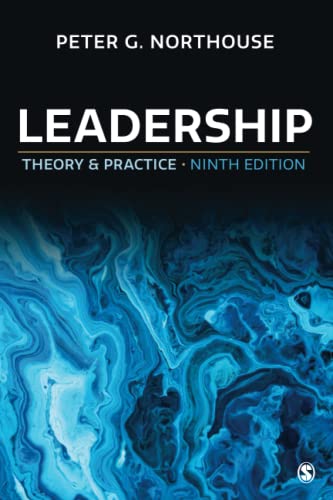
13. Leadership: Theory and Practice
Peter G. Northouse, 1997
Best for: Students and leaders who want the theory and evidenceThe standard academic leadership textbook in many universities. Each chapter covers a major theory, such as trait, skills, situational, path-goal, leader-member exchange, transformational, authentic and servant leadership, with research findings, strengths, criticisms, case studies and a self-assessment questionnaire. It is the best single book if you need to understand the evidence behind leadership theories. It is a textbook, so read it selectively, chapter by chapter, when you want to go deeper on one theory you have met elsewhere.
Key lesson: No single theory explains leadership; each one highlights different parts of the picture.
View on AmazonIf you want quick summaries of the main theories first, see my guides to types of leadership, situational leadership and transformational leadership.
What should you read before your first management role?
You do not need a team to start developing as a leader. Aspiring managers can build the foundations early, and doing so makes the first promotion far less of a shock. Three areas matter most at this point.
- Managing yourself. Habits of focus, prioritisation and reliability are the base everything else rests on. The 7 Habits of Highly Effective People by Stephen Covey remains the classic here.
- Influence without authority. Before you have a title, you lead by persuasion and relationships. How to Win Friends and Influence People is still the most practical starting point.
- A growth mindset. Dweck's Mindset, listed above for established managers, is just as valuable early on, because it shapes how you respond to feedback and setbacks.
Both Covey and Carnegie appear in my list of the best leadership books, along with short summaries.
How do you know you are ready for the next stage?
Many leaders move up before they have finished learning the lessons of their current stage, and then struggle. Others stay too long in a role they have outgrown. These signs, drawn from The Leadership Pipeline and my own experience of working with managers, suggest you are ready to read, and prepare, for the next step.
| Current stage | Signs you are ready to move on |
|---|---|
| First-time manager | Your team delivers without you doing the work; you hold regular one-to-ones and give feedback without dreading it |
| Established manager | Your team runs smoothly when you are away; you have hired well and developed at least one person who could step into your role |
| Manager of managers | Your managers make good decisions without escalating; you spend more time on priorities and people than on day-to-day problems |
| Senior leader | You think about the whole organisation, not only your function; you are comfortable with boards, governance and long-term risk |
If you recognise yourself in the right-hand column, start reading the books for the next stage now. If not, the books for your current stage will repay a second, more careful read.
Which skills matter at every stage?
Some leadership skills never stop being relevant. Emotional intelligence is the most important. Daniel Goleman's Harvard Business Review article What Makes a Leader? argued that self-awareness, self-regulation, motivation, empathy and social skill distinguish outstanding leaders, and that they can be learned. Clear communication, honest feedback and good judgement under pressure also matter at every level. The difference is the scale: a new manager uses them with a team of five, an executive with an organisation of thousands and a board.
How do you build a leadership development plan around these books?
A book on its own rarely changes behaviour. Here is a simple 12-month plan that combines reading with the experience and relationships that drive most development.
| Quarter | Read | Practise | Discuss with |
|---|---|---|---|
| 1 | One book for your current stage | Choose one behaviour to change, such as asking more questions in one-to-ones | Your manager |
| 2 | Crucial Conversations or The Coaching Habit | Hold one difficult conversation you have been avoiding | A mentor or peer |
| 3 | One book for the next stage up | Take on a stretch project beyond your current role | A sponsor or senior colleague |
| 4 | Leadership: Theory and Practice (selected chapters) | Ask your team for feedback on what has changed | Your team |
Repeat the cycle each year, adjusting the books to your stage. Keep a short note of what you tried and what happened; looking back over a year of notes is one of the most useful development exercises there is.
How I chose these books
I chose books that are clearly useful at a specific career stage, rather than general leadership titles. Each had to be practical enough to change what you do at work, and together they needed to cover the whole journey from first-time manager to executive. I included one academic textbook for readers who want the evidence. All summaries are my own and my book is clearly disclosed. For a broader list, see the best leadership books.
Bottom line
Read for the stage you are in now. New managers should start with The Making of a Manager and The Coaching Habit. Established managers should read High Output Management. When you start leading other managers, read The Leadership Pipeline. Senior leaders should read What Got You Here Won't Get You There and The First 90 Days. If you are moving towards a board-level or strategic role, you can read the first three chapters of my book free.
FAQs
What is the best book for leadership development?
There is no single best book, because each career stage needs different skills. The Leadership Pipeline by Charan, Drotter and Noel is the best book for understanding how leadership changes as you move up, and The Making of a Manager by Julie Zhuo is the best starting point for new managers.
How do leaders develop?
Research from the Center for Creative Leadership suggests most leadership learning comes from challenging experiences, followed by relationships such as mentors and bosses, with formal training and reading playing a smaller part. Books are most useful when they help you understand and act on a challenge you are facing now.
What should a first-time manager read?
Start with The Making of a Manager by Julie Zhuo for the basics, then The Coaching Habit by Michael Bungay Stanier for everyday coaching and Crucial Conversations for difficult discussions. If you lead a technical team, The Manager's Path by Camille Fournier is also excellent.
What books should executives read for development?
Executives benefit most from What Got You Here Won't Get You There by Marshall Goldsmith, on behaviours that hold senior people back, and The First 90 Days by Michael Watkins, on role transitions. For strategy and governance, my own book Becoming A Strategic Business Leader is a concise guide. Disclosure: I am the author.
Is there a textbook on leadership theory?
Yes. Leadership: Theory and Practice by Peter Northouse is the standard textbook in many universities. Each chapter covers one theory, such as transformational, situational or servant leadership, with research findings, criticisms, case studies and a self-assessment questionnaire.