
The best strategic leadership books are Good Strategy Bad Strategy by Richard Rumelt and Playing to Win by Lafley and Martin for direction, Execution by Bossidy and Charan for delivery, Leading Change by John Kotter for change, and The Fifth Discipline by Peter Senge for building a learning organisation.
As an Amazon Associate I earn from qualifying purchases. Links to Amazon on this page are affiliate links. This does not change the price you pay.
Strategic leadership is the ability to set a direction for an organisation, bring people with you and adapt as conditions change. It sits between pure strategy books, which can ignore people, and leadership books, which often ignore strategy. Surprisingly few reading lists focus on it, so I have put together 12 books that cover the whole job: setting direction, executing, leading change and building an organisation that lasts.
I have included my own book as the first pick, with a clear disclosure, because it was written specifically to join strategy, governance and leadership together. You should judge for yourself whether that suits you; the other 11 books are excellent whether or not you read mine.
Quick picks: the best strategic leadership books
| Book | Author | Best for |
|---|---|---|
| Becoming A Strategic Business Leader: The Ultimate All-In-One Guide | Adam Niazi FCCA | Managers and ACCA students who want strategy, governance and leadership joined up in one guide |
| Good Strategy Bad Strategy | Richard P. Rumelt | Leaders who suspect their strategy is really a list of goals |
| Playing to Win | A.G. Lafley and Roger L. Martin | Managers who need to make and communicate strategic choices |
| Execution | Larry Bossidy and Ram Charan | Senior leaders whose strategies are not turning into results |
| The 4 Disciplines of Execution | Chris McChesney, Sean Covey and Jim Huling | Leaders who need teams to deliver a few priorities amid daily pressure |
| Leading Change | John P. Kotter | Leaders running a transformation or major change programme |
| Leadership on the Line | Ronald A. Heifetz and Marty Linsky | Leaders driving difficult change in organisations or public life |
| Leadership: In Turbulent Times | Doris Kearns Goodwin | Leaders facing a crisis or turnaround |
| The Fifth Discipline | Peter M. Senge | Senior leaders who want to build an organisation that learns |
| Built to Last | Jim Collins and Jerry I. Porras | Leaders thinking about long-term purpose and company building |
| Principles | Ray Dalio | Leaders who want to make decision-making more systematic |
| The First 90 Days | Michael D. Watkins | Anyone starting a new leadership role or promotion |
What is strategic leadership, in short?
A useful definition comes from research by Paul Schoemaker, Steve Krupp and Samantha Howland, published in Harvard Business Review as Strategic Leadership: The Essential Skills. They identified six skills that strategic leaders practise: anticipate, challenge, interpret, decide, align and learn. The books on this list map onto those six skills, as the table below shows. For a fuller explanation, see my guide to what strategic leadership is and the strategic leadership skills page.
| Skill | What it means | Books that build it |
|---|---|---|
| Anticipate | Spot changes in the environment early | The Fifth Discipline, Leadership: In Turbulent Times |
| Challenge | Question assumptions, including your own | Good Strategy Bad Strategy, Principles |
| Interpret | Make sense of complex, ambiguous information | Becoming A Strategic Business Leader, The Fifth Discipline |
| Decide | Make clear choices with incomplete information | Playing to Win, Good Strategy Bad Strategy |
| Align | Bring stakeholders behind a direction | Leading Change, Leadership on the Line, The First 90 Days |
| Learn | Review outcomes and adapt | Principles, The 4 Disciplines of Execution |
Which books help leaders set strategic direction?
Setting direction is the first job of a strategic leader. These three books explain what a real strategy looks like, how to make clear choices and how the analytical models fit together.
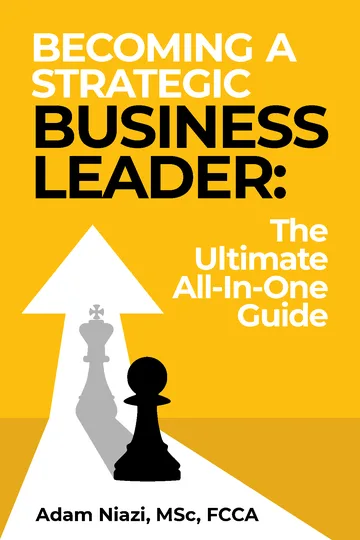
1. Becoming A Strategic Business Leader: The Ultimate All-In-One Guide
Adam Niazi FCCA, 2023
Best for: Managers and ACCA students who want strategy, governance and leadership joined up in one guideI wrote this book because strategic leadership is usually taught in pieces: strategy in one course, governance in another, leadership in a third. It brings them together in 19 short chapters covering strategic analysis and choice, governance and boards, stakeholders, leadership styles, risk, ethics, organisational structure, technology, financial decisions and managing change. It began as a revision guide for the ACCA Strategic Business Leader exam, so it is concise and model-based, and it works as a reference for any manager stepping into a strategic role. Disclosure: this is my own book.
Key lesson: Strategic leadership means connecting direction, governance, people and risk, not treating them separately.
View on Amazon Read 3 chapters free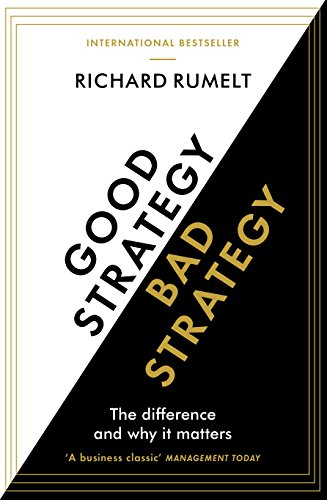
2. Good Strategy Bad Strategy
Richard P. Rumelt, 2011
Best for: Leaders who suspect their strategy is really a list of goalsRumelt, a UCLA professor, argues that most so-called strategies are just goals, slogans or wish lists. Good strategy has a kernel of three parts: a diagnosis of the challenge, a guiding policy for dealing with it and a set of coherent actions. He illustrates this with examples from business and military history and explains sources of power such as leverage, focus and chain-link systems. It is the best modern book on what strategy actually is.
Key lesson: Good strategy starts with an honest diagnosis of the problem, not with ambitious targets.
View on Amazon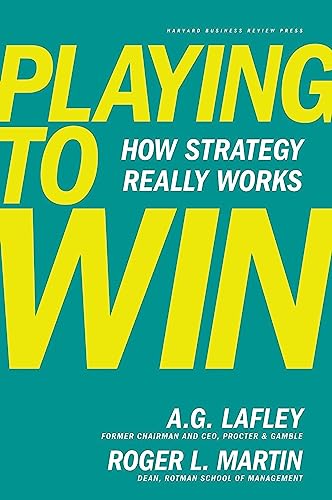
3. Playing to Win
A.G. Lafley and Roger L. Martin, 2013
Best for: Managers who need to make and communicate strategic choicesThe former CEO of Procter & Gamble and his long-time adviser explain the strategy approach they used together. Strategy is framed as five linked choices: a winning aspiration, where to play, how to win, the capabilities you need and the management systems that support them. Examples from brands like Olay and Bounty make it concrete. It is one of the most practical strategy books for working managers.
Key lesson: Strategy is a set of integrated choices, and choosing where not to play is as important as where to play.
View on AmazonWhich books help leaders execute strategy?
Many strategies fail not because they are wrong, but because they never get implemented. Day-to-day work crowds them out, or nobody translates them into specific goals and habits. These two books are the most practical I know on closing that gap.
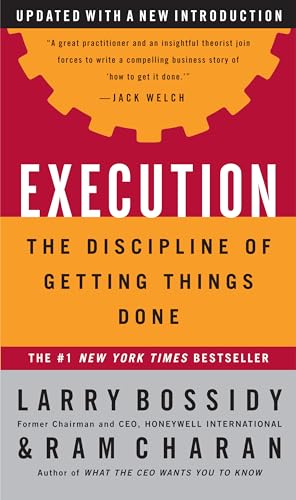
4. Execution
Larry Bossidy and Ram Charan, 2002
Best for: Senior leaders whose strategies are not turning into resultsA former CEO and a veteran adviser argue that execution is a discipline, and the leader's most important job, rather than a detail to delegate. They focus on three core processes: people, strategy and operations, and how linking them through robust dialogue and follow-through closes the gap between plans and results. It is direct and practical, written from inside large organisations.
Key lesson: A strategy is only as good as the people and operating processes that deliver it.
View on Amazon
5. The 4 Disciplines of Execution
Chris McChesney, Sean Covey and Jim Huling, 2012
Best for: Leaders who need teams to deliver a few priorities amid daily pressureThe authors argue that strategy usually fails in the whirlwind of day-to-day urgent work. Their four disciplines are: focus on a few wildly important goals, act on lead measures you can influence, keep a compelling scoreboard and create a cadence of accountability through short weekly meetings. It is a very practical system that teams can start using immediately. Many teams find the scoreboard idea alone sharpens their focus.
Key lesson: Track the lead measures you can influence this week, not just the results you hope to see.
View on AmazonFor the difference between deciding strategy and running operations, see my explainer on strategic versus operational leadership.
Which books teach leaders how to lead change?
Any significant strategy involves change, and change involves loss for someone. These books cover the process of change, the politics and the personal resilience it demands. My guides to Kotter's 8-step model and Lewin's change model give you the frameworks in a few minutes.
6. Leading Change
John P. Kotter, 1996
Best for: Leaders running a transformation or major change programmeKotter's book grew out of his 1995 Harvard Business Review article on why transformation efforts fail. He sets out eight steps: create urgency, build a guiding coalition, form a vision, communicate it, remove obstacles, generate short-term wins, consolidate gains and anchor the change in culture. It remains the most widely taught change model in business schools and professional exams, and it is short enough to read in a weekend.
Key lesson: Most change efforts fail because leaders skip steps, especially building real urgency.
View on Amazon
7. Leadership on the Line
Ronald A. Heifetz and Marty Linsky, 2002
Best for: Leaders driving difficult change in organisations or public lifeHeifetz and Linsky, both long associated with Harvard's Kennedy School, explain why leading change is dangerous for the leader. Their key distinction is between technical problems, which experts can solve, and adaptive challenges, which require people to change their values, habits or loyalties. Leaders who treat adaptive problems as technical ones get pushed aside. The book offers tactics for 'getting on the balcony' to see the wider pattern, managing conflict and protecting yourself while you do it.
Key lesson: Real change usually means asking people to give something up, so expect resistance and plan for it.
View on Amazon
8. Leadership: In Turbulent Times
Doris Kearns Goodwin, 2018
Best for: Leaders facing a crisis or turnaroundGoodwin draws on decades of research into four US presidents (Abraham Lincoln, Theodore Roosevelt, Franklin D. Roosevelt and Lyndon B. Johnson) to ask whether leaders are born or made. She traces how each was shaped by early setbacks, then examines a defining crisis for each: transformation, crisis management, turnaround and vision. It is shorter and more explicitly about leadership than her single biographies, which makes it an excellent bridge between history and practice.
Key lesson: Adversity often shapes leaders more than talent: how you respond to setbacks matters.
View on AmazonWhich books help leaders build an organisation that lasts?
The longest-term part of strategic leadership is shaping the organisation itself: its culture, its ability to learn and the way it makes decisions. These three books approach that from very different angles.
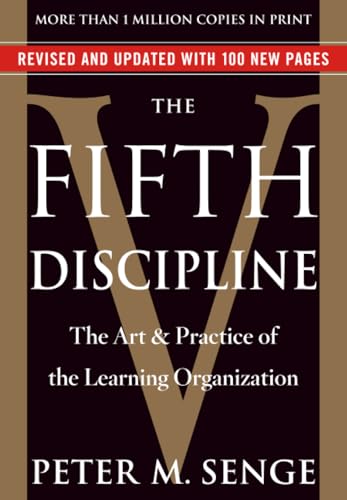
9. The Fifth Discipline
Peter M. Senge, 1990
Best for: Senior leaders who want to build an organisation that learnsSenge introduced the learning organisation: a company that continually expands its capacity to create its future. He describes five disciplines, personal mastery, mental models, shared vision, team learning and systems thinking, with systems thinking as the fifth that ties them together. The book's ideas on feedback loops, delays and the limits to growth are especially valuable for strategic leaders. The revised edition adds examples of organisations putting the ideas into practice.
Key lesson: Many problems are created by the system's structure, so changing people alone rarely fixes them.
View on Amazon
10. Built to Last
Jim Collins and Jerry I. Porras, 1994
Best for: Leaders thinking about long-term purpose and company buildingCollins and Porras compared long-lived 'visionary' companies with competitors that started out similarly, looking for what explained their endurance. Their answers include a core ideology that stays fixed while practices change, big hairy audacious goals, cult-like cultures, home-grown leaders, and building the organisation rather than relying on one charismatic figure. It is the prequel to Good to Great and especially useful for thinking about purpose and long-term direction.
Key lesson: Preserve the core, stimulate progress: keep your values fixed and everything else open to change.
View on Amazon
11. Principles
Ray Dalio, 2017
Best for: Leaders who want to make decision-making more systematicThe founder of Bridgewater Associates sets out the life and work principles he used to build one of the world's largest hedge funds. The core ideas are radical truthfulness, radical transparency and believability-weighted decision-making, where opinions count more if the person has a strong track record. The book is long and some practices will feel extreme in most workplaces, but the habit of writing down your principles and reviewing mistakes systematically is valuable for any leader.
Key lesson: Turn painful mistakes into written principles, so you make better decisions next time.
View on AmazonWhat should you read when stepping into a strategic role?
The move into a strategic role, such as a director, head of function or general manager, is a high-risk moment. You are visible, expectations are high and your old ways of working may no longer fit.

12. The First 90 Days
Michael D. Watkins, 2003
Best for: Anyone starting a new leadership role or promotionWatkins gives a structured plan for anyone stepping into a new leadership role. He explains how to diagnose the situation you have inherited (start-up, turnaround, realignment or sustaining success), secure early wins, build a coalition, agree expectations with your boss and avoid the classic traps of new leaders. The updated edition is practical and checklist-driven, which makes it one of the few leadership books you might actually reread during a transition.
Key lesson: Match your strategy to the type of situation you are inheriting before you try to change it.
View on AmazonIn what order should you read strategic leadership books?
| Order | Book | Why at this point |
|---|---|---|
| 1 | Good Strategy Bad Strategy | Learn what a real strategy is before anything else |
| 2 | Becoming A Strategic Business Leader (my own book) | Get the full set of strategy, governance and leadership models |
| 3 | Playing to Win | Practise making clear strategic choices |
| 4 | Execution or The 4 Disciplines of Execution | Turn choices into results |
| 5 | Leading Change | Take people with you |
| 6 | Leadership on the Line | Handle the politics and resistance |
| 7 | The Fifth Discipline | Build an organisation that learns |
What mistakes do these books help strategic leaders avoid?
When I talk to managers moving into strategic roles, and to ACCA students preparing for the Strategic Business Leader exam, the same mistakes come up again and again. Each of the books above tackles at least one of them.
- Confusing goals with strategy. "Grow revenue by 20 per cent" is a target, not a strategy. Rumelt is the cure: start with a diagnosis of the challenge, then choose a guiding policy.
- Analysing forever without choosing. Models such as PESTEL and the five forces are tools for a decision, not a substitute for one. Playing to Win forces you to make explicit choices about where to play and how to win.
- Announcing a strategy and assuming it will happen. Bossidy and Charan, and the authors of The 4 Disciplines of Execution, show that strategy needs people, processes and a weekly rhythm of accountability.
- Underestimating resistance. Kotter and Heifetz both show that people resist change for understandable reasons. Ignoring stakeholders is one of the fastest ways to fail, which is why tools like Mendelow's matrix matter.
- Forgetting governance and risk. Strategic decisions carry risk and need proper oversight. This is the gap my own book tries to fill, alongside guides such as enterprise risk management.
How I chose these books
I looked for books that address the strategic part of a leader's job, not just managing a team. Each book had to help with at least one of the six strategic leadership skills from the HBR research above, and together they needed to cover direction, execution, change and organisation-building. I left out general leadership titles that are mainly about motivation or feedback; you will find those in my list of the best leadership books. For more on thinking skills, see the best strategic thinking books. All summaries are my own and my book is clearly disclosed.
Bottom line
Strategic leadership needs three kinds of reading: strategy (Good Strategy Bad Strategy, Playing to Win), execution and change (Execution, Leading Change) and organisation-building (The Fifth Discipline). If you want the core models of strategy, governance and leadership joined up in one concise book, mine was written for exactly that, and you can read the first three chapters free before deciding.
FAQs
What is the best book on strategic leadership?
Good Strategy Bad Strategy by Richard Rumelt is the best single book on the strategy side, while Leading Change by John Kotter is the best on taking people with you. If you want strategy, governance and leadership models in one concise guide, my own book Becoming A Strategic Business Leader was written for that. Disclosure: I am the author.
What is the difference between strategic leadership and leadership?
Leadership in general is about influencing people towards a goal. Strategic leadership is about choosing the goal and direction for a whole organisation, aligning stakeholders behind it and adapting as the environment changes. It needs skills in analysis, decision-making and change, as well as people skills.
What skills does a strategic leader need?
Research published in Harvard Business Review by Schoemaker, Krupp and Howland identified six skills: anticipate, challenge, interpret, decide, align and learn. Strong strategic leaders also understand governance, risk and finance, because senior decisions affect all three.
Are these books useful for the ACCA SBL exam?
Several are. The SBL exam combines strategy, leadership, governance, risk and change, so books like Leading Change and Good Strategy Bad Strategy add depth. Your approved study text should come first. My book Becoming A Strategic Business Leader is a concise SBL revision guide. Disclosure: I am the author.
Which strategic leadership book is best for new directors?
The First 90 Days by Michael Watkins is the most practical book for anyone stepping into a senior role. It helps you diagnose the situation you have inherited, agree expectations and secure early wins. Pair it with Good Strategy Bad Strategy to sharpen your thinking about direction.