
The best business strategy books are Good Strategy Bad Strategy by Richard Rumelt, Playing to Win by A.G. Lafley and Roger Martin, and Michael Porter's Competitive Strategy, ideally read via Joan Magretta's Understanding Michael Porter. Add Blue Ocean Strategy and The Innovator's Dilemma for growth and disruption.
As an Amazon Associate I earn from qualifying purchases. Links to Amazon on this page are affiliate links. This does not change the price you pay.
Strategy is one of the most written-about subjects in business, and one of the most confused. Many so-called strategy books are really about goal setting, motivation or innovation. This list focuses on books that explain what strategy is, how competitive advantage works and how to make strategic choices. It mixes the classics, such as Michael Porter, with newer books that have earned their place.
I wrote my own book as a guide to the strategy models in the ACCA Strategic Business Leader exam, so I have included it with a clear disclosure. It is a concise reference rather than a big-idea book, which is why I list it alongside Rumelt rather than instead of him.
Quick picks: the best business strategy books
| Book | Author | Best for |
|---|---|---|
| Good Strategy Bad Strategy | Richard P. Rumelt | Leaders who suspect their strategy is really a list of goals |
| Becoming A Strategic Business Leader: The Ultimate All-In-One Guide | Adam Niazi FCCA | ACCA SBL students and managers who want every core strategy model in one short guide |
| Understanding Michael Porter | Joan Magretta | Readers who want Porter's ideas without the dense original texts |
| Playing to Win | A.G. Lafley and Roger L. Martin | Managers who need to make and communicate strategic choices |
| Competitive Strategy | Michael E. Porter | Strategy students and analysts who want the original source |
| Competitive Advantage | Michael E. Porter | Strategy students and managers analysing their own operations |
| 7 Powers | Hamilton Helmer | Strategists and investors assessing durable competitive advantage |
| Blue Ocean Strategy | W. Chan Kim and Renée Mauborgne | Leaders looking for growth beyond head-to-head competition |
| The Innovator's Dilemma | Clayton M. Christensen | Leaders in established firms facing new, low-cost competitors |
| Crossing the Chasm | Geoffrey A. Moore | Leaders taking a new product from early adopters to the mainstream |
| Zero to One | Peter Thiel with Blake Masters | Entrepreneurs and strategists looking for contrarian thinking |
| Strategy Safari | Henry Mintzberg, Bruce Ahlstrand and Joseph Lampel | Students and leaders who want to compare different views of strategy |
| Exploring Strategy | Richard Whittington, Patrick Regnér, Duncan Angwin, Gerry Johnson and Kevan Scholes | University and professional students who need a full strategy textbook |
| The Art of Strategy | Avinash K. Dixit and Barry J. Nalebuff | Leaders who negotiate or compete against thinking opponents |
| Measure What Matters | John Doerr | Leaders who need to turn strategy into measurable team goals |
Which strategy books should you start with?
Start with books that tell you what strategy actually is. Michael Porter's widely cited Harvard Business Review article What Is Strategy? makes the point that operational effectiveness, doing the same things better than rivals, is not a strategy. Strategy means choosing a different set of activities and accepting trade-offs. Rumelt, Magretta and Lafley and Martin all build on that idea in very readable ways.
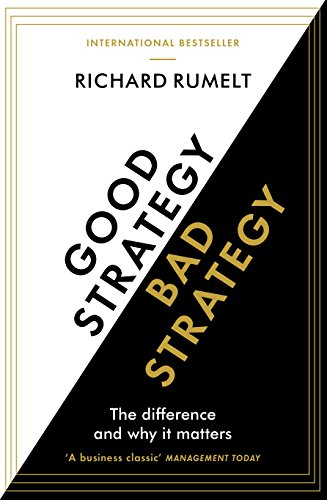
1. Good Strategy Bad Strategy
Richard P. Rumelt, 2011
Best for: Leaders who suspect their strategy is really a list of goalsRumelt, a UCLA professor, argues that most so-called strategies are just goals, slogans or wish lists. Good strategy has a kernel of three parts: a diagnosis of the challenge, a guiding policy for dealing with it and a set of coherent actions. He illustrates this with examples from business and military history and explains sources of power such as leverage, focus and chain-link systems. It is the best modern book on what strategy actually is.
Key lesson: Good strategy starts with an honest diagnosis of the problem, not with ambitious targets.
View on Amazon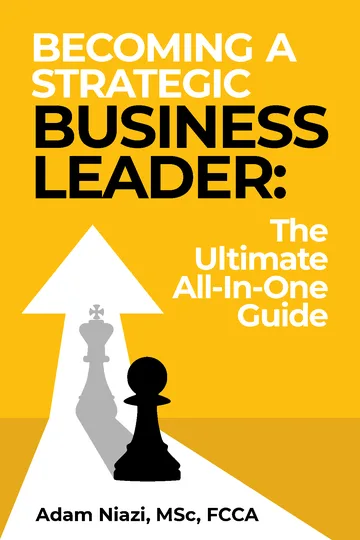
2. Becoming A Strategic Business Leader: The Ultimate All-In-One Guide
Adam Niazi FCCA, 2023
Best for: ACCA SBL students and managers who want every core strategy model in one short guideMy book is a concise tour of the strategy models used in professional exams and boardrooms: PESTEL, Porter's five forces, the value chain, SWOT, Ansoff, the BCG matrix, Bowman's strategy clock, suitability, acceptability and feasibility, and more. It was written as a revision guide for the ACCA Strategic Business Leader exam, so each model is explained briefly with how to apply it. Chapters 1 to 5 cover strategic planning, analysis, performance, choice and development. Disclosure: this is my own book.
Key lesson: Use models to structure your thinking, then make a clear choice; analysis alone is not a strategy.
View on Amazon Read 3 chapters free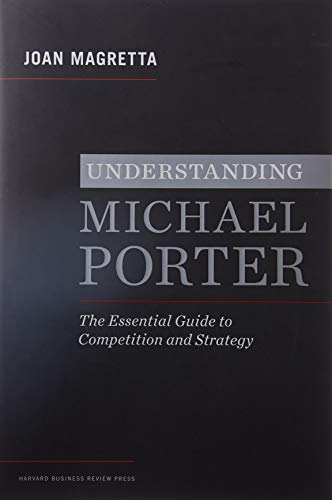
3. Understanding Michael Porter
Joan Magretta, 2012
Best for: Readers who want Porter's ideas without the dense original textsMagretta, who worked with Porter, gives a clear, readable guide to his core ideas: the five forces, competitive advantage, the value chain, trade-offs and fit. She also corrects common misreadings, such as treating strategy as being the best rather than being unique. If you find Porter's original books heavy going, start here, then dip into the originals. Magretta also includes a helpful question-and-answer section with Porter himself.
Key lesson: Strategy is about being different in ways that are hard to copy, not about being the best.
View on Amazon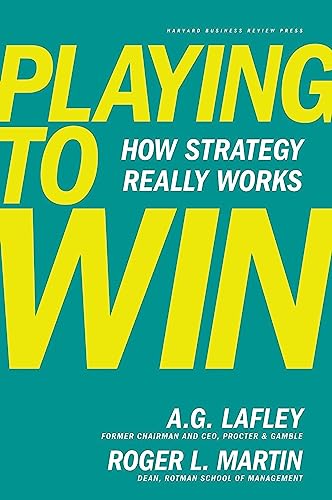
4. Playing to Win
A.G. Lafley and Roger L. Martin, 2013
Best for: Managers who need to make and communicate strategic choicesThe former CEO of Procter & Gamble and his long-time adviser explain the strategy approach they used together. Strategy is framed as five linked choices: a winning aspiration, where to play, how to win, the capabilities you need and the management systems that support them. Examples from brands like Olay and Bounty make it concrete. It is one of the most practical strategy books for working managers.
Key lesson: Strategy is a set of integrated choices, and choosing where not to play is as important as where to play.
View on AmazonPlaying to Win's five choices map neatly onto the strategic planning process. Roger Martin also explains the approach on his own website, which is a useful preview.
What are the best books on competitive advantage?
Competitive advantage is the heart of business strategy: why can some firms earn better returns than their rivals for long periods? Porter's two books remain the foundation, and Helmer's 7 Powers is the best modern attempt to list where durable advantage really comes from. If you want to see the models in action first, read my explainers on Porter's five forces, the value chain and the VRIO framework.
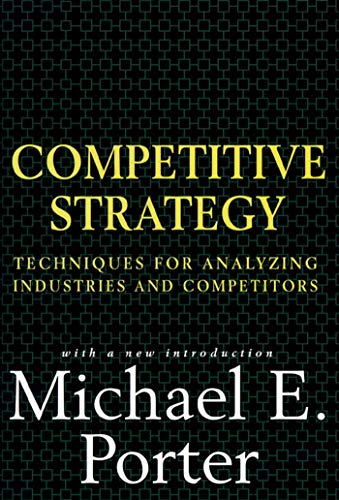
5. Competitive Strategy
Michael E. Porter, 1980
Best for: Strategy students and analysts who want the original sourcePorter's landmark book introduced the five forces framework for analysing industry profitability and the generic strategies of cost leadership, differentiation and focus. It also covers competitor analysis, industry evolution and strategy in fragmented, emerging and mature industries. It is dense and academic in tone, but almost every strategy textbook and professional exam, including ACCA SBL, still builds on its ideas.
Key lesson: Profitability depends heavily on industry structure, so understand the five forces before choosing a strategy.
View on Amazon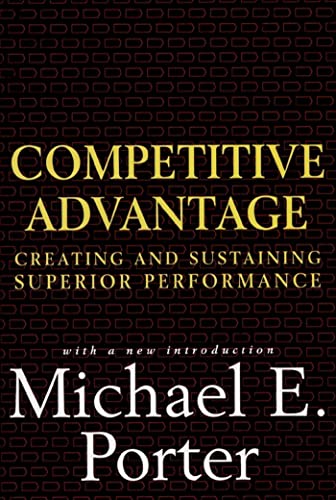
6. Competitive Advantage
Michael E. Porter, 1985
Best for: Strategy students and managers analysing their own operationsPorter's follow-up shifts from the industry to the firm. It introduces the value chain, a way of breaking a business into primary and support activities to see where cost or differentiation advantage is created. It also covers cost drivers, technology, buyer value and interrelationships between business units. Read it after Competitive Strategy if you want to understand how advantage is built inside a company.
Key lesson: Advantage comes from how activities fit together, not from any single activity.
View on Amazon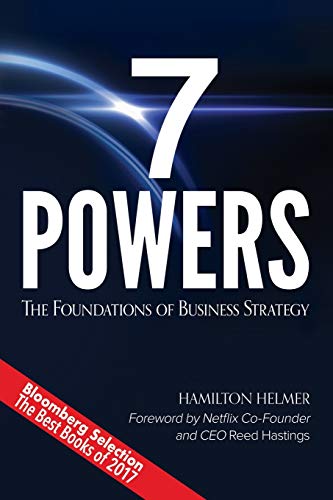
7. 7 Powers
Hamilton Helmer, 2016
Best for: Strategists and investors assessing durable competitive advantageHelmer, a strategy consultant and investor, identifies seven sources of durable advantage: scale economies, network economies, counter-positioning, switching costs, branding, cornered resources and process power. For each he explains both the benefit and the barrier that stops rivals copying it. It is compact and quite technical, and popular with investors and technology leaders. Expect to reread it: each chapter rewards slow, careful study with real examples in mind.
Key lesson: A real advantage needs both a benefit to you and a barrier that stops competitors copying it.
View on AmazonWhich strategy books cover innovation and new markets?
Classic positioning strategy assumes a fairly stable industry. These four books deal with what happens when markets are created or disrupted. They are essential for leaders in fast-moving sectors, and a useful challenge to anyone who believes their current advantage is safe.
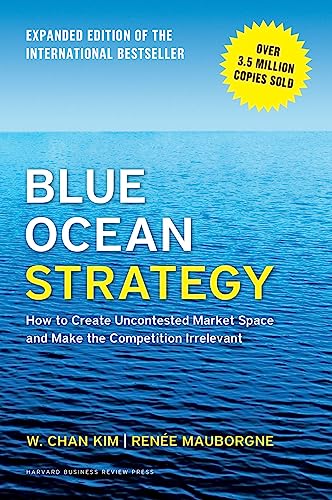
8. Blue Ocean Strategy
W. Chan Kim and Renée Mauborgne, 2005
Best for: Leaders looking for growth beyond head-to-head competitionINSEAD professors Kim and Mauborgne argue that rather than fighting rivals in crowded 'red oceans', firms should create uncontested market space by offering a leap in value at lower cost. Tools include the strategy canvas and the four actions framework (eliminate, reduce, raise, create). Cirque du Soleil is the best-known example. The expanded edition adds guidance on avoiding red ocean traps.
Key lesson: Ask which factors your industry takes for granted that you could eliminate or reduce to create new value.
View on Amazon
9. The Innovator's Dilemma
Clayton M. Christensen, 1997
Best for: Leaders in established firms facing new, low-cost competitorsChristensen explains why well-run market leaders often lose to newcomers. Disruptive technologies usually start out worse and cheaper, serving customers the leaders do not care about, so listening closely to your best customers can lead you to ignore them until it is too late. His examples range from disk drives to steel mini-mills. It is one of the most influential strategy books ever written and a vital counterweight to purely competitive thinking.
Key lesson: Doing everything 'right' for today's customers can blind you to the disruption that replaces you.
View on Amazon
10. Crossing the Chasm
Geoffrey A. Moore, 1991
Best for: Leaders taking a new product from early adopters to the mainstreamMoore explains why many technology products that win early enthusiasts then stall. Visionary early adopters buy for different reasons than the pragmatic early majority, and the gap between them is the chasm. His answer is to target one narrow niche, deliver a complete solution for it and use it as a beachhead to expand. The third edition updates the examples.
Key lesson: Dominate one narrow segment completely before trying to win the whole market.
View on Amazon
11. Zero to One
Peter Thiel with Blake Masters, 2014
Best for: Entrepreneurs and strategists looking for contrarian thinkingBased on a Stanford course Thiel taught, this short book argues that real progress comes from creating something new (going from zero to one) rather than copying what works (one to n). Thiel makes the provocative case that competition destroys profits and that great businesses aim for a monopoly in a small market first, then expand. It is opinionated and contrarian, which makes it a good thinking tool even where you disagree.
Key lesson: Ask what important truth very few people agree with you on: that is where unique opportunities hide.
View on AmazonWhich books go deeper or turn strategy into action?
Once you have the foundations, these books widen your view. Strategy Safari shows that there are many schools of thought about strategy. Exploring Strategy is the full university textbook. The Art of Strategy brings in game theory, and Measure What Matters deals with the step most strategies fail at: execution.
12. Strategy Safari
Henry Mintzberg, Bruce Ahlstrand and Joseph Lampel, 1998
Best for: Students and leaders who want to compare different views of strategyThe authors take readers through ten schools of strategic thinking, from the design and planning schools to the positioning, learning, cultural and configuration schools. Each is explained along with its strengths and blind spots. It is an excellent antidote to treating any single model as the truth, and it introduces Mintzberg's influential idea of emergent strategy. The animal metaphor running through the book also makes it more fun than most strategy texts.
Key lesson: Strategy is often emergent: it forms from patterns of action, not only from formal plans.
View on Amazon
13. Exploring Strategy
Richard Whittington, Patrick Regnér, Duncan Angwin, Gerry Johnson and Kevan Scholes, 1984
Best for: University and professional students who need a full strategy textbookFirst published as Exploring Corporate Strategy by Gerry Johnson and Kevan Scholes, this is one of the most widely used strategy textbooks in UK and European universities. It covers the environment, capabilities, stakeholders and culture, business and corporate strategy, international strategy, evaluation and implementation, with many case studies. Several of the models in professional syllabuses, including the cultural web and suitability, acceptability and feasibility, are associated with these authors.
Key lesson: Evaluate every strategic option for suitability, acceptability and feasibility before choosing.
View on Amazon
14. The Art of Strategy
Avinash K. Dixit and Barry J. Nalebuff, 2008
Best for: Leaders who negotiate or compete against thinking opponentsTwo economists explain game theory in plain language using examples from business, sport, politics and everyday life. Topics include anticipating rivals' responses, credible commitments, bargaining, auctions and when to cooperate. You do not need maths to follow most of it. It is the best introduction to thinking about strategy as a set of interacting moves rather than a solo plan.
Key lesson: Look forward and reason backward: think through how others will respond before you move.
View on Amazon
15. Measure What Matters
John Doerr, 2018
Best for: Leaders who need to turn strategy into measurable team goalsDoerr, who brought objectives and key results (OKRs) from Intel to Google, explains how the system works: a small number of ambitious objectives, each with measurable key results, set openly so everyone can see how their work connects. Case studies from Google, Intuit and others show OKRs in use, alongside a later section on continuous performance conversations. It is a practical guide for turning strategy into focused execution.
Key lesson: A few clear, measurable goals, visible to everyone, beat a long list of priorities.
View on AmazonIn what order should you read strategy books?
Reading order matters with strategy, because the later books assume you know the basics. Here is the order I recommend, depending on your goal.
| Step | If you are a manager | If you are a student (ACCA, MBA, CMI) |
|---|---|---|
| 1 | Good Strategy Bad Strategy | Becoming A Strategic Business Leader (my own book) or your exam text |
| 2 | Playing to Win | Understanding Michael Porter |
| 3 | Understanding Michael Porter | Exploring Strategy (selected chapters) |
| 4 | Blue Ocean Strategy | Good Strategy Bad Strategy |
| 5 | The Innovator's Dilemma | Strategy Safari |
| 6 | Measure What Matters | Competitive Strategy (as a reference) |
How do these strategy books compare?
| Book | Main idea | Difficulty | Typical use |
|---|---|---|---|
| Good Strategy Bad Strategy | Diagnosis, guiding policy, coherent action | Medium | Checking whether a plan is really a strategy |
| Competitive Strategy | Five forces and generic strategies | High | Analysing an industry |
| Competitive Advantage | Value chain | High | Finding where advantage is created inside a firm |
| Playing to Win | Five linked strategic choices | Low to medium | Building and communicating a strategy |
| Blue Ocean Strategy | Create uncontested market space | Medium | Looking for new growth |
| 7 Powers | Seven sources of durable advantage | Medium to high | Testing whether an advantage will last |
| Strategy Safari | Ten schools of strategy | Medium | Understanding different views of strategy |
| Becoming A Strategic Business Leader | Core models in one concise guide | Low to medium | Revision and quick reference |
What do the best strategy books agree on?
Despite their differences, the best strategy writers share a few conclusions. First, strategy is about choice: deciding what not to do is as important as deciding what to do. Second, a strategy needs a clear diagnosis of the situation, which is why tools like PESTEL and SWOT exist, though they are only the start. Third, advantage comes from activities that fit together and are hard to copy, not from a single clever move. Finally, a strategy that is not translated into resources, goals and actions is just a document. For a short explainer of these ideas, see what is strategy? and strategic management.
How I chose these books
I chose books that are either foundational to how strategy is taught, including on professional courses such as ACCA, or have added a genuinely new idea in the last two decades. I left out books that are mainly about leadership, motivation or productivity, even if they use the word strategy in the title. For those, see the best strategic leadership books and the best strategic thinking books. All summaries are my own.
Bottom line
If you read one strategy book, make it Good Strategy Bad Strategy. For practical choice-making, add Playing to Win. For the theory, read Understanding Michael Porter before Porter's originals. If you are studying for ACCA SBL or want every core model in one compact guide, my book is built for exactly that, and you can read the first three chapters free, which cover strategic planning, strategic analysis and performance analysis.
FAQs
What is the best book on business strategy?
Good Strategy Bad Strategy by Richard Rumelt is the best single book on what strategy is. It explains the kernel of a good strategy, a diagnosis, a guiding policy and coherent actions, and shows how to spot plans that are really just goals or slogans. Playing to Win is the best practical companion.
Should I read Michael Porter's original books?
Yes, eventually, but they are dense. Start with Understanding Michael Porter by Joan Magretta, which explains the five forces, value chain and competitive advantage clearly. Then use Competitive Strategy and Competitive Advantage as references for the parts most relevant to your work or studies.
What strategy books are useful for the ACCA SBL exam?
Your approved study text comes first. Beyond that, my own book Becoming A Strategic Business Leader is a concise guide to the SBL models, and Understanding Michael Porter and Exploring Strategy help with the theory behind them. Disclosure: I am the author of Becoming A Strategic Business Leader.
What is the difference between strategy and strategic thinking books?
Strategy books focus on what a strategy is and how organisations gain competitive advantage. Strategic thinking books focus on how individuals reason, make decisions and handle uncertainty, for example Thinking, Fast and Slow or Superforecasting. Strong strategists read both.
Is Blue Ocean Strategy still relevant?
Yes. The tools in Blue Ocean Strategy, such as the strategy canvas and the four actions framework, remain useful for finding growth beyond head-to-head competition. Critics argue that truly uncontested markets are rare and soon attract competitors, so treat it as a way of thinking about new value rather than a guarantee.