
The best business books of all time include Good to Great by Jim Collins, Thinking, Fast and Slow by Daniel Kahneman, Influence by Robert Cialdini and The Innovator's Dilemma by Clayton Christensen. Founders should add The Lean Startup, and aspiring strategists Michael Porter's Competitive Strategy.
As an Amazon Associate I earn from qualifying purchases. Links to Amazon on this page are affiliate links. This does not change the price you pay.
The best business books are the ones you keep coming back to years later, because the ideas still explain what you see at work. This list covers 24 of them, grouped by the stage you are at: timeless foundations, starting something new, core business skills, strategy and growth, managing an organisation, and the true stories that teach as much as any textbook. I have read all of them, and as an FCCA accountant with an Executive MBA I have tried to balance the popular favourites with books that hold up to scrutiny.
Quick picks: the best business books at a glance
| Book | Author | Best for |
|---|---|---|
| Good to Great | Jim Collins | Leaders who want an evidence-based view of what separates good organisations from great ones |
| Built to Last | Jim Collins and Jerry I. Porras | Leaders thinking about long-term purpose and company building |
| Thinking, Fast and Slow | Daniel Kahneman | Anyone who makes high-stakes decisions |
| Influence | Robert B. Cialdini | Leaders, marketers and anyone who needs to persuade |
| The Innovator's Dilemma | Clayton M. Christensen | Leaders in established firms facing new, low-cost competitors |
| The E-Myth Revisited | Michael E. Gerber | Small business owners stuck doing all the work themselves |
| The Lean Startup | Eric Ries | Founders and intrapreneurs launching new products |
| Zero to One | Peter Thiel with Blake Masters | Entrepreneurs and strategists looking for contrarian thinking |
| Rework | Jason Fried and David Heinemeier Hansson | Small teams and anyone fed up with corporate busywork |
| Shoe Dog | Phil Knight | Readers who want an honest, gripping founder story |
| The Personal MBA | Josh Kaufman | Career changers and specialists who want a broad business grounding |
| The Psychology of Money | Morgan Housel | Anyone who wants a calmer, behavioural view of money and risk |
| Never Split the Difference | Chris Voss with Tahl Raz | Leaders who negotiate deals, budgets or salaries |
| The Goal | Eliyahu M. Goldratt and Jeff Cox | Operations leaders and anyone improving a process |
| Competitive Strategy | Michael E. Porter | Strategy students and analysts who want the original source |
| Blue Ocean Strategy | W. Chan Kim and Renée Mauborgne | Leaders looking for growth beyond head-to-head competition |
| Crossing the Chasm | Geoffrey A. Moore | Leaders taking a new product from early adopters to the mainstream |
| Measure What Matters | John Doerr | Leaders who need to turn strategy into measurable team goals |
| Becoming A Strategic Business Leader: The Ultimate All-In-One Guide | Adam Niazi FCCA | Professionals and students who want the core business models in one compact reference |
| High Output Management | Andrew S. Grove | Managers who want a practical, systems-minded operating manual |
| Principles | Ray Dalio | Leaders who want to make decision-making more systematic |
| The Everything Store | Brad Stone | Readers who want a detailed case study of a modern strategy |
| Bad Blood | John Carreyrou | Anyone interested in governance, ethics and corporate culture |
| Business Adventures | John Brooks | Readers who enjoy business history told in depth |
What are the best business books of all time?
If you only read five business books in your life, I would choose these. They cover how great companies are built, how people make decisions, how persuasion works and why successful firms get overtaken. Each one changed the vocabulary of business, which is why you will hear their ideas in boardrooms decades after publication.

1. Good to Great
Jim Collins, 2001
Best for: Leaders who want an evidence-based view of what separates good organisations from great onesCollins and his research team compared companies that moved from average results to sustained outperformance with similar firms that never made the jump. The patterns they found have become part of everyday management language: Level 5 leaders who mix personal humility with fierce resolve, getting the right people on the bus before deciding where to drive it, facing brutal facts without losing faith, and the steady flywheel of effort rather than one dramatic breakthrough. Some of the featured companies later stumbled, which is worth remembering, but the core ideas about disciplined people, thought and action still hold up well.
Key lesson: The best leaders channel ambition into the organisation, not themselves, and build momentum through consistent, disciplined effort.
View on Amazon
2. Built to Last
Jim Collins and Jerry I. Porras, 1994
Best for: Leaders thinking about long-term purpose and company buildingCollins and Porras compared long-lived 'visionary' companies with competitors that started out similarly, looking for what explained their endurance. Their answers include a core ideology that stays fixed while practices change, big hairy audacious goals, cult-like cultures, home-grown leaders, and building the organisation rather than relying on one charismatic figure. It is the prequel to Good to Great and especially useful for thinking about purpose and long-term direction.
Key lesson: Preserve the core, stimulate progress: keep your values fixed and everything else open to change.
View on Amazon
3. Thinking, Fast and Slow
Daniel Kahneman, 2011
Best for: Anyone who makes high-stakes decisionsNobel laureate Kahneman summarises decades of research with Amos Tversky on how people make judgements. System 1 thinking is fast, intuitive and prone to predictable biases; System 2 is slow, deliberate and lazy. The book explains anchoring, loss aversion, overconfidence, the planning fallacy and more. It is demanding in places, and a few studies it cites have since struggled to replicate, but it changed how many leaders think about decisions.
Key lesson: Your intuition is confident even when it is wrong, so slow down for decisions that really matter.
View on AmazonKahneman shared the 2002 Nobel Memorial Prize in Economic Sciences for his work integrating psychology into economics, much of which this book explains for a general reader.

4. Influence
Robert B. Cialdini, 1984
Best for: Leaders, marketers and anyone who needs to persuadeCialdini, a psychologist, spent time inside sales and fundraising organisations to understand why people say yes. He identified principles of persuasion including reciprocity, commitment and consistency, social proof, liking, authority and scarcity. Each is explained with experiments and real tactics, plus advice on defending yourself against manipulation. For leaders, marketers and negotiators it remains the standard reference on ethical persuasion.
Key lesson: People follow predictable shortcuts when deciding; use them honestly and learn to spot them.
View on Amazon
5. The Innovator's Dilemma
Clayton M. Christensen, 1997
Best for: Leaders in established firms facing new, low-cost competitorsChristensen explains why well-run market leaders often lose to newcomers. Disruptive technologies usually start out worse and cheaper, serving customers the leaders do not care about, so listening closely to your best customers can lead you to ignore them until it is too late. His examples range from disk drives to steel mini-mills. It is one of the most influential strategy books ever written and a vital counterweight to purely competitive thinking.
Key lesson: Doing everything 'right' for today's customers can blind you to the disruption that replaces you.
View on AmazonWhich business books are best for starting a business?
Starting a business is a different discipline from running an established one. Resources are tight, almost everything is uncertain and the founder does every job. These books are written for that stage, and between them they cover systems, experimentation, contrarian thinking and the reality of building a company from nothing.

6. The E-Myth Revisited
Michael E. Gerber, 1995
Best for: Small business owners stuck doing all the work themselvesGerber argues that most small businesses are started by technicians, skilled people who enjoy the work, who then find themselves trapped doing everything. He explains the three roles of entrepreneur, manager and technician, and urges owners to work on the business rather than in it by building systems that could run like a franchise. The story of a bakery owner makes the ideas easy to follow.
Key lesson: Build systems so the business works without you doing every task.
View on Amazon
7. The Lean Startup
Eric Ries, 2011
Best for: Founders and intrapreneurs launching new productsRies applies lean manufacturing ideas to new ventures. Instead of writing a long business plan, you build a minimum viable product, measure how real customers respond and learn whether to persevere or pivot. Validated learning replaces guesswork. The approach was developed for start-ups but has spread into large companies running innovation programmes, and the language of experiments and pivots is now standard in business.
Key lesson: Test your riskiest assumption cheaply and quickly before you invest heavily.
View on Amazon
8. Zero to One
Peter Thiel with Blake Masters, 2014
Best for: Entrepreneurs and strategists looking for contrarian thinkingBased on a Stanford course Thiel taught, this short book argues that real progress comes from creating something new (going from zero to one) rather than copying what works (one to n). Thiel makes the provocative case that competition destroys profits and that great businesses aim for a monopoly in a small market first, then expand. It is opinionated and contrarian, which makes it a good thinking tool even where you disagree.
Key lesson: Ask what important truth very few people agree with you on: that is where unique opportunities hide.
View on Amazon
9. Rework
Jason Fried and David Heinemeier Hansson, 2010
Best for: Small teams and anyone fed up with corporate busyworkThe founders of Basecamp challenge conventional business advice in short, punchy essays: planning is guessing, workaholism is not a virtue, meetings are toxic, and you do not need outside investors to grow. It is deliberately provocative and very quick to read. Not every idea transfers to large organisations, but it is a refreshing push to simplify how work is done.
Key lesson: Do less, but do it well: constraints often produce better work.
View on Amazon
10. Shoe Dog
Phil Knight, 2016
Best for: Readers who want an honest, gripping founder storyNike's co-founder tells the story of the company's early years, from selling imported Japanese running shoes out of his car to near-bankruptcy, supplier disputes and legal battles. It is a memoir, not a manual, and it is unusually honest about cash flow crises and mistakes. The lesson for leaders is how much persistence, loyalty and sheer luck sit behind a famous brand.
Key lesson: Fast growth can still nearly kill a company if cash and financing do not keep up.
View on AmazonWhich business books teach core skills?
Every career in business relies on a few transferable skills: understanding how a business makes money, managing risk and money calmly, negotiating and improving the way work flows. These four books teach those skills better than most courses I have seen.
11. The Personal MBA
Josh Kaufman, 2010
Best for: Career changers and specialists who want a broad business groundingKaufman condenses core business concepts into short, plain-English entries covering value creation, marketing, sales, finance, systems, and how people and teams work. It is designed as a self-study alternative to an MBA, or at least a map of what you would learn on one. The 10th anniversary edition updates the content. It is excellent for career changers and specialists who need a broad grounding fast.
Key lesson: Every business, at heart, creates value, markets it, sells it, delivers it and gets paid enough to continue.
View on Amazon
12. The Psychology of Money
Morgan Housel, 2020
Best for: Anyone who wants a calmer, behavioural view of money and riskHousel uses short stories to show that financial success depends more on behaviour than on intelligence. Topics include the power of compounding, the role of luck and risk, knowing when you have enough, and why saving is a form of independence. It is aimed at personal finance but the lessons on risk, patience and humility apply directly to business decisions.
Key lesson: Avoiding ruin matters more than chasing the best possible return.
View on Amazon
13. Never Split the Difference
Chris Voss with Tahl Raz, 2016
Best for: Leaders who negotiate deals, budgets or salariesA former FBI hostage negotiator turns crisis negotiation techniques into tools for salary talks, deals and difficult conversations. Key ideas include tactical empathy, labelling emotions, mirroring, calibrated 'how' and 'what' questions, and aiming to hear 'that's right' rather than a hollow 'yes'. It is practical and full of stories, though some tactics need adapting for long-term relationships. The techniques are easy to rehearse before an important meeting.
Key lesson: Understanding the other side's emotions often unlocks the deal more than logic.
View on Amazon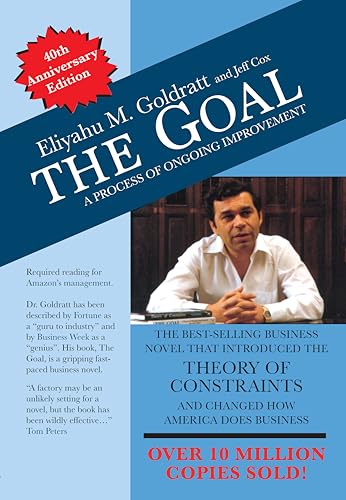
14. The Goal
Eliyahu M. Goldratt and Jeff Cox, 1984
Best for: Operations leaders and anyone improving a processA business novel about a plant manager who has three months to save his factory. Guided by Jonah, a physicist he knew from his student days, he discovers that the whole system's output is limited by its bottleneck, which became the theory of constraints. The story format makes operations thinking surprisingly engaging, and the logic applies well beyond factories, to any process where work queues up.
Key lesson: Improve the bottleneck; improving anything else is often wasted effort.
View on AmazonWhat are the best business books on strategy and growth?
Strategy is where many business readers stop, because the classic texts can be dense. They are still worth the effort. Porter explains why some industries are more profitable than others, Kim and Mauborgne show how to escape head-to-head competition, Moore explains how new products reach the mainstream and Doerr shows how to turn strategy into measurable goals. For a deeper list, see my guide to the best business strategy books. You can also read the short explainers on Porter's five forces and Porter's generic strategies before tackling the original.
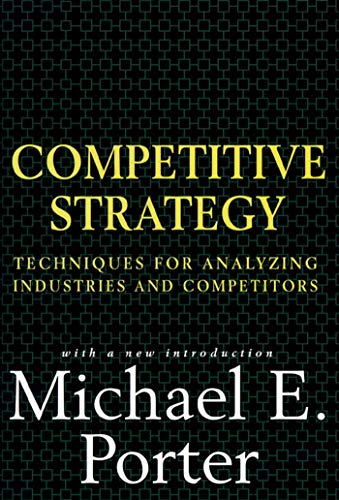
15. Competitive Strategy
Michael E. Porter, 1980
Best for: Strategy students and analysts who want the original sourcePorter's landmark book introduced the five forces framework for analysing industry profitability and the generic strategies of cost leadership, differentiation and focus. It also covers competitor analysis, industry evolution and strategy in fragmented, emerging and mature industries. It is dense and academic in tone, but almost every strategy textbook and professional exam, including ACCA SBL, still builds on its ideas.
Key lesson: Profitability depends heavily on industry structure, so understand the five forces before choosing a strategy.
View on Amazon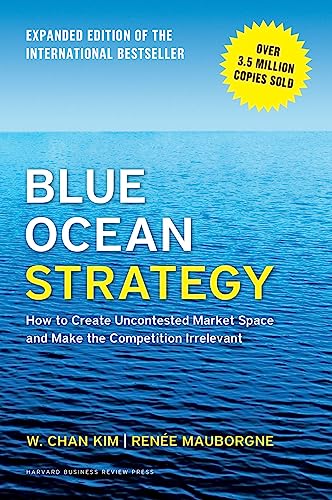
16. Blue Ocean Strategy
W. Chan Kim and Renée Mauborgne, 2005
Best for: Leaders looking for growth beyond head-to-head competitionINSEAD professors Kim and Mauborgne argue that rather than fighting rivals in crowded 'red oceans', firms should create uncontested market space by offering a leap in value at lower cost. Tools include the strategy canvas and the four actions framework (eliminate, reduce, raise, create). Cirque du Soleil is the best-known example. The expanded edition adds guidance on avoiding red ocean traps.
Key lesson: Ask which factors your industry takes for granted that you could eliminate or reduce to create new value.
View on Amazon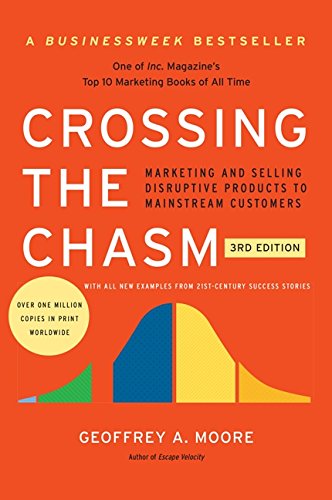
17. Crossing the Chasm
Geoffrey A. Moore, 1991
Best for: Leaders taking a new product from early adopters to the mainstreamMoore explains why many technology products that win early enthusiasts then stall. Visionary early adopters buy for different reasons than the pragmatic early majority, and the gap between them is the chasm. His answer is to target one narrow niche, deliver a complete solution for it and use it as a beachhead to expand. The third edition updates the examples.
Key lesson: Dominate one narrow segment completely before trying to win the whole market.
View on Amazon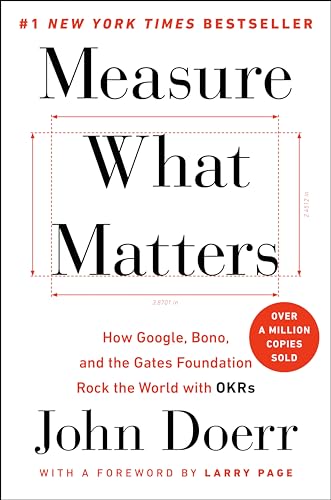
18. Measure What Matters
John Doerr, 2018
Best for: Leaders who need to turn strategy into measurable team goalsDoerr, who brought objectives and key results (OKRs) from Intel to Google, explains how the system works: a small number of ambitious objectives, each with measurable key results, set openly so everyone can see how their work connects. Case studies from Google, Intuit and others show OKRs in use, alongside a later section on continuous performance conversations. It is a practical guide for turning strategy into focused execution.
Key lesson: A few clear, measurable goals, visible to everyone, beat a long list of priorities.
View on AmazonI have also included my own book in this section, with a clear disclosure. It is not a classic and does not pretend to be. What it does offer is a single, compact guide to the models that the books above introduce, together with governance, risk and ethics, which most popular business books leave out.
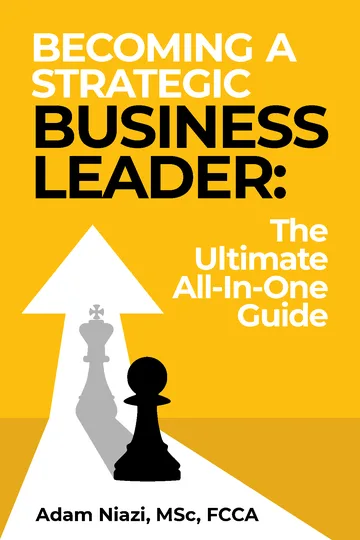
19. Becoming A Strategic Business Leader: The Ultimate All-In-One Guide
Adam Niazi FCCA, 2023
Best for: Professionals and students who want the core business models in one compact referenceA concise all-in-one guide to the strategy, governance and leadership models that sit behind most senior business decisions. It was written as a revision guide for the ACCA Strategic Business Leader exam, so each of its 19 chapters is short and structured: strategic analysis and choice, governance and boards, stakeholders, risk, ethics, IT, online marketing, project management, financial decision-making and managing change. Think of it as a compact business school reference rather than a story. Disclosure: this is my own book.
Key lesson: Good business decisions combine strategic analysis, financial sense and attention to governance and risk.
View on Amazon Read 3 chapters freeWhich business books help you manage an organisation?
Managing a growing organisation brings a new set of problems: meetings, planning, performance and decision-making at scale. These two books, by leaders who ran very large and very successful organisations, are among the most practical ever written on the subject. For more on the people side, see the best leadership books.

20. High Output Management
Andrew S. Grove, 1983
Best for: Managers who want a practical, systems-minded operating manualWritten by Intel's former CEO, this is a manager's operating manual based on a production line mindset. Grove argues that a manager's output is the output of their organisation plus the neighbouring parts they influence, so they should focus on high-leverage activities. He covers one-to-ones, meetings, decision-making, planning, performance reviews and task-relevant maturity (how much supervision someone needs). Decades later it is still one of the most practical books on running a team.
Key lesson: Spend your time on activities with the highest leverage over your team's output.
View on Amazon
21. Principles
Ray Dalio, 2017
Best for: Leaders who want to make decision-making more systematicThe founder of Bridgewater Associates sets out the life and work principles he used to build one of the world's largest hedge funds. The core ideas are radical truthfulness, radical transparency and believability-weighted decision-making, where opinions count more if the person has a strong track record. The book is long and some practices will feel extreme in most workplaces, but the habit of writing down your principles and reviewing mistakes systematically is valuable for any leader.
Key lesson: Turn painful mistakes into written principles, so you make better decisions next time.
View on AmazonWhich business stories teach the most?
Case studies in books are often tidied up to prove a point. Good business journalism and history show the mess: incomplete information, personalities and luck. These three are among the best business stories ever written, and each carries a clear lesson about strategy, governance or judgement.
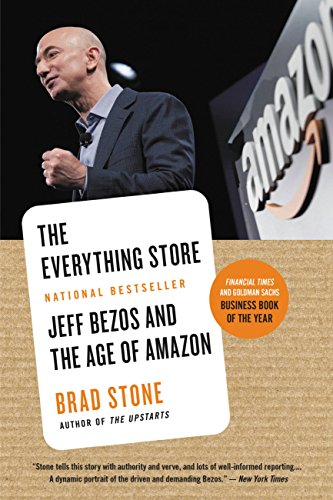
22. The Everything Store
Brad Stone, 2013
Best for: Readers who want a detailed case study of a modern strategyJournalist Brad Stone traces Amazon's rise from online bookseller to retail and cloud giant, and Jeff Bezos's relentless, customer-obsessed and sometimes harsh leadership style. It covers key decisions such as investing for the long term over short-term profit and launching Amazon Web Services. It is a detailed case study in strategy, execution and the trade-offs of an intense culture. Read it alongside Amazon's own shareholder letters for balance.
Key lesson: Long-term thinking and customer obsession can justify years of low profits, if investors trust the plan.
View on Amazon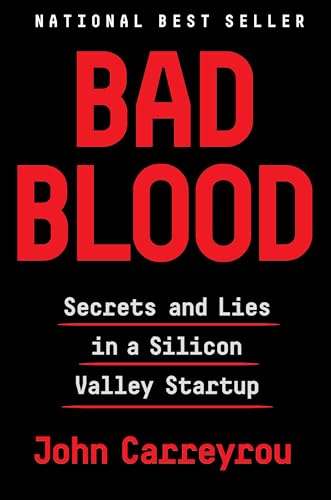
23. Bad Blood
John Carreyrou, 2018
Best for: Anyone interested in governance, ethics and corporate cultureThe Wall Street Journal reporter who exposed Theranos tells how a celebrated start-up raised huge sums on blood-testing technology that did not work as claimed. It reads like a thriller, but it is also a governance lesson: a star board with little relevant expertise, a culture of secrecy and fear, and people who spoke up being silenced. Essential reading on what happens when oversight fails.
Key lesson: Boards and leaders need people with the expertise and courage to challenge, or failures stay hidden.
View on AmazonBad Blood is the book I recommend most often to anyone studying governance. It shows almost every warning sign covered in governance codes: a dominant founder, a board without relevant expertise, weak internal controls and whistleblowers who were ignored. My guide to business ethics covers the principles that were missing.
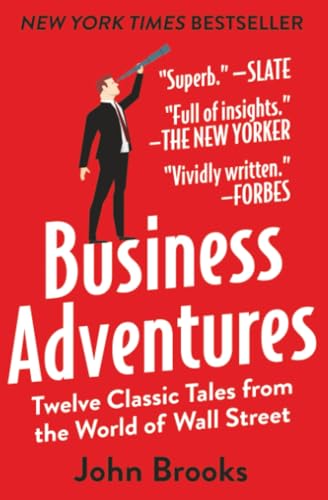
24. Business Adventures
John Brooks, 1969
Best for: Readers who enjoy business history told in depthA collection of twelve long articles from The New Yorker about episodes in American business, including the Ford Edsel failure, a Xerox growth story and a famous insider trading case. Bill Gates has said Warren Buffett lent him a copy. The stories are rich in detail about how real people make decisions under pressure, and they show that the human side of business changes very little across decades.
Key lesson: Business failures are usually human failures of judgement, communication or nerve.
View on AmazonWhich business book should you read first?
It depends on your stage. This table gives a starting point and a follow-up for the most common situations.
| Your stage | Read first | Then read |
|---|---|---|
| Student or graduate | The Personal MBA | Good to Great |
| Starting a business | The E-Myth Revisited | The Lean Startup |
| Launching a tech product | Zero to One | Crossing the Chasm |
| New manager | High Output Management | Influence |
| Moving into strategy or senior roles | Competitive Strategy (or Becoming A Strategic Business Leader for a concise overview) | Blue Ocean Strategy |
| Board member or governance role | Bad Blood | Built to Last |
| Anyone making big decisions | Thinking, Fast and Slow | The Psychology of Money |
How do the classics compare with newer business books?
Older business books often have dated examples, but their core ideas tend to be more carefully tested. Newer books are fresher and more relevant to digital business, but some ideas will not last. A balanced reading list includes both. The table below shows how I think about the trade-off.
| Classics (pre-2000) | Modern (2000 onwards) | |
|---|---|---|
| Examples on this list | Influence, Competitive Strategy, The Goal, Business Adventures, Built to Last | The Lean Startup, Zero to One, Measure What Matters, The Psychology of Money |
| Strengths | Ideas tested over decades, widely taught | Relevant to digital business, readable |
| Weaknesses | Dated examples, denser writing | Ideas less proven, some hype |
| Best use | Building lasting mental models | Applying ideas to today's markets |
For brand new titles and award winners, see my separate list of the best business books of 2026.
How I chose these books
I looked for books that appear repeatedly on business school reading lists and long-running recommendation lists, then asked three questions of each one. Has it lasted, or is it likely to? Does it teach something the other books on the list do not? And would I give it to a colleague without hesitation? I deliberately included a mix of research, practical guides and stories, because each teaches in a different way. The summaries are my own. I have not used ratings or sales figures, which change constantly, and my own book is clearly disclosed.
Bottom line
For a single all-time pick, read Good to Great. Pair it with Thinking, Fast and Slow for decision-making and Influence for persuasion. Founders should start with The E-Myth Revisited and The Lean Startup; aspiring strategists with Competitive Strategy and Blue Ocean Strategy. If you want a compact guide to the strategy, governance and leadership models in one place, you can read the first three chapters of my book free.
FAQs
What is the most recommended business book?
Good to Great by Jim Collins is probably the most widely recommended business book, because it is based on a structured research study and its ideas apply to companies of any size. Thinking, Fast and Slow by Daniel Kahneman and Influence by Robert Cialdini are close behind for decision-making and persuasion.
What business book should a beginner read first?
Start with The Personal MBA by Josh Kaufman. It explains the core ideas of value creation, marketing, sales, finance and systems in short, plain-English entries, giving you a map of business before you go deeper. Follow it with Good to Great or The E-Myth Revisited, depending on whether you work in a large company or run a small one.
Which business books do successful CEOs recommend?
Several books on this list have well-known CEO champions. Bill Gates has said Warren Buffett lent him Business Adventures by John Brooks, and High Output Management by Intel's former CEO Andy Grove is widely recommended among technology leaders. The Innovator's Dilemma is also frequently cited by executives.
Are old business books still relevant?
Yes. Classics like Influence, Competitive Strategy and The Goal explain ideas that have been tested for decades, even if the examples feel dated. Read them for the underlying mental models, and pair them with newer books such as The Lean Startup or Measure What Matters for current practice.
What is the best business book for starting a company?
The E-Myth Revisited by Michael Gerber is best for small business owners who want to build systems rather than doing every job themselves. The Lean Startup by Eric Ries is best for new products where you need to test ideas quickly. Zero to One by Peter Thiel suits ambitious technology founders.
What is the best business book on governance?
Bad Blood by John Carreyrou is the most readable lesson in governance failure, showing what happens when a board lacks expertise and challenge. For the models and principles behind governance, my own book Becoming A Strategic Business Leader has chapters on governance, boards, internal controls and risk. Disclosure: I am the author.