
The best leadership books for women are How Women Rise by Sally Helgesen and Marshall Goldsmith, Dare to Lead by Brené Brown, Playing Big by Tara Mohr, Lean In by Sheryl Sandberg and Radical Candor by Kim Scott. Start with How Women Rise if you are in mid-career, or Playing Big if self-doubt is holding you back.
As an Amazon Associate I earn from qualifying purchases. Links to Amazon on this page are affiliate links. This does not change the price you pay.
This list brings together twelve widely recognised leadership books written by women. Some tackle the specific barriers women face at work, from confidence to promotion and sponsorship. Others are simply among the best leadership books ever written, and happen to be by women. I have grouped them into three themes: confidence and career progression, leading people well, and lessons from women who have led at the very top.
Quick picks: the best leadership books for women
| Book | Author | Best for |
|---|---|---|
| Playing Big | Tara Mohr | Women who want to quieten self-doubt and take on bigger challenges |
| The Confidence Code | Katty Kay and Claire Shipman | Women who want to understand and build confidence at work |
| How Women Rise | Sally Helgesen and Marshall Goldsmith | Women moving into senior or executive roles |
| Lean In | Sheryl Sandberg | Women early to mid career thinking about ambition and progression |
| Dare to Lead | Brené Brown | Women who want to lead with courage and honesty |
| Radical Candor | Kim Scott | Women managers who want to give clear feedback without being labelled harsh |
| The Making of a Manager | Julie Zhuo | Women stepping into their first management role |
| Multipliers | Liz Wiseman | High performers learning to grow their teams |
| The Fearless Organization | Amy C. Edmondson | Leaders who want everyone, not just the loudest voices, to speak up |
| My Life in Full | Indra Nooyi | Readers who want an honest memoir from a woman who led a global company |
| Lead from the Outside | Stacey Abrams | People who feel like outsiders and want to lead anyway |
| Leadership | Doris Kearns Goodwin | Readers who learn best from history and biography |
Why read leadership books written for and by women?
Because the path to leadership is still not equal. The 2025 Women in the Workplace report from Lean In and McKinsey found that for every 100 men promoted to their first manager role, 93 women were promoted, and the gap is much wider for women of colour (60 Black women per 100 men). Only 31% of entry-level women had a sponsor, compared with 45% of men (Lean In). That first step up, often called the "broken rung", shapes careers for decades. Books cannot fix structural problems on their own, but the best ones help women name what is happening, build the habits that help them progress and, when they reach senior roles, change the system for others. Many of these books are just as valuable for men who manage women, or who want to build fairer teams.
Which books help women build confidence and progress their careers?
These four books focus on the inner and outer obstacles to progression: self-doubt, habits that stop serving you, and the unwritten rules of promotion.
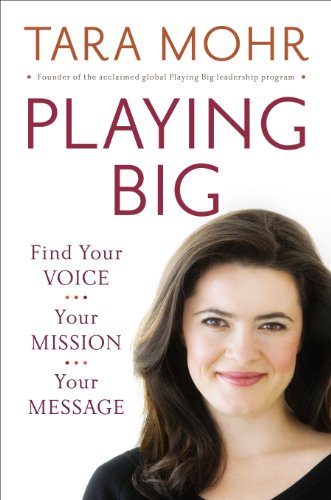
1. Playing Big
Tara Mohr, 2014
Best for: Women who want to quieten self-doubt and take on bigger challengesTara Mohr, a coach who developed a leadership programme for women, focuses on the inner obstacles that stop talented women from going after their biggest ambitions. She offers tools for separating your inner critic from your real voice, unhooking from praise and criticism, and taking small "leaps" that build momentum quickly. The book is gentle and reflective, with exercises throughout. It suits women who already have the skills for bigger roles but notice that self-doubt or playing safe is keeping their ideas small.
Key lesson: Notice the inner critic, then act anyway with a small, fast leap.
View on AmazonMohr's tools are gentle but effective. The idea of separating your inner critic from your own voice is simple enough to use in the moment, for instance before you decide not to put your name forward for a project. Her "leaps" (small, quick actions that stretch you) are a practical way to build momentum.
2. The Confidence Code
Katty Kay and Claire Shipman, 2014
Best for: Women who want to understand and build confidence at workJournalists Katty Kay and Claire Shipman investigate why many highly capable women feel less confident than men, drawing on interviews and research in psychology and genetics. Their main conclusion is that confidence is partly inherited but largely built through action: taking risks, failing and trying again. The book is written in a lively journalistic style and its central message, that confidence turns thoughts into action, is easy to apply. Some of the science has moved on, but the practical point stands.
Key lesson: Confidence grows from action, so act before you feel ready.
View on AmazonThe most useful message here is that confidence follows action rather than coming before it. If you wait to feel ready, you may wait a long time. The book is journalistic rather than academic, so treat the science as background and focus on the practical advice.
3. How Women Rise
Sally Helgesen and Marshall Goldsmith, 2018
Best for: Women moving into senior or executive rolesLeadership coach Sally Helgesen teamed up with executive coach Marshall Goldsmith to identify twelve habits that often help women early in their careers but hold them back later. Examples include expecting others to notice and reward great work, building rather than leveraging relationships, the perfection trap and the disease to please. Each habit is explained with stories and specific ways to change it. It is practical and non-judgemental, and particularly useful for women moving from senior manager to executive roles.
Key lesson: The habits that got you here can hold you back at the next level.
View on AmazonThis is the book I would recommend most strongly to women in mid-career. Habits such as waiting to be noticed, or putting the job before your career, are often rewarded early on and become liabilities later. The book names each habit clearly and suggests specific changes, without blaming the reader.
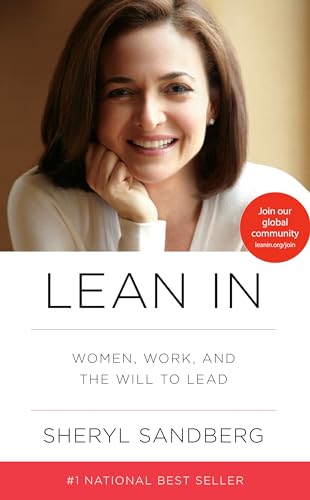
4. Lean In
Sheryl Sandberg, 2013
Best for: Women early to mid career thinking about ambition and progressionSheryl Sandberg, then chief operating officer of Facebook, combines personal stories with research on the barriers holding women back from senior roles, both external (bias, workplace structures) and internal (holding back, not negotiating). Her advice includes sitting at the table, making your partner a real partner and not leaving before you leave. The book sparked wide debate, including criticism that it places too much responsibility on individual women, and it is worth reading with that conversation in mind. It also led to the Lean In circles and research programme.
Key lesson: Do not hold yourself back before anyone else has.
View on AmazonLean In is the most famous book on this list and also the most debated. Critics argue that it puts too much weight on individual women rather than on employers and policy. Read it alongside that debate, and pair it with the Lean In and McKinsey research, which focuses much more on what organisations need to change.
Which books by women are best for leading people?
These five books are among the best leadership books of any kind. They are written by women whose research or experience has shaped how organisations think about courage, feedback, management and teams.

5. Dare to Lead
Brené Brown, 2018
Best for: Women who want to lead with courage and honestyBrown, a research professor known for her work on vulnerability and shame, turns her research into a practical leadership programme. She argues that courage is a set of teachable skills: rumbling with vulnerability, living your values, building trust and learning to rise after setbacks. The book is full of tools such as "clear is kind" and the habit of naming the stories we tell ourselves. It is especially useful for leaders who find difficult conversations uncomfortable and want language that keeps them honest without being harsh.
Key lesson: Clear is kind; unclear is unkind.
View on AmazonBrown's research gives leaders language for the hardest parts of the job: vulnerability, difficult conversations and living your values. "Clear is kind" is one of the most useful phrases a manager can adopt. Many women find her approach especially helpful because it shows that strength and empathy work together.

6. Radical Candor
Kim Scott, 2017
Best for: Women managers who want to give clear feedback without being labelled harshKim Scott, who managed teams at Google and coached leaders at Apple, offers a two-by-two model for feedback: care personally and challenge directly. Doing both is radical candour; challenging without caring is obnoxious aggression, caring without challenging is ruinous empathy, and doing neither is manipulative insincerity. The book then covers how to ask for criticism, give praise, hold one-to-ones and build a culture where feedback flows in every direction. It is one of the most practical books on the everyday conversations that make or break a manager.
Key lesson: Care personally and challenge directly at the same time.
View on AmazonScott writes candidly about how feedback is perceived differently depending on who gives it, and how women can be judged as abrasive for the same directness that is praised in men. Her framework helps any leader be both caring and clear.

7. The Making of a Manager
Julie Zhuo, 2019
Best for: Women stepping into their first management roleJulie Zhuo became a manager at Facebook at 25 and writes the guide she wishes she had been given. She explains that management is about three things: purpose, people and process, and then works through the real situations new managers face, from the first awkward one-to-one to hiring, running meetings, giving feedback and managing former peers. The tone is warm and honest, with simple illustrations. It is the friendliest single book for someone who has just been promoted and is quietly worried they will get it wrong.
Key lesson: A manager's job is to get better outcomes from a group of people working together.
View on AmazonZhuo became a manager at 25 and writes honestly about her early mistakes. For women stepping into a first management role, it is reassuring as well as practical: nobody starts out knowing how to do this.
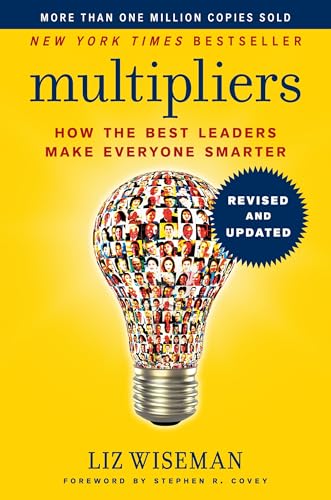
8. Multipliers
Liz Wiseman, 2010
Best for: High performers learning to grow their teamsLiz Wiseman, a former Oracle executive, contrasts two kinds of leaders. Diminishers drain intelligence from their teams by deciding everything, micromanaging and holding the best ideas for themselves. Multipliers draw out more capability than people knew they had, by attracting talent, setting stretching challenges, debating decisions and giving ownership. The revised edition adds the idea of the "accidental diminisher": the well-meaning leader whose helpfulness quietly shrinks the team. It is a sharp mirror for any capable manager who struggles to let go.
Key lesson: The best leaders make everyone around them smarter and more capable.
View on AmazonWiseman's research shows how leaders can either shrink or grow the intelligence of the people around them. It is especially useful for high performers who have been rewarded for doing everything themselves and now need to grow others.
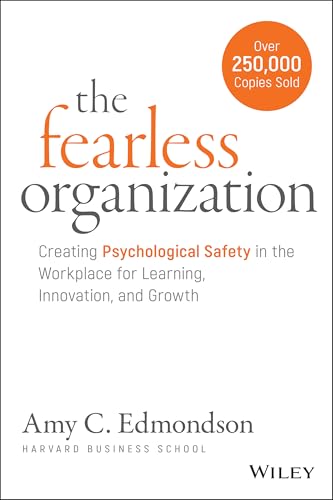
9. The Fearless Organization
Amy C. Edmondson, 2018
Best for: Leaders who want everyone, not just the loudest voices, to speak upAmy Edmondson, the Harvard professor who popularised the term psychological safety, explains why people stay silent at work and what it costs, from missed errors in hospitals to corporate scandals. She defines psychological safety as a shared belief that it is safe to speak up with ideas, questions or mistakes, and stresses that it is not about being nice or lowering standards. The second half gives leaders a practical toolkit: framing the work, inviting participation and responding productively when people do speak up.
Key lesson: High standards and psychological safety work together, not against each other.
View on AmazonEdmondson's work on psychological safety matters for inclusive leadership, because people who feel like outsiders are the most likely to stay silent. Her practical toolkit helps leaders make sure every voice is heard, not just the most confident ones.
Which books tell the stories of women who led at the top?
Stories can teach things that frameworks cannot: what leadership feels like from the inside, and how real people dealt with setbacks, bias and pressure.
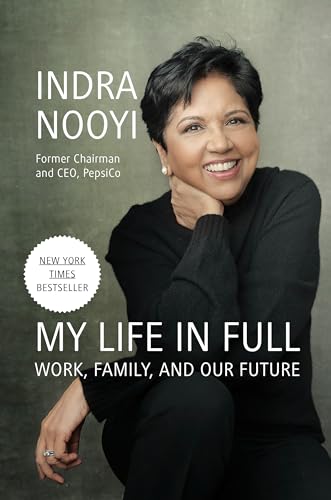
10. My Life in Full
Indra Nooyi, 2021
Best for: Readers who want an honest memoir from a woman who led a global companyIndra Nooyi, the former chairman and chief executive of PepsiCo, tells the story of her journey from Chennai to leading one of the world's largest food and drink companies. Alongside the memoir, she makes a strong argument that work and family structures need to change, including paid leave, flexible work and better care for children and older relatives. For leaders, it offers an honest view of strategy at the top, including PepsiCo's shift to healthier products, and of the personal trade-offs senior women still face.
Key lesson: Leaders must redesign work so that talented people do not have to choose between career and family.
View on AmazonNooyi is unusually candid about the personal costs of a top job and the support she relied on. Her argument that organisations must redesign work around care for children and older relatives is aimed at leaders of every gender, and it is one of the best parts of the book.

11. Lead from the Outside
Stacey Abrams, 2018
Best for: People who feel like outsiders and want to lead anywayStacey Abrams, the former minority leader of the Georgia House of Representatives, writes for people who do not fit the usual picture of a leader, including women, people of colour and those from working-class backgrounds. She covers ambition, fear, money, networking, managing power and handling failure, using her own career as a running example. The advice is candid and practical, and the paperback edition adds reflections on her later campaigns. It is particularly valuable for readers who feel like outsiders in their organisation.
Key lesson: Name your ambition clearly and plan around the barriers you will face.
View on AmazonAbrams writes for people who do not look like the traditional picture of a leader. Her chapters on ambition, money and handling failure are practical and honest, and they speak to anyone who has felt like an outsider in their organisation.
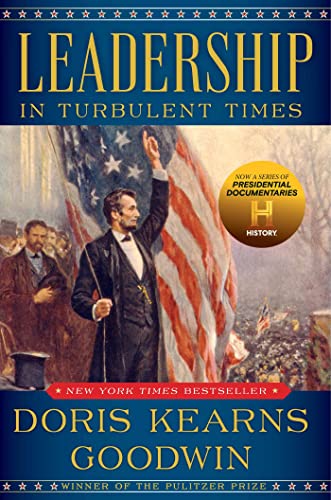
12. Leadership: In Turbulent Times
Doris Kearns Goodwin, 2018
Best for: Readers who learn best from history and biographyPulitzer Prize-winning historian Doris Kearns Goodwin studies four US presidents (Abraham Lincoln, Theodore Roosevelt, Franklin D. Roosevelt and Lyndon B. Johnson) to ask whether leaders are born or made and how they rise to meet a crisis. She traces each man's early setbacks and then looks closely at one defining episode of their leadership. The result is history written with clear leadership lessons on resilience, emotional intelligence and timing. It is a good pick for readers who prefer stories to frameworks.
Key lesson: Leaders are shaped by how they respond to setbacks.
View on AmazonGoodwin's book is about four male presidents, but it is here because it is by one of the most respected historians writing about leadership today, and its lessons on resilience and adversity apply to everyone. It is a good choice if you prefer history to business books.
Which book should you start with?
| If you want to... | Start with | Then read |
|---|---|---|
| Quieten self-doubt and go for bigger roles | Playing Big | The Confidence Code |
| Move from senior manager to executive | How Women Rise | Lead from the Outside |
| Become a confident first-time manager | The Making of a Manager | Radical Candor |
| Lead with courage and honesty | Dare to Lead | The Fearless Organization |
| Understand the wider debate on women at work | Lean In | My Life in Full |
| Learn from history and biography | Leadership: In Turbulent Times | My Life in Full |
What themes run through these books?
- Act before you feel ready. Mohr, Kay and Shipman all argue that confidence grows from action, not the other way round.
- Make your work and ambitions visible. Helgesen and Abrams both warn against waiting to be noticed. Ask for what you want and build relationships with people who can sponsor you.
- Directness and care work together. Brown and Scott show that being clear is not the same as being harsh, which matters when women are often judged more critically for directness.
- Fix the system, not only yourself. Nooyi and the Lean In research both make the case that organisations, not just individuals, need to change how promotion, care and flexibility work.
Which leadership skills matter most as you move up?
The skills that get you promoted are not always the skills that make you successful in the next role. The Center for Creative Leadership names four fundamentals that matter at every career stage: self-awareness, communication, influence and learning agility (CCL). The books on this list map neatly onto them. Playing Big and The Confidence Code build self-awareness. Dare to Lead and Radical Candor build communication. How Women Rise and Lead from the Outside are, at heart, books about influence: building relationships, making your contribution visible and enlisting sponsors. And the memoirs show learning agility in action, as leaders adapt to roles nobody prepared them for.
Range matters too. Daniel Goleman's research with more than 3,000 executives found that the most effective leaders switch between several styles, such as coaching, democratic and visionary, depending on the situation (Harvard Business Review). Women are sometimes pushed towards a narrow, "acceptable" style. Knowing the full range gives you more options and more confidence in choosing between them.
Finally, remember how much your own manager matters. Gallup estimates that managers account for at least 70% of the variance in team engagement (Gallup). If you are a manager, the way you sponsor, stretch and give feedback to the women in your team has a bigger effect on their progress than any book they read.
Should men read leadership books for women?
Yes. Many of the barriers these books describe are created, often unknowingly, by managers and colleagues. A male manager who reads How Women Rise will notice which habits he rewards and which he overlooks. One who reads Radical Candor will think twice before describing a woman's directness as "abrasive". And anyone who manages a team can use The Fearless Organization to make sure quieter voices are heard. Sponsorship gaps close fastest when senior leaders of every gender actively open doors.
How I chose these
Every book on this list is written or co-written by a woman and is widely recognised, either through strong sales, wide use in leadership programmes or the author's standing in her field. I balanced books about women's specific career challenges with general leadership books that are among the best available, and added memoir and history for readers who learn best from stories. I left out titles that repeat the same advice less well. For a broader list without this focus, see my guide to the best leadership books.
Where to go next
If you want to build specific skills, my list of leadership skills books recommends one book per skill, and my best leadership books for managers focuses on the first years in a management role. If you are moving into a role where strategy, governance and risk become part of the job, my own book, Becoming A Strategic Business Leader, is a concise guide to the core strategy, governance and leadership models, originally written for the ACCA Strategic Business Leader exam. It is not a book about women's leadership, which is why it is not on this list, but many readers use it to get up to speed on the frameworks used in senior meetings. You can read the first three chapters free.
Bottom line
For most women in mid-career, How Women Rise is the most practical single book. Pair it with Dare to Lead for leading others and Playing Big if self-doubt is holding you back. If you are new to management, start with The Making of a Manager. And remember that the research is clear: the barriers are as much about systems as about individuals, so the best leaders, of any gender, use what they learn to open doors for others.
FAQs
What is the best leadership book for women?
How Women Rise by Sally Helgesen and Marshall Goldsmith is the most practical single book for women in mid-career, because it names twelve habits that can hold women back and shows how to change them. Dare to Lead by Brené Brown is the best general leadership book by a woman, and Playing Big by Tara Mohr is excellent for overcoming self-doubt.
Is Lean In still worth reading?
Yes, as long as you read it alongside the debate it started. Lean In offers useful advice on ambition, negotiation and partnership at home, but critics argue it places too much responsibility on individual women. Pair it with the annual Women in the Workplace research, which focuses on what organisations need to change.
What is the broken rung?
The broken rung is the gap at the first promotion to manager. The 2025 Women in the Workplace report from Lean In and McKinsey found that for every 100 men promoted to manager, 93 women were promoted, with much larger gaps for women of colour. Because fewer women make that first step, fewer reach senior roles later.
Which leadership book is best for women new to management?
The Making of a Manager by Julie Zhuo is the best choice. Zhuo became a manager at 25 and writes honestly about learning the job, covering one-to-ones, feedback, hiring and managing former peers. Follow it with Radical Candor by Kim Scott, which helps you give clear feedback while showing you care.
Should men read leadership books for women?
Yes. Many barriers women face are created by managers and colleagues without realising it. Books such as How Women Rise and Radical Candor help male managers notice which behaviours they reward and how they judge directness, while The Fearless Organization helps any leader make sure quieter voices are heard in their team.