
The best servant leadership books are Robert Greenleaf's Servant Leadership, the original source, and James Hunter's The Servant, the easiest introduction. For modern practice, read Leaders Eat Last by Simon Sinek, Turn the Ship Around! by David Marquet and Humble Inquiry by Edgar Schein.
As an Amazon Associate I earn from qualifying purchases. Links to Amazon on this page are affiliate links. This does not change the price you pay.
Servant leadership turns the usual picture of leadership upside down: instead of people serving the leader, the leader's first job is to serve the people they lead, helping them grow and do their best work. The idea is more than 50 years old and has a small but excellent set of books behind it. This guide explains what servant leadership is, then recommends 10 books, starting with the original source and moving on to the most practical modern applications.
Quick picks: the best servant leadership books
| Book | Author | Best for |
|---|---|---|
| Servant Leadership | Robert K. Greenleaf | Readers who want the original source of servant leadership |
| The Power of Servant Leadership | Robert K. Greenleaf (edited by Larry C. Spears) | Readers who have read Greenleaf's main essays and want more |
| The Servant | James C. Hunter | First-time readers wanting an accessible introduction |
| Leadership Is an Art | Max De Pree | Senior leaders who want a reflective read on leading with integrity |
| Leaders Eat Last | Simon Sinek | Managers who want to build trust and loyalty in a team |
| Turn the Ship Around! | L. David Marquet | Leaders who want to build a team that thinks for itself |
| Good to Great | Jim Collins | Leaders who want an evidence-based view of what separates good organisations from great ones |
| Humble Inquiry | Edgar H. Schein | Senior leaders who want to listen better across hierarchy |
| Multipliers | Liz Wiseman | Capable leaders who suspect they are holding their team back |
| The Ideal Team Player | Patrick Lencioni | Leaders who hire and develop team members |
What is servant leadership?
The term was coined by Robert K. Greenleaf in his 1970 essay The Servant as Leader, according to the Greenleaf Center for Servant Leadership. Greenleaf spent around 40 years at AT&T, retiring as director of management research in 1964, and said the idea came from reading Hermann Hesse's novel Journey to the East, as Gonzaga University records. In the novel, a humble servant on a journey turns out to be the leader of the order that sponsored it.
Greenleaf's best-known test for a servant leader asks whether the people being served grow as persons: do they become healthier, wiser, freer and more likely to serve others themselves? He also asked what the effect is on the least privileged in society.
Larry Spears, who led the Greenleaf Center for many years, later drew out ten characteristics of the servant leader from Greenleaf's writing:
| Characteristic | What it means in practice |
|---|---|
| Listening | Paying real attention to what others say, and what they do not say |
| Empathy | Trying to understand people and assuming good intentions |
| Healing | Helping people recover from setbacks and conflict |
| Awareness | Understanding yourself and the situation honestly |
| Persuasion | Convincing people rather than relying on positional authority |
| Conceptualisation | Thinking beyond day-to-day issues to the bigger picture |
| Foresight | Learning from the past to anticipate likely outcomes |
| Stewardship | Holding the organisation in trust for the good of others |
| Commitment to the growth of people | Investing in each person's development |
| Building community | Creating a sense of belonging within the organisation |
How does servant leadership compare with other styles?
Servant leadership is often compared with transformational leadership. Both care about people, but they put the emphasis in different places. A transformational leader focuses on inspiring people towards the organisation's goals; a servant leader focuses first on the people, trusting that the organisation will benefit. My guide to transformational leadership explains that model in detail, and types of leadership compares the main styles.
| Servant leadership | Transformational leadership | Transactional leadership | |
|---|---|---|---|
| Main focus | The growth and wellbeing of followers | Inspiring change towards a vision | Exchanging rewards for performance |
| Source of influence | Service, trust and persuasion | Charisma and vision | Position, rewards and sanctions |
| Typical strengths | Trust, loyalty, development | Energy and change | Clarity and efficiency |
| Typical risks | Slow decisions; can be seen as soft | Dependence on the leader | Little innovation or commitment |
For the transactional model, see my guide to transactional leadership.
Is there evidence that servant leadership works?
A major systematic review by Eva, Robin, Sendjaya, van Dierendonck and Liden, published in The Leadership Quarterly in 2019, examined around 20 years of research covering more than 200 studies. It found a growing body of work linking servant leadership to positive outcomes for individuals and teams, while calling for better measurement and more rigorous research designs. In short, the evidence is encouraging but still developing, so treat strong claims with care.
Which servant leadership books are the original sources?
Start with Greenleaf himself. His writing is reflective rather than practical, but it is the source every other book on this list draws on.
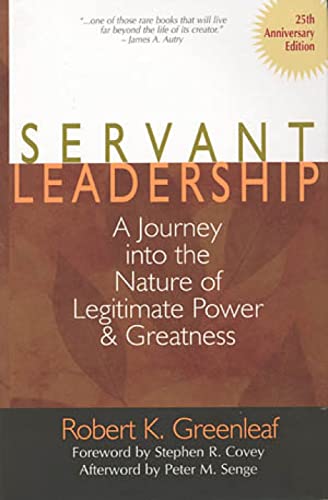
1. Servant Leadership
Robert K. Greenleaf, 1977
Best for: Readers who want the original source of servant leadershipThe founding text of servant leadership collects Greenleaf's essays, beginning with The Servant as Leader, and extends the idea to institutions, trustees, businesses, education and churches. The 25th anniversary edition includes a foreword by Stephen Covey and an afterword by Peter Senge. The prose is reflective rather than practical, so read it slowly, but it remains the essential source for anyone who wants to understand the idea properly.
Key lesson: The test of a leader is whether the people served grow as persons.
View on Amazon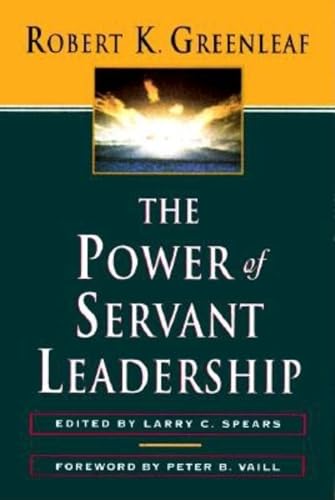
2. The Power of Servant Leadership
Robert K. Greenleaf (edited by Larry C. Spears), 1998
Best for: Readers who have read Greenleaf's main essays and want moreThis collection gathers further Greenleaf essays, edited by Larry Spears, who led the Greenleaf Center for many years. Themes include foresight, spirit, education and how servant leadership can shape organisations and communities. It complements the main Servant Leadership collection and gives a fuller picture of Greenleaf's thinking. Read it once you have finished the main collection and want to see how Greenleaf's ideas developed and how they apply beyond business, in schools, charities and community life.
Key lesson: Foresight, seeing what is likely to happen and acting on it early, is a core duty of the servant leader.
View on AmazonWhich servant leadership books are easiest to start with?
If Greenleaf feels heavy, these two shorter books are gentler introductions. One is a fable, the other a CEO's reflections.
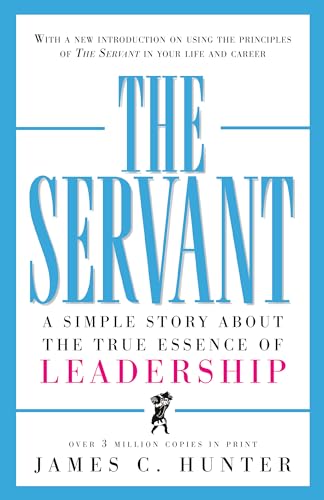
3. The Servant
James C. Hunter, 1998
Best for: First-time readers wanting an accessible introductionA business fable about a stressed manager who goes on a week-long retreat at a monastery, where a former business leader turned monk teaches him what servant leadership means in practice. The book defines leadership as influence built on authority earned through service, rather than power that comes from position. It is simple and easy to read, which makes it a good first book on the topic.
Key lesson: Authority that comes from serving people lasts longer than power that comes from your position.
View on Amazon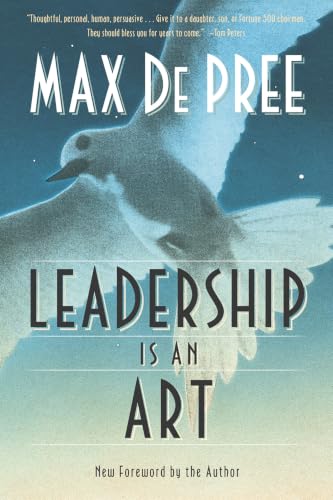
4. Leadership Is an Art
Max De Pree, 1987
Best for: Senior leaders who want a reflective read on leading with integrityDe Pree, former CEO of furniture maker Herman Miller, wrote this short book of reflections on leading people well. He describes the leader as a servant and a debtor who owes the organisation clarity, momentum and a sense of meaning. His line that the first responsibility of a leader is to define reality is often quoted. Gentle, wise and brief.
Key lesson: Leaders owe their people clarity about reality and a sense of meaning in their work.
View on AmazonWhich books show servant leadership working in organisations?
These three books do not always use the term servant leadership, but they show its core ideas, protecting people, giving away control and leading with humility, working in real organisations from submarines to large companies.

5. Leaders Eat Last
Simon Sinek, 2014
Best for: Managers who want to build trust and loyalty in a teamSinek argues that people do their best work when they feel safe inside their team, and that creating that feeling is the leader's job. He draws on stories from the military and business, plus a simple explanation of the brain chemicals linked to trust, stress and reward, to show why short-term cost cutting and leaders who protect themselves first erode loyalty. The writing is accessible and story-led rather than academic, so treat the biology as a helpful metaphor more than a scientific manual.
Key lesson: When people feel protected by their leader, they turn their energy outwards against problems instead of against each other.
View on Amazon
6. Turn the Ship Around!
L. David Marquet, 2012
Best for: Leaders who want to build a team that thinks for itselfMarquet took command of a poorly performing US nuclear submarine and moved it from a culture of following orders to one where crew members stated their intentions and acted. He calls this a leader-leader model, as opposed to leader-follower. The book explains the practical mechanisms he used, such as replacing 'permission to' with 'I intend to', and pairing control with competence and clarity. It is one of the best accounts of giving away authority without losing standards.
Key lesson: Push decision-making down to where the information is, but only as fast as competence and clarity allow.
View on Amazon
7. Good to Great
Jim Collins, 2001
Best for: Leaders who want an evidence-based view of what separates good organisations from great onesCollins and his research team compared companies that moved from average results to sustained outperformance with similar firms that never made the jump. The patterns they found have become part of everyday management language: Level 5 leaders who mix personal humility with fierce resolve, getting the right people on the bus before deciding where to drive it, facing brutal facts without losing faith, and the steady flywheel of effort rather than one dramatic breakthrough. Some of the featured companies later stumbled, which is worth remembering, but the core ideas about disciplined people, thought and action still hold up well.
Key lesson: The best leaders channel ambition into the organisation, not themselves, and build momentum through consistent, disciplined effort.
View on AmazonCollins's Level 5 leader, modest about themselves and determined for the organisation, has much in common with Greenleaf's servant leader. His Harvard Business Review article on Level 5 leadership is a good short summary.
Which books help you practise servant leadership day to day?
Servant leadership lives in daily behaviour: how you listen, how you ask questions and how you develop people. These three books turn the philosophy into habits.
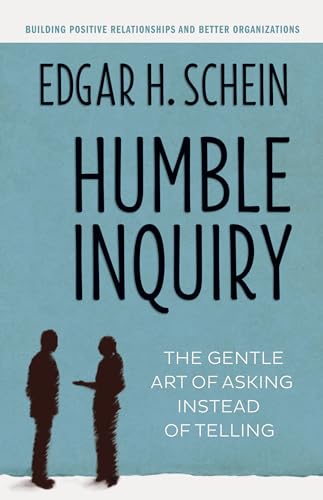
8. Humble Inquiry
Edgar H. Schein, 2013
Best for: Senior leaders who want to listen better across hierarchySchein, one of the founders of organisational culture research, argues that leaders talk too much and ask too little. Humble inquiry means asking questions you genuinely do not know the answer to, out of interest in the other person. He shows how this builds trust across status gaps, which matters for safety and quality in complex organisations. Short and thoughtful.
Key lesson: Asking genuine questions builds the trust people need to tell you the truth.
View on Amazon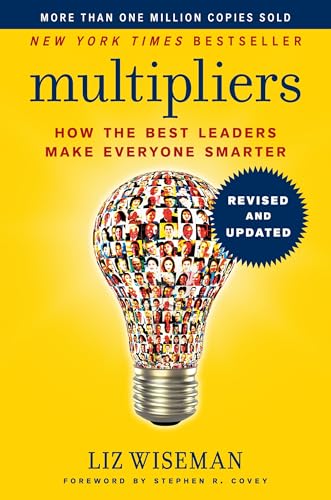
9. Multipliers
Liz Wiseman, 2010
Best for: Capable leaders who suspect they are holding their team backWiseman contrasts two kinds of leader. Diminishers, often very talented people, make themselves the smartest person in the room and drain capability from their teams. Multipliers attract talent, set stretching challenges, debate decisions properly and give ownership away, getting much more out of the same people. The book includes a useful section on 'accidental diminishers', well-meaning leaders whose habits, such as always having the answer or rescuing people too quickly, quietly shut others down.
Key lesson: A leader's job is to draw out other people's intelligence, not to display their own.
View on Amazon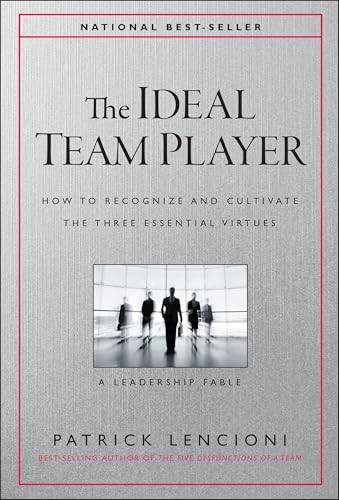
10. The Ideal Team Player
Patrick Lencioni, 2016
Best for: Leaders who hire and develop team membersAnother Lencioni fable, this time about a construction company leader who discovers that great team members share three virtues: humble, hungry and people smart. The book explains what happens when someone has only one or two of them and gives practical ideas for hiring, assessing and developing staff against all three. A quick, useful read for anyone who builds teams.
Key lesson: Look for people who are humble, hungry and people smart, and develop all three in yourself.
View on AmazonIn what order should you read them?
| Order | Book | Why |
|---|---|---|
| 1 | The Servant | The easiest introduction to the core idea |
| 2 | Servant Leadership (Greenleaf) | The original source, read slowly |
| 3 | Leaders Eat Last | Why serving people builds trust and performance |
| 4 | Turn the Ship Around! | How to give control away in practice |
| 5 | Humble Inquiry | The daily habit of asking and listening |
| 6 | Multipliers | Developing the capability of your team |
How I chose these books
I started with Greenleaf's own writing, then chose books that either explain servant leadership directly or show its main ideas, such as listening, humility, giving away control and developing people, applied in real organisations. I left out books that use the label but add little, and I have not included my own book, which covers leadership styles but is not a servant leadership book. All summaries are my own. For a broader list, see the best leadership books or the leadership development books by career stage.
Bottom line
Servant leadership asks one simple question: are the people you lead growing? Start with The Servant for an easy introduction, then read Greenleaf's Servant Leadership for the original thinking. For modern practice, read Leaders Eat Last, Turn the Ship Around! and Humble Inquiry. If you want to see how servant leadership sits alongside other leadership styles, my free guide to leadership styles is a good next step.
FAQs
Who created servant leadership?
Robert K. Greenleaf coined the term in his 1970 essay The Servant as Leader. He had spent around 40 years at AT&T, and said the idea came from reading Hermann Hesse's novel Journey to the East, in which a humble servant turns out to be the true leader of the group.
What is the best book on servant leadership?
Greenleaf's Servant Leadership is the essential original source, though it is reflective and slow to read. For an easier start, The Servant by James C. Hunter explains the core ideas through a short fable. Leaders Eat Last by Simon Sinek is the most popular modern book on the same themes.
What are the ten characteristics of a servant leader?
Larry Spears drew ten characteristics from Greenleaf's writing: listening, empathy, healing, awareness, persuasion, conceptualisation, foresight, stewardship, commitment to the growth of people and building community. They are a useful checklist for reflecting on your own leadership behaviour.
Does servant leadership actually work?
Research is encouraging. A 2019 systematic review in The Leadership Quarterly examined more than 200 studies and found a growing body of evidence linking servant leadership to positive outcomes for individuals and teams, while calling for better measurement and stronger research designs.
What is the difference between servant and transformational leadership?
Both care about people, but transformational leaders focus mainly on inspiring followers towards an organisational vision, while servant leaders focus first on followers' growth and wellbeing, trusting that the organisation will benefit. In practice, many effective leaders combine elements of both.
Is servant leadership too soft for business?
It can look soft, but it is not about avoiding hard decisions. Servant leaders still set standards and hold people accountable; they simply do so in ways that develop people rather than control them. Turn the Ship Around! shows high standards and servant leadership working together in a demanding military setting.
Sources
- Greenleaf Center for Servant Leadership, What is servant leadership?
- Gonzaga University, Robert Greenleaf on servant-leadership
- Larry C. Spears, Character and Servant Leadership: Ten Characteristics of Effective, Caring Leaders, Journal of Virtues and Leadership
- Eva et al., Servant Leadership: A systematic review and call for future research, The Leadership Quarterly (2019)
- Jim Collins, Level 5 Leadership, Harvard Business Review