
The best new leadership books of 2026 are Genius at Scale by Linda Hill and co-authors, Leadership Intelligence by Caroline Webb, Incorruptible by Eric Ries, Manage the Machine by Paula Goldman and Level Up by Nir Halevy. Genius at Scale and Incorruptible were named in the Thinkers50 Best New Management Books for 2026.
As an Amazon Associate I earn from qualifying purchases. Links to Amazon on this page are affiliate links. This does not change the price you pay.
This is my list of the best new leadership books of 2026: titles published in late 2025 or during 2026 that are worth a busy leader's time. It includes picks from the Thinkers50 Best New Management Books for 2026, plus the strongest practical leadership releases of the year so far. Every publication date has been checked against the publisher or a major retailer, and I will update the list as the year closes. If you would rather read proven classics, see my guide to the best leadership books of all time.
Quick picks: the best leadership books of 2026
| Book | Author | Best for |
|---|---|---|
| Genius at Scale | Linda A. Hill, Emily Tedards and Jason Wild | Senior leaders responsible for innovation across a large organisation |
| How to Be Bold | Ranjay Gulati | Leaders who want to take braver decisions at work |
| Hone | Steven Goldbach and Geoff Tuff (illustrated by Tom Fishburne) | Executives who suspect their organisation is drifting from its strategy |
| Incorruptible | Eric Ries | Founders, boards and leaders who care about purpose and governance |
| Our Best Work | Nilofer Merchant | Leaders who want to rethink the unwritten rules in their team |
| Leadership Intelligence | Caroline Webb | Working managers who want science-based fixes for common problems |
| The Radical Promise | Steve Farber, James M. Kouzes and Barry Z. Posner | Leaders who want to build or rebuild trust and credibility |
| Collective Confidence | Andre Martin | Team leaders who want to build belief and trust within the team |
| Level Up | Nir Halevy | Leaders redesigning structures or struggling with a toxic hierarchy |
| Manage the Machine | Paula Goldman | Managers whose teams are starting to use AI tools |
| Profits, Prophets, Coaches, and Kings | Jared Diamond | Readers who enjoy big-picture history and want to think about leadership impact |
What are the big leadership themes of 2026?
Reading this year's releases side by side, four themes stand out.
- Leading alongside AI. Several books ask what work should stay human and how leaders keep people at the centre as AI tools spread. Manage the Machine is the most practical example.
- Purpose that survives growth. Incorruptible and Hone both look at how organisations drift away from their strategy or mission, and what leaders can build into governance and management systems to stop it.
- Redesigning how teams and hierarchies work. Level Up, Our Best Work and Collective Confidence all argue that the structure and unwritten rules of a team matter as much as the talent in it.
- Courage and credibility. How to Be Bold and The Radical Promise focus on the personal side of leadership: acting bravely and doing what you say you will do.
Which 2026 books made the Thinkers50 list?
Thinkers50, which ranks the world's leading management thinkers, announced its Best New Management Books for 2026 on 4 May 2026 (Thinkers50). I have picked the five titles from that list that focus most clearly on leadership. Two other titles from the same list, Epic Disruptions and Uncompete, appear on my best business books of 2026 page.
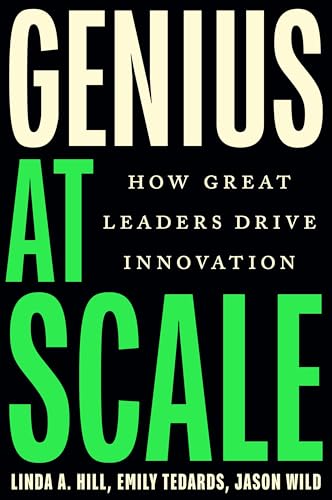
1. Genius at Scale: How Great Leaders Drive Innovation
Linda A. Hill, Emily Tedards and Jason Wild, 2026
Best for: Senior leaders responsible for innovation across a large organisationHarvard Business School professor Linda Hill and her co-authors build on her earlier book Collective Genius to tackle the harder problem: scaling innovation beyond a single team. They argue that innovation has to be led through cocreation with people inside and outside the organisation, and describe three leadership roles that make this work: the architect, who shapes culture and capabilities; the bridger, who builds partnerships; and the catalyst, who mobilises wider ecosystems. Examples come from companies including Mastercard, Pfizer and Procter & Gamble.
Key lesson: Scaling innovation is a leadership job built on cocreation, not a lone genius.
View on AmazonMy verdict: the most substantial leadership book of the year for senior leaders. Hill's earlier work on collective genius was widely respected, and this follow-up tackles the harder question of how innovation spreads across a whole organisation. Read it if you are responsible for innovation beyond a single team. Try this: ask which of the three roles (architect, bridger, catalyst) you play least, and find one project where you could practise it.
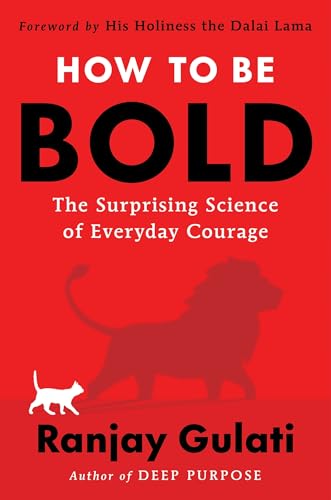
2. How to Be Bold: The Surprising Science of Everyday Courage
Ranjay Gulati, 2025
Best for: Leaders who want to take braver decisions at workHarvard Business School professor Ranjay Gulati argues that boldness is a discipline you can practise rather than a rare personality trait. He sets out a framework of nine "C"s, including commitment, connection and charisma, and illustrates it with stories ranging from ordinary people facing danger to leaders making risky business calls. The practical focus is on acting with courage in everyday work situations: speaking up, making difficult decisions and taking sensible risks. It was named in the Thinkers50 list of best new management books for 2026.
Key lesson: Courage is a skill that grows with deliberate practice.
View on AmazonMy verdict: an accessible, encouraging read. It was published in September 2025, so it qualifies as a recent release rather than a 2026 one, but it was named in the 2026 Thinkers50 list. Best for leaders who know what they should do but hesitate to do it. Try this: pick one conversation you have been postponing and schedule it this week.
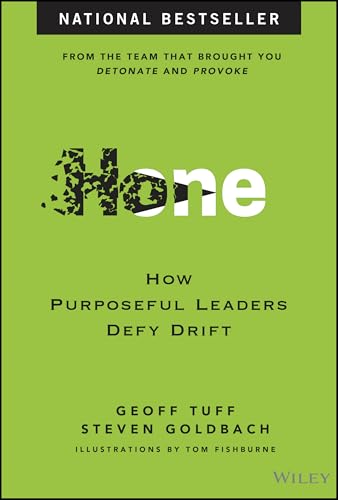
3. Hone: How Purposeful Leaders Defy Drift
Steven Goldbach and Geoff Tuff (illustrated by Tom Fishburne), 2025
Best for: Executives who suspect their organisation is drifting from its strategyThe third book in a trilogy by two Deloitte strategy leaders, Hone argues that organisations slowly drift away from their strategy and that big, costly transformation programmes are the wrong fix. Instead, leaders should continuously refine the management systems (the routines for planning, budgeting, decision-making and talent) that act as the organisation's nervous system, and retire the ones that no longer help. The chief executive becomes the chief designer of these systems. It is practical and very readable, helped by Fishburne's cartoons.
Key lesson: Keep honing your management systems instead of waiting for a big transformation.
View on AmazonMy verdict: a smart, practical book for executives tired of big transformation programmes. The idea of drift will feel familiar to anyone who has watched a clear strategy slowly blur. Published in October 2025 and named in the 2026 Thinkers50 list. Try this: list your team's recurring meetings and reports, and retire one that no longer helps anyone decide anything.
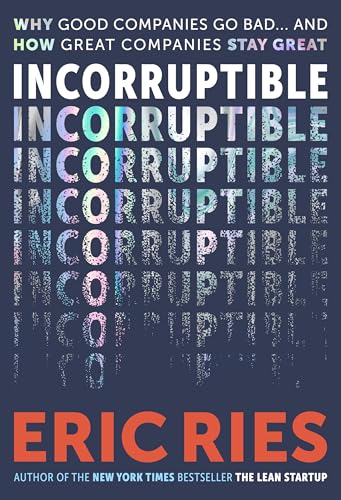
4. Incorruptible: Why Good Companies Go Bad and How Great Companies Stay Great
Eric Ries, 2026
Best for: Founders, boards and leaders who care about purpose and governanceEric Ries, author of The Lean Startup, asks why so many companies lose their way once they succeed. He argues that hidden forces, including investor pressure and the pull of short-term metrics, steadily pull organisations away from the people and principles that made them worthwhile. His answer is to design "mission-locked" companies whose governance protects their purpose as they grow, drawing on examples such as Cadbury, the John Lewis Partnership and Vanguard. It is a governance book as much as a leadership one.
Key lesson: Purpose survives growth only if it is built into the governance structure.
View on AmazonMy verdict: essential reading for founders, boards and anyone interested in corporate governance. Ries brings the same clarity he brought to The Lean Startup to a much bigger question: how to stop success corrupting a company's purpose. Try this: ask what in your organisation's governance would actually protect its mission if a new owner or chief executive wanted to change it.
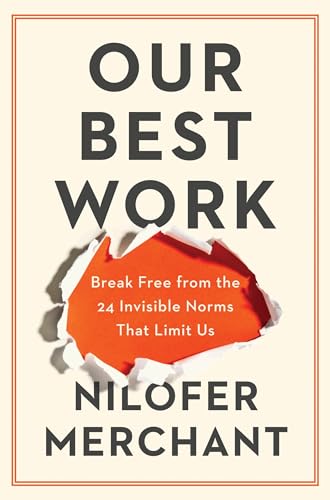
5. Our Best Work: Break Free from the 24 Invisible Norms That Limit Us
Nilofer Merchant, 2026
Best for: Leaders who want to rethink the unwritten rules in their teamNilofer Merchant argues that many everyday workplace habits quietly limit what people can contribute, and traces them to hierarchy, control and outdated assumptions about business. She identifies 24 invisible norms, challenges popular ideas including personal branding and traditional performance reviews, and offers a practice at the end of each chapter that teams can try. Her central claim is that better work comes from changing the rules of work itself, not from individual self-help. It is provocative and practical in equal measure.
Key lesson: Change the norms of work, not just the people doing it.
View on AmazonMy verdict: the most provocative pick on the list. You will not agree with every argument (she challenges some popular ideas, including servant leadership), but the chapter-end practices make it useful for teams who want to change how they work. Try this: ask your team which unwritten rule most gets in the way of their best work.
Which new leadership books are most practical for managers?
These four books are the ones I would hand to a working manager this year. Each gives you tools you can use straight away. For more established titles, see my best leadership books for managers.
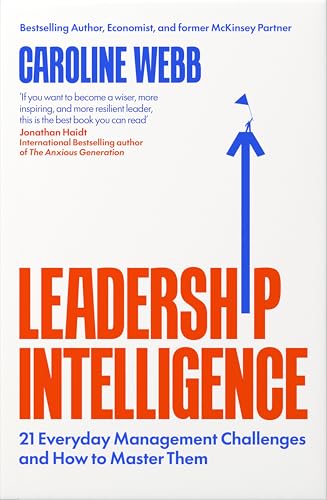
6. Leadership Intelligence
Caroline Webb, 2026
Best for: Working managers who want science-based fixes for common problemsCaroline Webb, an economist and executive coach who previously worked at McKinsey, uses psychology, neuroscience and behavioural economics to tackle 21 everyday management challenges. The tools are grouped under three strengths: wisdom (clearer thinking and better decisions), inspiration (bringing out people's motivation and performance) and resilience (handling pressure and threat). It is designed both as a quick reference to open before a tricky meeting and as a cover-to-cover read, with stories from executives at well-known companies. A strong, practical pick for working managers.
Key lesson: Small, evidence-based changes in how you lead daily can make management feel less like guesswork.
View on AmazonMy verdict: the best practical management book of 2026 so far. Webb's earlier book, How to Have a Good Day, was a strong guide to applying behavioural science at work, and this one applies the same approach to leadership. Published by Macmillan Business on 10 September 2026 in the UK. Try this: before your next difficult meeting, open the relevant chapter and pick one technique to use.
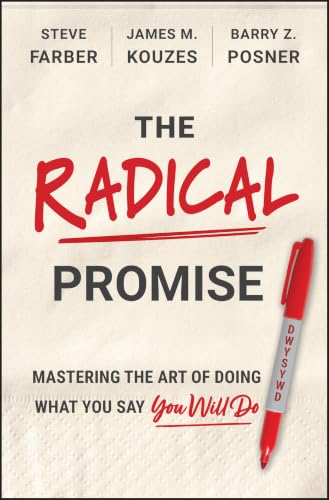
7. The Radical Promise
Steve Farber, James M. Kouzes and Barry Z. Posner, 2026
Best for: Leaders who want to build or rebuild trust and credibilityThe authors of The Leadership Challenge join leadership writer Steve Farber to focus on credibility, the foundation of their research. Through a story-led format, followed by explanation, they show why leaders so often fail to do what they say they will do, and set out steps for keeping promises and repairing trust when you fall short. The message applies to anyone who makes commitments, not only those with formal titles. It is short, accessible and grounded in decades of research.
Key lesson: Credibility comes from doing what you say you will do, consistently.
View on AmazonMy verdict: short, story-led and useful. Kouzes and Posner's research has long shown that credibility is the foundation of leadership; this book turns that finding into a practical guide. Published by Wiley in August 2026. Try this: list the commitments you made last month and check honestly how many you kept.
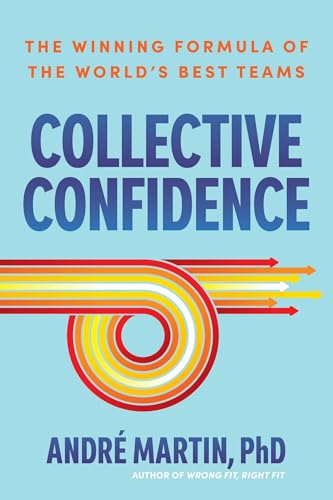
8. Collective Confidence: The Winning Formula of the World's Best Teams
Andre Martin, 2026
Best for: Team leaders who want to build belief and trust within the teamOrganisational psychologist Andre Martin, a former talent leader at major global companies, argues that the thing that separates extraordinary teams is not talent, money or luck but collective confidence: a shared belief in one another. He draws on stories from a submarine crew, an underdog national football team, a design studio and a mine rescue to show how trust, shared purpose and healthy friction build that belief. The book sets out six principles that team leaders can apply.
Key lesson: Teams win when members believe in each other, not just in themselves.
View on AmazonMy verdict: an engaging book for anyone leading a team, with memorable stories and six clear principles. It sits well alongside classics such as The Five Dysfunctions of a Team. Try this: ask each team member to name one thing a colleague does that gives them confidence, and share the answers.
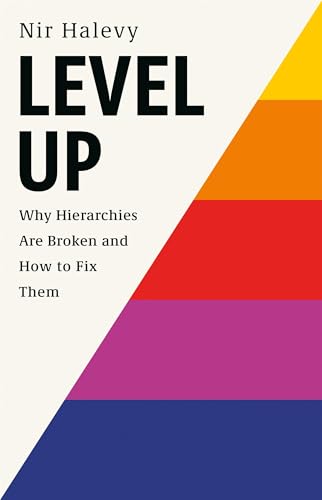
9. Level Up: Why Hierarchies Are Broken and How to Fix Them
Nir Halevy, 2026
Best for: Leaders redesigning structures or struggling with a toxic hierarchyStanford organisational behaviour professor Nir Halevy argues that hierarchy is not the enemy: well-designed hierarchies help people coordinate, learn from mentors and see clear paths to progress. Badly designed ones breed fear, competition and stress. The book gives a framework for diagnosing what is wrong with a hierarchy and practical fixes that people at any level can apply. It is a refreshing counterpoint to the fashion for flat structures, and it connects leadership behaviour to organisational design.
Key lesson: Fix the hierarchy rather than pretending you can abolish it.
View on AmazonMy verdict: a well-argued, research-based case for fixing hierarchy rather than flattening it. Useful for leaders redesigning structures, and a refreshing change from books that treat every layer of management as a problem. Published by Basic Venture on 20 October 2026. Try this: ask whether your team's hierarchy makes progression and decision rights clear, or whether people have to guess.
Which 2026 books look at the bigger picture?
These two books step back from day-to-day management: one to the arrival of AI at work, the other to the oldest question in leadership.
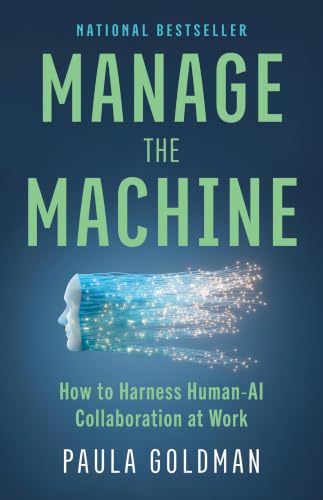
10. Manage the Machine: How to Harness Human-AI Collaboration at Work
Paula Goldman, 2026
Best for: Managers whose teams are starting to use AI toolsPaula Goldman, Salesforce's chief ethical and humane use officer, offers a practical framework for bringing AI into everyday work responsibly. She covers how to decide which tasks AI should take on and which should stay with people (partly by watching how customers react), how to design guardrails that stop both the technology and its users from causing harm, and how to keep people at the centre of the change. Examples include Walmart, SharkNinja and Nike. Timely for any manager whose team is adopting AI tools.
Key lesson: Decide deliberately which work stays human, then build guardrails for the rest.
View on AmazonMy verdict: the most useful book on AI for managers I have read this year, because it focuses on decisions leaders actually face rather than predictions. Published by Basic Venture on 15 September 2026. Try this: list your team's main tasks and mark which ones you would never want customers to see handled by AI alone.
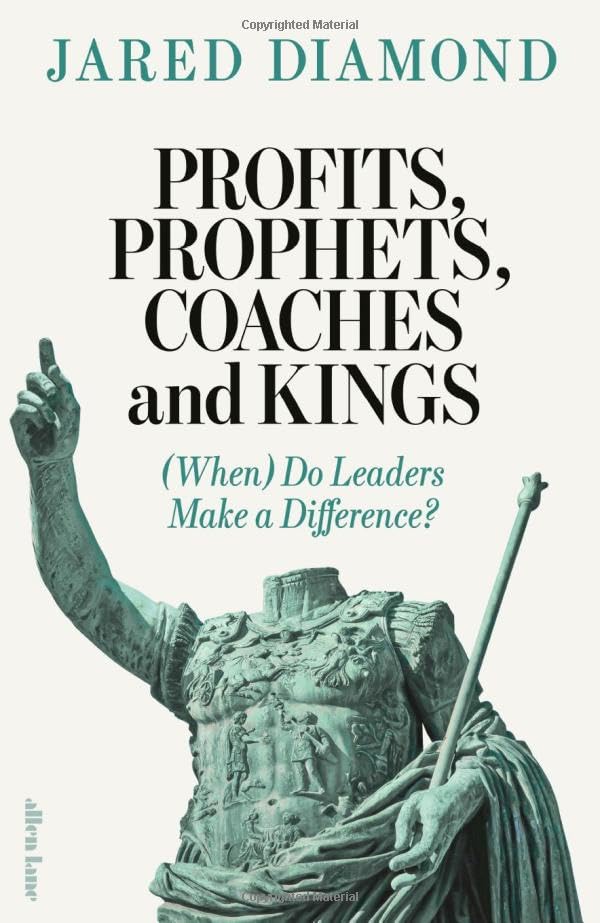
11. Profits, Prophets, Coaches, and Kings: (When) Do Leaders Matter?
Jared Diamond, 2026
Best for: Readers who enjoy big-picture history and want to think about leadership impactThe Pulitzer Prize-winning author of Guns, Germs, and Steel asks one of the oldest questions in leadership: do individual leaders actually change history, or are they carried along by bigger forces? Diamond examines leaders in politics, religion, business and sport, including Seretse Khama, Rachel Carson and basketball coach John Wooden, and concludes that impact depends on the interaction of circumstances, personal talent and the opportunities a leader chooses to seize. It is a big-picture, reflective read rather than a manual.
Key lesson: Leaders matter most when talent meets the right circumstances and the opportunity is seized.
View on AmazonMy verdict: a fascinating, wide-ranging book that will make you think about leadership differently, though it is reflective rather than practical. Published by Penguin in the UK on 1 September 2026.
Which new leadership book should you read first?
| If you are... | Read |
|---|---|
| A working manager wanting practical tools | Leadership Intelligence |
| Rolling out AI in your team | Manage the Machine |
| A senior leader responsible for innovation | Genius at Scale |
| A founder or board member | Incorruptible |
| Leading a team that lacks belief | Collective Confidence |
| Rebuilding trust after a setback | The Radical Promise |
| Redesigning your structure | Level Up or Hone |
| Interested in big ideas and history | Profits, Prophets, Coaches, and Kings |
What makes a new leadership book worth reading?
Hundreds of leadership books are published every year, and most are forgotten within a few months. When I judge a new release, I look for five things.
- A genuinely new idea or evidence. Does it add something, such as new research or a fresh angle, rather than repackaging Covey or Lencioni?
- A credible author. Has the author researched the topic seriously or led at the level they write about?
- Practical tools. Can you do something differently next week because of it?
- Honest about limits. Good books admit where their ideas do not apply. Be wary of any book that claims one secret explains all success.
- Staying power. Will the ideas still make sense in five years, or are they tied to a passing trend?
The books on this page pass most of these tests. Where one is weaker, for example being reflective rather than practical, I have said so in the verdict.
Should you read new leadership books or the classics?
Both, but in proportion. New books are useful for current challenges, especially AI and changing ways of working, and they often update older ideas with better research. But most new books build on a small number of classics. Genius at Scale extends Linda Hill's earlier work; The Radical Promise builds on The Leadership Challenge; Incorruptible draws on long-running debates about governance and stakeholder interests. If you have not read the foundations, such as The Effective Executive, The Five Dysfunctions of a Team or Leading Change, start there. A good balance for most leaders is one new book for every two or three proven ones. My list of leadership and management books is a good place to find the classics.
How do these books connect to strategy and governance?
One thing I noticed this year is how many leadership books are really about strategy and governance. Hone is about strategy drifting away from execution, Incorruptible is about governance protecting purpose, and Level Up is about organisational structure. That reflects something I have long believed: leadership cannot be separated from the strategy, governance and structure it sits within. My own book, Becoming A Strategic Business Leader, is not a 2026 release, so it is not on this list, but it is a concise guide to the core strategy, governance and leadership models, originally written for the ACCA Strategic Business Leader exam. If these new books leave you wanting the underlying frameworks in one place, you can read the first three chapters free. For a broader view, see my list of the best strategic leadership books.
How I chose these
I started from the Thinkers50 Best New Management Books for 2026 and from publisher catalogues and well-regarded round-ups of new releases, such as the Next Big Idea Club's autumn business list (Next Big Idea Club). I kept only books first published between late 2025 and November 2026, checked every date with the publisher or a major retailer, and chose titles with substantial ideas from credible authors rather than quick self-help. I will review the list after the end of the year and again as new titles appear.
Bottom line
If you read one new leadership book this year, make it Leadership Intelligence by Caroline Webb for practical tools, or Genius at Scale if you are a senior leader responsible for innovation. Add Manage the Machine if your team is adopting AI. Then balance the new reading with one or two classics, because the best new books build on old foundations.
FAQs
What is the best leadership book of 2026?
For senior leaders, Genius at Scale by Linda Hill, Emily Tedards and Jason Wild is the most substantial new leadership book of 2026 and was named in the Thinkers50 Best New Management Books list. For working managers, Leadership Intelligence by Caroline Webb is the most practical, covering 21 everyday management challenges using behavioural science.
Which books are on the Thinkers50 Best New Management Books for 2026 list?
The list, announced on 4 May 2026, includes Genius at Scale, How to Be Bold, Epic Disruptions, The Digital Phoenix Effect, Our Best Work, Hone, Uncompete, Incorruptible, How Great Ideas Happen and The Transformation Economy. Some were first published in late 2025, as the list covers recent releases.
What is the best new book on leading with AI?
Manage the Machine by Paula Goldman, published in September 2026, is the most practical new book for managers whose teams are adopting AI. It focuses on deciding which work should stay human, setting guardrails and keeping people at the centre of the change, with examples from companies including Walmart and Nike.
Are new leadership books better than the classics?
Not necessarily. New books are useful for current challenges such as AI and new ways of working, but most build on a small number of classics. A sensible balance is one new book for every two or three proven ones, such as The Effective Executive, The Five Dysfunctions of a Team or Leading Change.
When is this list updated?
I review this list as new titles are published and update it after the end of each year, when the full set of 2026 releases and award results is known. Every book included was first published between late 2025 and 2026, and each date was checked with the publisher or a major retailer.
Sources
- Thinkers50: Best New Management Books for 2026
- Next Big Idea Club: The 10 Best Business Books of Fall 2026
- Pan Macmillan: Leadership Intelligence by Caroline Webb
- Hachette Book Group: Level Up by Nir Halevy
- Penguin: Incorruptible by Eric Ries
- Penguin: Profits, Prophets, Coaches and Kings by Jared Diamond
- NetGalley: Manage the Machine by Paula Goldman