
The best leadership and management books are The Effective Executive (Drucker), High Output Management (Grove), The Making of a Manager (Zhuo), The Five Dysfunctions of a Team (Lencioni), Radical Candor (Scott) and Good Strategy Bad Strategy (Rumelt). Start with Zhuo if you are new to managing, and add Rumelt once you set direction.
As an Amazon Associate I earn from qualifying purchases. Links to Amazon on this page are affiliate links. This does not change the price you pay.
There are thousands of books on leading and managing people, and most of them repeat each other. This list is the twenty I would actually hand to a manager, grouped by the problem each one solves: leading yourself, getting started as a manager, building a team, having honest conversations, motivating people, and setting strategy and leading change. For each book you get who it suits, the one lesson to take away, and my note on how to use it.
Quick picks: the 20 best leadership and management books
| Book | Author | Best for |
|---|---|---|
| The Effective Executive | Peter F. Drucker | Anyone whose days are full but whose results are thin |
| The 7 Habits of Highly Effective People | Stephen R. Covey | Readers who want a principles-based foundation for leading themselves before others |
| The Making of a Manager | Julie Zhuo | First-time managers in their first year |
| High Output Management | Andrew S. Grove | New and mid-level managers who like a systematic, numbers-based approach |
| First, Break All the Rules | Marcus Buckingham and Curt Coffman | Managers who want an evidence-based view of what great managers do differently |
| The First 90 Days | Michael D. Watkins | Anyone starting a new leadership role or promotion |
| The Five Dysfunctions of a Team | Patrick Lencioni | Leaders of teams that are polite but stuck |
| The Fearless Organization | Amy C. Edmondson | Leaders who want people to raise problems and ideas early |
| Leaders Eat Last | Simon Sinek | Leaders who want to build loyalty and a sense of safety in their teams |
| Multipliers | Liz Wiseman | Strong individual performers who now need to grow others |
| Turn the Ship Around! | L. David Marquet | Leaders who want to delegate decisions without losing control |
| Radical Candor | Kim Scott | Managers who avoid tough feedback or deliver it badly |
| Dare to Lead | Brené Brown | Leaders who want to have braver, more honest conversations |
| Extreme Ownership | Jocko Willink and Leif Babin | Leaders who need to build accountability and decisiveness |
| Drive | Daniel H. Pink | Managers designing incentives or trying to re-energise a team |
| Primal Leadership | Daniel Goleman, Richard Boyatzis and Annie McKee | Leaders who want to understand emotional intelligence and the six Goleman styles |
| Good to Great | Jim Collins | Senior leaders thinking about long-term organisational performance |
| Good Strategy Bad Strategy | Richard Rumelt | Leaders who need to turn vague goals into a clear plan |
| Leading Change | John P. Kotter | Anyone leading a restructure, new system or culture change |
| Becoming A Strategic Business Leader | Adam Niazi | Managers and students who want the main strategy and leadership models in one concise book |
What is the difference between leadership books and management books?
Management books are mostly about getting reliable results through systems: planning, organising work, running one-to-ones, measuring performance and solving problems. Leadership books are mostly about direction and people: creating a vision, building trust, motivating people and leading them through change. John Kotter, whose work features below, describes management as coping with complexity and leadership as coping with change. You need both, which is why this list mixes them. If you want the distinction explained properly, see my guide to leadership vs management.
The stakes are high. Gallup's research finds that managers account for at least 70% of the variance in employee engagement between teams, and that companies choose the wrong person for management roles 82% of the time (Gallup). Reading will not fix a bad appointment, but it is the cheapest way to close the gap between being promoted and being good at the job.
Which books help you lead yourself first?
Before you can lead others, you have to manage your own time, attention and character. These two classics are where most leadership reading lists begin, and for good reason.
1. The Effective Executive
Peter F. Drucker, 1967
Best for: Anyone whose days are full but whose results are thinDrucker argues that effectiveness is a set of habits anyone can learn, not a personality trait. He asks knowledge workers to track where their time really goes, decide what contribution they are paid to make, build on strengths (their own and their team's), put first things first, and make a few big decisions well rather than many small ones badly. The book is short and old fashioned in tone, but the core questions still expose why busy managers often achieve little. Reading it is a useful reset whenever your diary has taken over.
Key lesson: Ask "what contribution am I paid to make?" and protect the time to make it.
View on AmazonDrucker's chapter on knowing your time is the most practical place to start: log a week of your diary honestly and you will see the problem he describes. I also like his insistence on contribution rather than effort. Many new managers measure themselves by how busy they are; Drucker makes you ask what the organisation actually needs from you.
2. The 7 Habits of Highly Effective People
Stephen R. Covey, 1989
Best for: Readers who want a principles-based foundation for leading themselves before othersCovey sets out seven habits that move people from dependence to independence and then to interdependence: being proactive, beginning with the end in mind, putting first things first, thinking win-win, seeking first to understand, synergising and renewing yourself. The book is about character and principles before techniques, which is why it still appears on so many leadership reading lists. For managers the most useful parts are the time matrix (important versus urgent) and the discipline of listening properly before trying to be understood.
Key lesson: Seek first to understand, then to be understood.
View on AmazonCovey's book is long, so read habits 1 to 3 (leading yourself) first and come back to 4 to 6 (working with others) once you are managing a team. Thinkers50 named it one of its management classics in 2025 (Thinkers50), which shows how well the ideas have aged.
What are the best management books for getting started?
If you have just been promoted, start here. These books cover the mechanics that nobody teaches you: one-to-ones, hiring, meetings, setting goals and getting through your first months in a new role. For a longer list focused only on this stage, see my best leadership books for managers.

3. The Making of a Manager
Julie Zhuo, 2019
Best for: First-time managers in their first yearJulie Zhuo became a manager at Facebook at 25 and writes the guide she wishes she had been given. She explains that management is about three things: purpose, people and process, and then works through the real situations new managers face, from the first awkward one-to-one to hiring, running meetings, giving feedback and managing former peers. The tone is warm and honest, with simple illustrations. It is the friendliest single book for someone who has just been promoted and is quietly worried they will get it wrong.
Key lesson: A manager's job is to get better outcomes from a group of people working together.
View on AmazonThis is the book I would give someone on their first day as a manager. Zhuo is honest about her own mistakes, and the chapters on managing former peers and running your first one-to-ones are exactly what new managers worry about. It is also the easiest read on this list.

4. High Output Management
Andrew S. Grove, 1983
Best for: New and mid-level managers who like a systematic, numbers-based approachWritten by the former Intel chief executive, this is a manual for treating management as a production process. Grove's central idea is that a manager's output is the output of their team and of the neighbouring teams they influence, so the job is to choose the activities with the highest leverage. He covers one-to-ones, meetings, decision-making, planning, performance reviews and training with an engineer's precision. Some examples are dated, yet the ideas on leverage, indicators and task-relevant maturity remain some of the most practical in the genre.
Key lesson: Your output is your team's output, so spend time where your leverage is highest.
View on AmazonGrove is the opposite of Zhuo in tone: precise, structured and demanding. Read it once you have a few months of management under your belt. His idea of "managerial leverage" (some activities, like a good one-to-one or a clear decision, multiply your team's output) changes how you plan your week.
5. First, Break All the Rules
Marcus Buckingham and Curt Coffman, 1999
Best for: Managers who want an evidence-based view of what great managers do differentlyBased on Gallup interviews with tens of thousands of managers, this book argues that the best managers break conventional wisdom. Instead of trying to fix people's weaknesses, they select for talent, define the right outcomes, focus on strengths and find the right fit for each person. It also introduced the twelve questions Gallup uses to measure a strong workplace. The research base is its biggest strength, and it remains a good antidote to the idea that management is about making everyone the same.
Key lesson: Focus on strengths and define outcomes, not steps.
View on AmazonThis book is useful because it is built on large-scale research rather than one person's experience. Its message, that you should define outcomes, play to people's strengths and stop trying to make everyone the same, is a healthy correction to rigid competency frameworks.
6. The First 90 Days
Michael D. Watkins, 2003
Best for: Anyone starting a new leadership role or promotionWatkins focuses on the most dangerous moment in a leader's career: the transition into a new role. He explains how to accelerate learning, match your strategy to the situation (start-up, turnaround, realignment or sustaining success), secure early wins, negotiate expectations with your boss, build alliances and avoid common traps. The updated edition keeps the same structure. It is practical and checklist friendly, and it is just as useful for an internal promotion as for joining a new organisation.
Key lesson: Diagnose the situation before you act, and agree what success looks like with your boss early.
View on AmazonWatkins is worth reading every time you change role, not just once. His four situations (start-up, turnaround, realignment and sustaining success) are a quick way to work out whether you should be moving fast or listening first.
Which books are best for building strong teams?
Once the basics are in place, the hardest part of management is the team itself: trust, conflict, safety and ownership. These five books tackle that from different angles.

7. The Five Dysfunctions of a Team
Patrick Lencioni, 2002
Best for: Leaders of teams that are polite but stuckTold as a business fable about a new chief executive and her divided leadership team, the book builds a simple pyramid of team problems: absence of trust, fear of conflict, lack of commitment, avoidance of accountability and inattention to results. Each level depends on the one beneath it, so a team that cannot be open with each other will never argue productively or hold each other to account. The story format makes it quick to read, and the model gives teams a shared language for talking about what is going wrong.
Key lesson: Trust comes first: without it, healthy conflict and accountability never happen.
View on AmazonLencioni's pyramid is the most useful team diagnostic I know because everyone understands it after one reading. Try sharing it with your team and asking where you are stuck. It turns an awkward conversation into a shared problem.
8. The Fearless Organization
Amy C. Edmondson, 2018
Best for: Leaders who want people to raise problems and ideas earlyAmy Edmondson, the Harvard professor who popularised the term psychological safety, explains why people stay silent at work and what it costs, from missed errors in hospitals to corporate scandals. She defines psychological safety as a shared belief that it is safe to speak up with ideas, questions or mistakes, and stresses that it is not about being nice or lowering standards. The second half gives leaders a practical toolkit: framing the work, inviting participation and responding productively when people do speak up.
Key lesson: High standards and psychological safety work together, not against each other.
View on AmazonEdmondson's research is the academic foundation for much of what modern leaders say about speaking up. If you only read one chapter, read the leader's toolkit: framing work as a learning problem, asking good questions and thanking people for bad news.
9. Leaders Eat Last
Simon Sinek, 2014
Best for: Leaders who want to build loyalty and a sense of safety in their teamsSinek borrows the military custom of officers eating after their troops to argue that great leaders make people feel safe. He draws on biology (the chemicals linked to stress, trust and reward) and stories from the armed forces and business to explain why teams in a "circle of safety" cooperate and take risks, while teams led by fear turn inward. The science is simplified, but the message is clear and memorable, and it pushes leaders to think about the conditions they create rather than only the targets they set.
Key lesson: People give their best when they feel their leader will protect them.
View on AmazonSinek's book is lighter on evidence than Edmondson's but more inspiring, and it reaches readers who would never pick up an academic book. Pair the two: Sinek for the why, Edmondson for the how.
10. Multipliers
Liz Wiseman, 2010
Best for: Strong individual performers who now need to grow othersLiz Wiseman, a former Oracle executive, contrasts two kinds of leaders. Diminishers drain intelligence from their teams by deciding everything, micromanaging and holding the best ideas for themselves. Multipliers draw out more capability than people knew they had, by attracting talent, setting stretching challenges, debating decisions and giving ownership. The revised edition adds the idea of the "accidental diminisher": the well-meaning leader whose helpfulness quietly shrinks the team. It is a sharp mirror for any capable manager who struggles to let go.
Key lesson: The best leaders make everyone around them smarter and more capable.
View on AmazonMost capable managers are accidental diminishers at some point: jumping in with the answer, rescuing people too quickly or being "always on". Wiseman's self-assessment questions are uncomfortable in a useful way.

11. Turn the Ship Around!
L. David Marquet, 2012
Best for: Leaders who want to delegate decisions without losing controlMarquet took command of a poorly performing US nuclear submarine and, partly by accident, abandoned the usual leader-follower model. Instead of giving orders, he asked officers to state their intentions ("I intend to...") and pushed decision-making to the people with the information. The book tells the story and draws out practical mechanisms around control, competence and clarity. It is one of the best accounts of how to delegate authority safely, and it shows that empowerment needs both skill building and a clear shared purpose.
Key lesson: Move authority to the information, not information to the authority.
View on AmazonMarquet's "I intend to..." language is one of the simplest practical tools in any leadership book. It shifts people from asking permission to stating intent, which builds ownership without losing oversight.
Which books help with feedback and difficult conversations?
Most management problems eventually come down to a conversation that has not happened yet. These three books build the courage and skill to have it. For more books grouped by individual skill, see my list of leadership skills books.

12. Radical Candor
Kim Scott, 2017
Best for: Managers who avoid tough feedback or deliver it badlyKim Scott, who managed teams at Google and coached leaders at Apple, offers a two-by-two model for feedback: care personally and challenge directly. Doing both is radical candour; challenging without caring is obnoxious aggression, caring without challenging is ruinous empathy, and doing neither is manipulative insincerity. The book then covers how to ask for criticism, give praise, hold one-to-ones and build a culture where feedback flows in every direction. It is one of the most practical books on the everyday conversations that make or break a manager.
Key lesson: Care personally and challenge directly at the same time.
View on AmazonThe two-by-two grid on the cover is worth the price on its own. Most kind managers drift into "ruinous empathy": they care too much about the relationship to say what needs saying. Scott shows how to keep the care and add the challenge.

13. Dare to Lead
Brené Brown, 2018
Best for: Leaders who want to have braver, more honest conversationsBrown, a research professor known for her work on vulnerability and shame, turns her research into a practical leadership programme. She argues that courage is a set of teachable skills: rumbling with vulnerability, living your values, building trust and learning to rise after setbacks. The book is full of tools such as "clear is kind" and the habit of naming the stories we tell ourselves. It is especially useful for leaders who find difficult conversations uncomfortable and want language that keeps them honest without being harsh.
Key lesson: Clear is kind; unclear is unkind.
View on AmazonBrown's work complements Scott's. Where Radical Candor gives you the framework, Dare to Lead deals with the fear and discomfort that stop you using it. Her research-based tools are especially good for leaders who want to be honest without being harsh.
14. Extreme Ownership
Jocko Willink and Leif Babin, 2015
Best for: Leaders who need to build accountability and decisivenessTwo former US Navy SEAL officers take lessons from combat in Iraq and apply them to business. Each chapter tells a battlefield story, explains the principle and shows it working in a company. The central idea is that leaders own everything in their world: if the team fails, the leader looks first at what they could have done differently. Other principles include keeping plans simple, prioritising and executing one problem at a time, and decentralised command. It is direct, energetic and best read with an eye to adapting the military tone to your workplace.
Key lesson: There are no bad teams, only bad leaders: own the outcome.
View on AmazonNot everyone will like the tone, but the core principle is powerful: when something goes wrong, look first at your own part in it. That habit, more than any technique, earns a team's respect.
What are the best books on motivation and emotional intelligence?
Leaders spend a surprising amount of effort on incentives and too little on the conditions that make people want to do good work. These two books correct that.

15. Drive
Daniel H. Pink, 2009
Best for: Managers designing incentives or trying to re-energise a teamPink pulls together decades of motivation research to argue that carrots and sticks work for simple, routine tasks but often backfire for creative, complex work. For that kind of work, people are driven by autonomy (control over how they work), mastery (getting better at something that matters) and purpose (serving something larger than themselves). The book is readable and well referenced, and it gives managers a useful lens for designing roles, incentives and recognition that do not crowd out people's own motivation.
Key lesson: For complex work, autonomy, mastery and purpose beat bonuses.
View on AmazonPink's three drivers (autonomy, mastery and purpose) are a useful checklist when you design a role or a project. If people are disengaged, ask which of the three is missing before reaching for a bonus. A practical example: giving a capable analyst ownership of how a monthly report is produced (autonomy), time to learn a new tool (mastery) and a clear link to the decisions it informs (purpose) often does more for their energy than a pay rise, although fair pay still has to be in place first. Pink is clear that money matters when it is unfair; it simply stops motivating once it is fair.
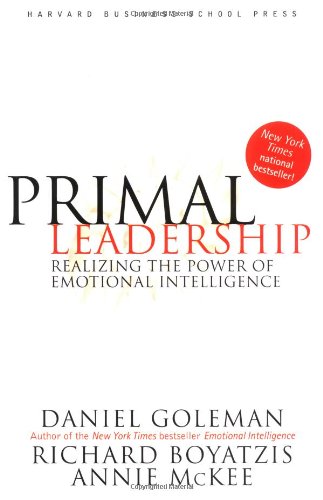
16. Primal Leadership
Daniel Goleman, Richard Boyatzis and Annie McKee, 2002
Best for: Leaders who want to understand emotional intelligence and the six Goleman stylesThis book applies emotional intelligence to leadership. The authors argue that a leader's main task is emotional: setting the mood that spreads through a team and shapes its results. They describe six leadership styles (visionary, coaching, affiliative, democratic, pacesetting and commanding), show when each helps or harms, and explain how leaders can build the self-awareness and self-management needed to switch between them. It remains one of the best-known sources for the idea that effective leaders use several styles rather than one.
Key lesson: A leader's mood is contagious, so managing yourself is the first leadership task.
View on AmazonThis is the book behind Goleman's six leadership styles, which come from research with more than 3,000 executives (Harvard Business Review). The key finding is that the best leaders use several styles in a week, not one. My guide to leadership styles summarises them, and my list of books on leadership styles pairs each style with the best book on it.
What are the best books on strategy and leading change?
The final group connects leadership to the bigger picture: where the organisation is going and how to get it there. This is where many leadership and management lists stop too early, because a manager who cannot think strategically will always be a step behind.

17. Good to Great
Jim Collins, 2001
Best for: Senior leaders thinking about long-term organisational performanceCollins and his research team compared companies that made a lasting leap from average to outstanding results with similar firms that did not. The findings include Level 5 leadership (personal humility combined with fierce resolve), getting the right people on the bus before deciding where to drive it, confronting brutal facts, and the hedgehog concept of focusing on what you can be best at. Some of the featured companies later struggled, which is worth remembering, but the leadership ideas remain widely taught and discussed.
Key lesson: Great leaders combine personal humility with an intense will to make the organisation succeed.
View on AmazonRead Collins for the leadership chapters, especially Level 5 leadership and "first who, then what". Treat the company case studies with care, since several of them did not stay great, which is a useful lesson in itself.
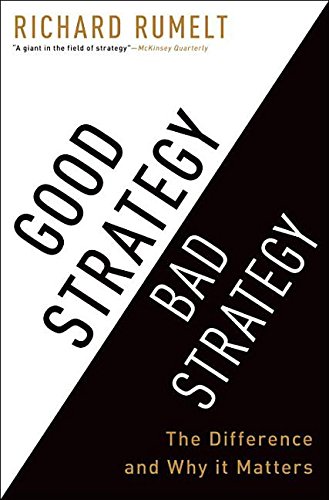
18. Good Strategy Bad Strategy
Richard Rumelt, 2011
Best for: Leaders who need to turn vague goals into a clear planRumelt argues that much of what organisations call strategy is really goals, slogans or wish lists. A good strategy has a kernel of three parts: a diagnosis of the challenge, a guiding policy for dealing with it and a set of coherent actions. Using examples from business and military history, he shows how leaders find leverage and focus resources. For managers, the book is a sharp test of whether your plans are real strategy, and it links leadership directly to the hard choices strategy requires.
Key lesson: A strategy starts with an honest diagnosis of the problem.
View on AmazonRumelt is the best antidote to strategy documents full of slogans. His three-part kernel (diagnosis, guiding policy, coherent actions) is a test you can apply to any plan you are asked to deliver or approve.
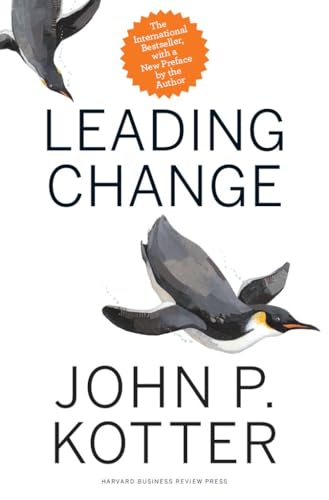
19. Leading Change
John P. Kotter, 1996
Best for: Anyone leading a restructure, new system or culture changeKotter, a Harvard Business School professor, explains why most change efforts fail and sets out his eight-stage process: create urgency, build a guiding coalition, form a vision, communicate it, remove obstacles, generate short-term wins, consolidate gains and anchor the change in culture. The book distinguishes leadership (setting direction, aligning and inspiring people) from management (planning, budgeting and controlling). It is short, clear and still the starting point for most courses and exams on organisational change.
Key lesson: Change fails when leaders skip steps, especially building urgency and a guiding coalition.
View on AmazonKotter's eight steps first appeared in a 1995 Harvard Business Review article on why transformation efforts fail, and the book expands it. It is still the most widely taught change model. For a quick summary, see my guide to Kotter's 8-step change model.
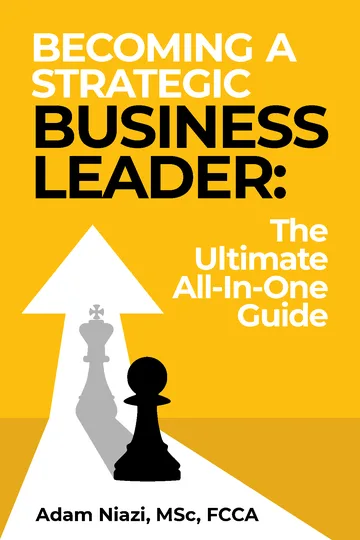
20. Becoming A Strategic Business Leader: The Ultimate All-In-One Guide
Adam Niazi, 2023
Best for: Managers and students who want the main strategy and leadership models in one concise bookA concise guide to the core strategy, governance and leadership models, originally written for the ACCA Strategic Business Leader (SBL) exam and useful for any manager who wants the big frameworks in one place. Its 19 short chapters run from strategic analysis and choice through governance, stakeholders, leadership, risk, ethics, project management and managing change, so you can see how leadership fits into the wider job of running an organisation. It is a revision-style summary rather than a story-led read. Disclosure: this is my own book.
Key lesson: Leadership only works when it is tied to strategy, governance, risk and the way change is managed.
View on Amazon Read 3 chapters freeI have included my own book here, in the strategy group, because that is where it honestly fits. It is not a leadership memoir or a management manual. It is a concise summary of the strategy, governance and leadership models, originally written for the ACCA Strategic Business Leader exam, and it is most useful as a companion to the books above when you want the frameworks side by side.
Which leadership and management book should you read first?
Pick based on the problem in front of you, not the most famous title. This table is a quick way to decide.
| Your situation | Start with | Then read |
|---|---|---|
| Just promoted to manager | The Making of a Manager | High Output Management |
| Starting a new senior role | The First 90 Days | Good Strategy Bad Strategy |
| Team is polite but stuck | The Five Dysfunctions of a Team | The Fearless Organization |
| Avoiding a tough conversation | Radical Candor | Dare to Lead |
| Doing too much yourself | Multipliers | Turn the Ship Around! |
| Team lacks energy | Drive | Leaders Eat Last |
| Leading a big change | Leading Change | Good to Great |
| Want the core models in one place | Becoming A Strategic Business Leader | Primal Leadership |
Which books suit experienced and senior managers?
If you have managed people for years, the beginner books will feel familiar. The titles that tend to stretch experienced leaders are the ones that question habits you have built up. Multipliers is uncomfortable for strong performers who have become the bottleneck in their own teams. The Fearless Organization challenges senior people to notice how their position makes others go quiet, even when they think they are approachable. Good Strategy Bad Strategy is essential once you are writing or approving plans, because it exposes the difference between goals and genuine strategy. Leading Change becomes more valuable the bigger the organisation you lead, since large changes fail for the reasons Kotter describes far more often than for technical ones. And Good to Great is worth reading at senior level for its discussion of humility and will, which is as much about character as technique.
Senior leaders also benefit from reading outside the usual business shelf. History and biography, such as Doris Kearns Goodwin's work on presidential leadership, show how leaders behave under real pressure over long periods. I include those on my broader lists, but for this page I have kept to books that directly cover leading and managing at work.
What do the best leadership and management books agree on?
Read twenty of these books and you notice the same handful of ideas coming back, in different words and from different research. That overlap is reassuring: it suggests these are the principles that really matter.
- Your job is the team's output, not your own. Grove says it directly, Zhuo says it gently and Wiseman shows what happens when leaders forget it. The shift from doing the work to multiplying other people's work is the hardest transition in management.
- Trust and safety come before performance. Lencioni puts trust at the base of his pyramid, Edmondson calls it psychological safety and Sinek calls it the circle of safety. Teams that cannot admit mistakes cannot improve.
- Honest feedback is a form of respect. Scott, Brown and Patterson all argue that avoiding hard conversations is not kindness. It leaves people guessing and lets small problems grow.
- Push decisions to the people with the information. Marquet, Willink and Babin, and Pink all show that control at the top slows organisations down, while clear intent plus local authority speeds them up.
- Direction matters as much as delivery. Rumelt, Collins and Kotter remind leaders that a well-run team heading the wrong way is still failing. Strategy, focus and change are part of the leader's job, not someone else's.
If you remember nothing else from this list, these five ideas will take you a long way.
How do you get the most out of a leadership book?
In my experience, most people finish a leadership book feeling inspired and then change nothing. A simple routine fixes that.
- Choose the book for a current problem. You will read more closely if you are looking for an answer to something real, such as a struggling team member or a new role.
- Take one idea, not ten. Write down the single technique you will try, such as Marquet's "I intend to..." or Scott's habit of asking for criticism first.
- Try it for a month. New habits feel awkward at first. Give it enough time to see whether it works in your context.
- Talk about it with your team. Sharing a model such as the five dysfunctions gives everyone a common language and makes it easier to change together.
- Review and move on. Note what worked, keep it, and choose the next book based on the next problem.
Which books help with management qualifications and exams?
If you are studying for a qualification such as the CMI Level 7 in strategic management and leadership, an MBA or the ACCA Strategic Business Leader exam, some books on this list are more useful than others. Leading Change and Primal Leadership give you models that examiners recognise, such as Kotter's eight steps and Goleman's six styles. Good to Great and Good Strategy Bad Strategy give you well-known examples and arguments to use in essays. The more story-led books, such as Extreme Ownership or Leaders Eat Last, are excellent for your own development but less useful as exam references. For the ACCA exam specifically, see my SBL exam guide, which explains how leadership is tested alongside strategy, governance and risk.
How do these books connect to strategy and governance?
Most leadership books focus on people and teams, which is right, but in practice leadership sits inside a bigger system: the organisation's strategy, its governance, its risks and the way it manages change. When I wrote Becoming A Strategic Business Leader, I wanted one place where those pieces sit together. Chapter 8 covers leadership styles and theories, Chapter 19 covers managing change (including Kotter and Lewin), and Chapters 1 to 5 cover strategic planning, analysis and choice. You can read the first three chapters free here. If you want more books that bridge leadership and strategy, see my list of the best strategic leadership books.
How I chose these
I started from the books that appear most often on reputable reading lists from business schools, Thinkers50 and professional bodies, then kept only those I would actually recommend to a working manager. Each book had to be practical (you can do something differently on Monday), well grounded in research or deep experience, and still relevant today. I balanced classics with newer titles, management with leadership, and different writing styles, from fables to research summaries. I left out books that mostly repeat ideas covered better elsewhere on the list.
Bottom line
If you read only three books from this list, make them The Making of a Manager (the basics), Radical Candor (the conversations) and The Five Dysfunctions of a Team (the team). Add Good Strategy Bad Strategy once you are responsible for direction as well as delivery. The best leaders read with a problem in mind and try one idea at a time, so pick the book that matches the challenge you face this month. For a broader list that includes biographies and newer titles, see my guide to the best leadership books.
FAQs
What is the best book on leadership and management?
There is no single best book, but The Effective Executive by Peter Drucker and High Output Management by Andrew Grove are the two most respected classics that cover both leading and managing. For a first-time manager, The Making of a Manager by Julie Zhuo is the most practical and approachable starting point.
What is the difference between leadership and management?
Management is about getting reliable results through planning, organising, budgeting and controlling. Leadership is about setting direction, aligning people and inspiring them, especially through change. John Kotter's well-known distinction is that management copes with complexity while leadership copes with change. Good managers need both skills, which is why the best books cover each.
Which leadership book should a new manager read first?
Start with The Making of a Manager by Julie Zhuo. It covers the situations new managers worry about most, such as first one-to-ones, giving feedback and managing former peers, in a warm and honest style. Follow it with Radical Candor for feedback and High Output Management for the systems side of the job.
Are old management books like Drucker still worth reading?
Yes. Some examples are dated, but the core questions in classics such as The Effective Executive, about where your time goes and what contribution you are paid to make, are timeless. Thinkers50 still includes older titles such as The 7 Habits of Highly Effective People in its list of management classics.
How many leadership books should I read a year?
Quality matters more than quantity. Reading four to six books a year and applying one idea from each will do more than skimming twenty. A good pattern is to choose each book based on a current challenge, try one technique for a month, then reflect on what changed before moving on.
Is Becoming A Strategic Business Leader a leadership book?
It is a concise guide to the core strategy, governance and leadership models, originally written for the ACCA Strategic Business Leader exam. It covers leadership styles and change management alongside strategy, risk and ethics, so it works best as a companion to the people-focused books on this list. Disclosure: I wrote it.