
The best leadership skills books, by skill, are Crucial Conversations (communication), Radical Candor (feedback), Turn the Ship Around! (delegation), The Coaching Habit (coaching), Decisive (decision-making) and Good Strategy Bad Strategy (strategic thinking). Choose the skill you most need, read that book and practise one technique for a month.
As an Amazon Associate I earn from qualifying purchases. Links to Amazon on this page are affiliate links. This does not change the price you pay.
Most lists of leadership books are organised by popularity. That is not much help if you know exactly which skill you need to improve. This page is organised by skill instead: communication, feedback, delegation, coaching, decision-making, strategic thinking, influence, emotional intelligence, team building, leading change and managing your own time. For each skill I recommend one or two books that teach it best, with a note on how to practise what you read.
Quick picks: the best books for each leadership skill
| Book | Author | Best for |
|---|---|---|
| Crucial Conversations | Kerry Patterson, Joseph Grenny, Ron McMillan and Al Switzler | Communication when stakes and emotions are high |
| Difficult Conversations | Douglas Stone, Bruce Patton and Sheila Heen | Handling conflict and disagreement calmly |
| Radical Candor | Kim Scott | Giving feedback that is both kind and direct |
| Thanks for the Feedback | Douglas Stone and Sheila Heen | Receiving feedback well and modelling it |
| Turn the Ship Around! | L. David Marquet | Delegating authority, not just tasks |
| Multipliers | Liz Wiseman | Developing people instead of doing the work yourself |
| The Coaching Habit | Michael Bungay Stanier | Coaching in everyday conversations |
| Thinking, Fast and Slow | Daniel Kahneman | Understanding bias in decisions |
| Decisive | Chip Heath and Dan Heath | A practical process for better decisions |
| Good Strategy Bad Strategy | Richard Rumelt | Strategic thinking and turning goals into a plan |
| Becoming A Strategic Business Leader | Adam Niazi | Learning the main strategy, governance and leadership models in one place |
| Influence | Robert B. Cialdini | Persuading without formal authority |
| Primal Leadership | Daniel Goleman, Richard Boyatzis and Annie McKee | Emotional intelligence and adapting your style |
| The Five Dysfunctions of a Team | Patrick Lencioni | Building trust and accountability in a team |
| Leading Change | John P. Kotter | Leading people through change |
| The Effective Executive | Peter F. Drucker | Prioritising and managing your own time |
What are the most important leadership skills?
There is no official list, but most frameworks overlap heavily. The Center for Creative Leadership names four core skills that matter at every career stage: self-awareness, communication, influence and learning agility (CCL). Daniel Goleman's research with more than 3,000 executives found that the most effective leaders draw on a range of styles, each rooted in a different part of emotional intelligence (Harvard Business Review). In practice, the skills that come up most often when I talk to managers are the ones in the table below.
| Skill | Why it matters | Best book | Try this first |
|---|---|---|---|
| Communication | Most problems start with a conversation that went badly or never happened | Crucial Conversations | Notice when someone goes silent or defensive, and restore safety before continuing |
| Feedback | People cannot improve what nobody tells them | Radical Candor | Ask your team for criticism before you give any |
| Delegation | You cannot scale if every decision comes back to you | Turn the Ship Around! | Ask people to say "I intend to..." instead of asking permission |
| Coaching | Advice creates dependence; questions build capability | The Coaching Habit | Ask "And what else?" before offering a solution |
| Decision-making | Biases affect clever people and teams too | Decisive | Before deciding, list at least one more option |
| Strategic thinking | Teams need direction, not just delivery | Good Strategy Bad Strategy | Write a one-paragraph diagnosis of your biggest challenge |
| Influence | Much of a leader's work happens without formal authority | Influence | Find genuine common ground before making a request |
| Emotional intelligence | A leader's mood spreads through the team | Primal Leadership | Check your own mood before an important meeting |
| Team building | Teams fail on trust before they fail on skill | The Five Dysfunctions of a Team | Admit one of your own mistakes to the team |
| Leading change | Most change efforts fail for people reasons | Leading Change | Explain why the change is urgent before explaining what it is |
| Self-management | Your time is the scarcest resource you lead | The Effective Executive | Log a week of your time and compare it with your priorities |
Which books improve communication skills?
Communication is the skill that underpins every other one on this page. The two books below come from the same research tradition and work well together: one helps you keep a high-stakes conversation on track, the other helps you understand why it went off track.
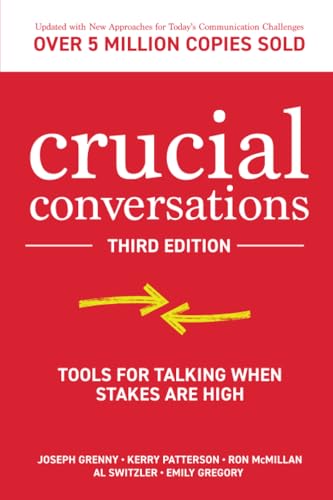
1. Crucial Conversations
Kerry Patterson, Joseph Grenny, Ron McMillan and Al Switzler, 2002
Best for: Communication when stakes and emotions are highA crucial conversation is one where stakes are high, opinions differ and emotions run strong. The authors show how most people either go silent or turn aggressive at these moments, and they set out skills for staying in dialogue: start with what you really want, notice when safety is at risk, separate facts from the stories you tell yourself, and state your path in a way others can hear. The third edition updates the examples. It is one of the most practical communication books for managers.
Key lesson: When people feel unsafe they stop listening, so restore safety before you continue.
View on AmazonThe most useful idea in this book is that when people feel unsafe they either go silent or turn aggressive, and nothing productive happens until safety returns. Practise by noticing those signals in your next tense meeting and pausing to restate your shared purpose. For example, if a colleague goes quiet when you question their budget, you might say: "I am not doubting your judgement; I want us both to be able to defend this number to the board." That one sentence often reopens the conversation, because it shows you are on the same side.

2. Difficult Conversations
Douglas Stone, Bruce Patton and Sheila Heen, 1999
Best for: Handling conflict and disagreement calmlyFrom the Harvard Negotiation Project, this book breaks every hard conversation into three hidden conversations: the "what happened" conversation, the feelings conversation and the identity conversation. Most conflict, the authors argue, comes from arguing about who is right instead of exploring different stories and contributions. The practical advice on shifting from blame to contribution, listening, and starting from a neutral "third story" is excellent for managers handling performance problems or tension between colleagues.
Key lesson: Swap the argument about who is right for curiosity about how each person sees it.
View on AmazonUse this book when you are preparing for a conversation you are dreading. Map out the three conversations (what happened, feelings, identity) on paper beforehand. You will usually discover that the real issue is not the one you planned to raise.
Which books teach you to give and receive feedback?
Feedback is where many good managers fall down, usually because they care too much about the relationship to be clear. Read one book on giving feedback and one on receiving it.

3. Radical Candor
Kim Scott, 2017
Best for: Giving feedback that is both kind and directKim Scott, who managed teams at Google and coached leaders at Apple, offers a two-by-two model for feedback: care personally and challenge directly. Doing both is radical candour; challenging without caring is obnoxious aggression, caring without challenging is ruinous empathy, and doing neither is manipulative insincerity. The book then covers how to ask for criticism, give praise, hold one-to-ones and build a culture where feedback flows in every direction. It is one of the most practical books on the everyday conversations that make or break a manager.
Key lesson: Care personally and challenge directly at the same time.
View on AmazonStart by asking for feedback rather than giving it. Scott suggests having a go-to question such as "What could I do or stop doing that would make it easier to work with me?", then waiting through the awkward silence. Once your team sees you take criticism well, your own feedback lands better.
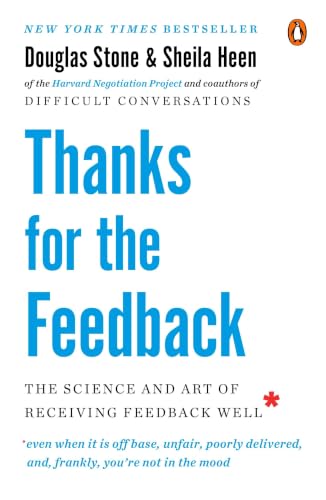
4. Thanks for the Feedback
Douglas Stone and Sheila Heen, 2014
Best for: Receiving feedback well and modelling itMost feedback books teach you how to give it. This one, by two Harvard Negotiation Project lecturers, teaches you how to receive it, which is where most feedback actually fails. The authors explain three triggers that make us reject feedback (truth, relationship and identity triggers) and how to separate appreciation, coaching and evaluation. For managers it has a double benefit: you get better at hearing difficult messages, and you understand why your own feedback sometimes bounces off.
Key lesson: The receiver, not the giver, controls whether feedback leads to change.
View on AmazonThis is the book I recommend to managers who receive feedback badly without realising it. The three triggers are easy to remember, and spotting them in yourself is the first step to responding well.
Which books help you delegate and develop people?
Delegation is not just handing out tasks. It is handing over decisions and helping people grow into them. These two books cover both halves.

5. Turn the Ship Around!
L. David Marquet, 2012
Best for: Delegating authority, not just tasksMarquet took command of a poorly performing US nuclear submarine and, partly by accident, abandoned the usual leader-follower model. Instead of giving orders, he asked officers to state their intentions ("I intend to...") and pushed decision-making to the people with the information. The book tells the story and draws out practical mechanisms around control, competence and clarity. It is one of the best accounts of how to delegate authority safely, and it shows that empowerment needs both skill building and a clear shared purpose.
Key lesson: Move authority to the information, not information to the authority.
View on AmazonMarquet's key point is that you cannot delegate authority to people who lack competence or clarity, so empowerment has to be built step by step. Pick one type of decision this month and move it to your team, with a clear statement of intent and the information they need.
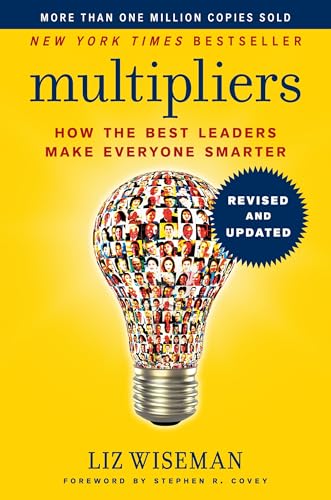
6. Multipliers
Liz Wiseman, 2010
Best for: Developing people instead of doing the work yourselfLiz Wiseman, a former Oracle executive, contrasts two kinds of leaders. Diminishers drain intelligence from their teams by deciding everything, micromanaging and holding the best ideas for themselves. Multipliers draw out more capability than people knew they had, by attracting talent, setting stretching challenges, debating decisions and giving ownership. The revised edition adds the idea of the "accidental diminisher": the well-meaning leader whose helpfulness quietly shrinks the team. It is a sharp mirror for any capable manager who struggles to let go.
Key lesson: The best leaders make everyone around them smarter and more capable.
View on AmazonWiseman's list of "accidental diminisher" behaviours is a brilliant self-check. If you are the ideas person, the rescuer or the pacesetter, your team may be holding back without you noticing.
What is the best book for coaching skills?
Coaching is the skill most managers say they want and least often practise, usually because they think it needs formal sessions. It does not.
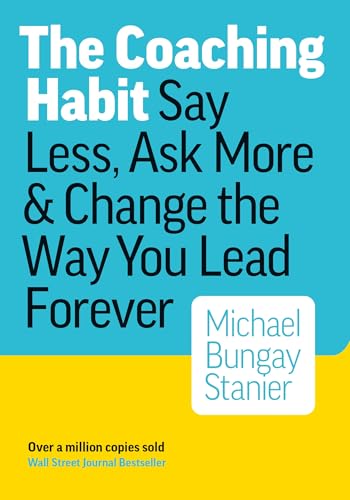
7. The Coaching Habit
Michael Bungay Stanier, 2016
Best for: Coaching in everyday conversationsA short, practical book built around seven questions, starting with "What's on your mind?" and ending with "What was most useful for you?". The author's argument is that managers give too much advice and ask too few questions, which creates dependence and overwhelm. By staying curious a little longer, leaders help people solve their own problems. The book includes simple habit-building advice, so the questions actually get used. It is ideal for busy managers who want to coach without setting aside formal coaching sessions.
Key lesson: Stay curious a little longer and rush to advice a little more slowly.
View on AmazonThe seven questions fit on an index card. Keep them on your desk and use one in every one-to-one for a month. "And what else?" alone will change the quality of your conversations, because the first answer people give is rarely the most important one.
Which books improve decision-making?
Leaders are paid to make decisions under uncertainty. One of these books explains why our judgement goes wrong; the other gives a practical process to correct it.

8. Thinking, Fast and Slow
Daniel Kahneman, 2011
Best for: Understanding bias in decisionsThe Nobel prize-winning psychologist explains two modes of thinking: fast, intuitive System 1 and slow, deliberate System 2. Most of the book shows how System 1 leads us astray through biases such as anchoring, overconfidence, loss aversion and the planning fallacy. It is not a leadership book in the usual sense, but it is one of the most useful books a leader can read about decision-making, because it explains why smart people and smart teams make predictable mistakes, and how processes such as premortems can help.
Key lesson: Intuition is confident but often wrong, so build checks into important decisions.
View on AmazonKahneman's book is long and dense, so read it in chunks. The sections on overconfidence and the planning fallacy are the most directly useful to managers who approve budgets, timelines and forecasts.
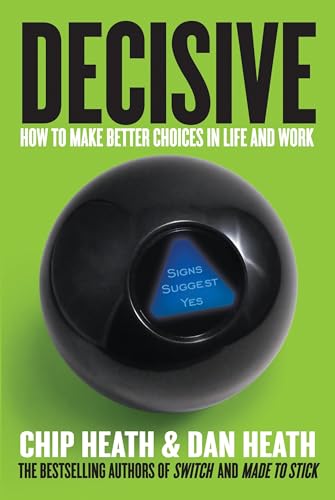
9. Decisive
Chip Heath and Dan Heath, 2013
Best for: A practical process for better decisionsThe Heath brothers identify four villains of decision-making (narrow framing, confirmation bias, short-term emotion and overconfidence) and offer a four-step process to counter them, known as WRAP: widen your options, reality-test your assumptions, attain distance before deciding and prepare to be wrong. Each step comes with practical techniques such as the vanishing options test and setting tripwires. It is more practical than most books on bias and easy to use in a team setting.
Key lesson: Widen your options before you choose between them.
View on AmazonIf you want the practical version, start with Decisive. The WRAP process is simple enough to use in a team meeting, and "what would have to be true for this option to be right?" is one of the best questions a leader can ask.
Which books build strategic thinking skills?
Strategic thinking is the skill that separates leaders who deliver from leaders who set direction. It is also the skill most leadership books skip. For a deeper list on this one skill, see my guide to the best strategic thinking books, and for how it fits with other leadership skills see strategic leadership skills.
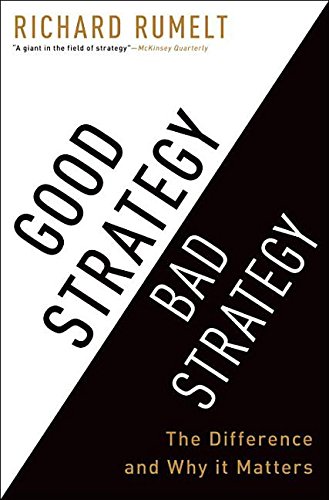
10. Good Strategy Bad Strategy
Richard Rumelt, 2011
Best for: Strategic thinking and turning goals into a planRumelt argues that much of what organisations call strategy is really goals, slogans or wish lists. A good strategy has a kernel of three parts: a diagnosis of the challenge, a guiding policy for dealing with it and a set of coherent actions. Using examples from business and military history, he shows how leaders find leverage and focus resources. For managers, the book is a sharp test of whether your plans are real strategy, and it links leadership directly to the hard choices strategy requires.
Key lesson: A strategy starts with an honest diagnosis of the problem.
View on AmazonPractise Rumelt's kernel on your own area: write down the diagnosis (what is really going on), the guiding policy (your overall approach) and three coherent actions. If you cannot write the diagnosis clearly, you do not yet have a strategy.
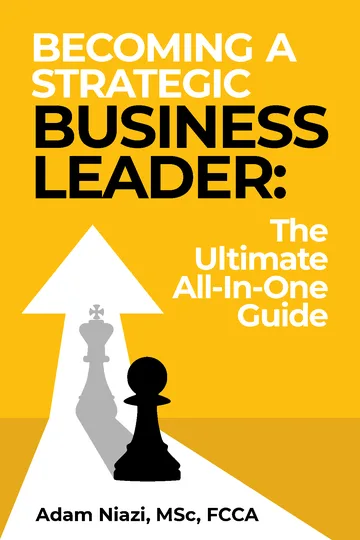
11. Becoming A Strategic Business Leader: The Ultimate All-In-One Guide
Adam Niazi, 2023
Best for: Learning the main strategy, governance and leadership models in one placeA concise guide to the core strategy, governance and leadership models, originally written for the ACCA Strategic Business Leader (SBL) exam and useful for any manager who wants the big frameworks in one place. Its 19 short chapters run from strategic analysis and choice through governance, stakeholders, leadership, risk, ethics, project management and managing change, so you can see how leadership fits into the wider job of running an organisation. It is a revision-style summary rather than a story-led read. Disclosure: this is my own book.
Key lesson: Leadership only works when it is tied to strategy, governance, risk and the way change is managed.
View on Amazon Read 3 chapters freeI include my own book here because strategic thinking depends on knowing the core frameworks, such as PESTEL, Porter's five forces, the Ansoff matrix and stakeholder mapping, and how they connect. It is a concise reference rather than a narrative, and I wrote it originally for ACCA Strategic Business Leader students, so judge it on that basis.
Which book helps you influence and persuade?
Leaders spend much of their time influencing people they do not manage: peers, senior stakeholders, customers and partners.
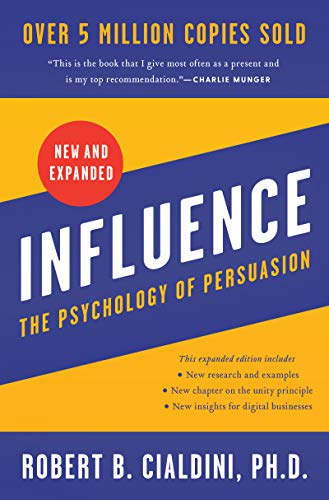
12. Influence
Robert B. Cialdini, 1984
Best for: Persuading without formal authorityCialdini, a psychology professor, studied salespeople, fundraisers and advertisers to identify the principles that make people say yes: reciprocity, commitment and consistency, social proof, liking, authority and scarcity. The new and expanded edition adds unity, the pull of shared identity. For leaders, the book explains why some requests land and others do not, and it helps you persuade ethically while spotting when others are using these levers on you. It is lively, evidence based and widely cited.
Key lesson: People follow those they see as similar, credible and fair to them.
View on AmazonRead Influence with an ethical lens. The principles work whether or not you mean well, so the leadership lesson is to use them honestly (for example, genuine social proof from teams that have already adopted a change) and to recognise when they are being used on you. A common example at work is scarcity: "this offer ends Friday" pushes people to decide before they have thought it through, so leaders should be careful about creating false deadlines.
Which book develops emotional intelligence?
Emotional intelligence is the foundation for adapting your style to different people and situations.
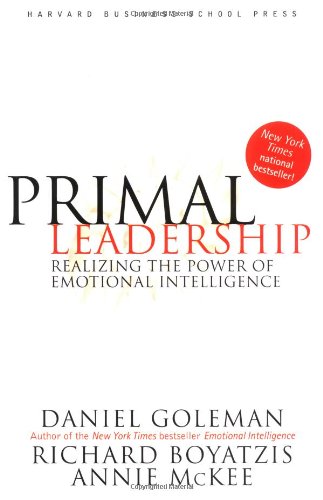
13. Primal Leadership
Daniel Goleman, Richard Boyatzis and Annie McKee, 2002
Best for: Emotional intelligence and adapting your styleThis book applies emotional intelligence to leadership. The authors argue that a leader's main task is emotional: setting the mood that spreads through a team and shapes its results. They describe six leadership styles (visionary, coaching, affiliative, democratic, pacesetting and commanding), show when each helps or harms, and explain how leaders can build the self-awareness and self-management needed to switch between them. It remains one of the best-known sources for the idea that effective leaders use several styles rather than one.
Key lesson: A leader's mood is contagious, so managing yourself is the first leadership task.
View on AmazonPrimal Leadership is the best way to understand Goleman's six styles in depth. A useful exercise is to note which style you used in each meeting for a week. Most of us rely on two or three, and the gaps are where development lies. For more on styles, see my list of books on leadership styles.
Which book helps you build a stronger team?
Team building is less about away days and more about trust, healthy conflict and shared accountability.

14. The Five Dysfunctions of a Team
Patrick Lencioni, 2002
Best for: Building trust and accountability in a teamTold as a business fable about a new chief executive and her divided leadership team, the book builds a simple pyramid of team problems: absence of trust, fear of conflict, lack of commitment, avoidance of accountability and inattention to results. Each level depends on the one beneath it, so a team that cannot be open with each other will never argue productively or hold each other to account. The story format makes it quick to read, and the model gives teams a shared language for talking about what is going wrong.
Key lesson: Trust comes first: without it, healthy conflict and accountability never happen.
View on AmazonThe quickest way to apply Lencioni is to go first. Admit a mistake or a weakness in front of your team. It signals that vulnerability is safe and makes everything above trust on the pyramid easier.
Which book teaches you to lead change?
Change is where leadership skills are tested hardest, because people have something to lose.
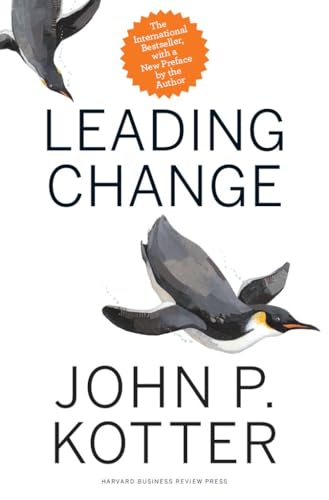
15. Leading Change
John P. Kotter, 1996
Best for: Leading people through changeKotter, a Harvard Business School professor, explains why most change efforts fail and sets out his eight-stage process: create urgency, build a guiding coalition, form a vision, communicate it, remove obstacles, generate short-term wins, consolidate gains and anchor the change in culture. The book distinguishes leadership (setting direction, aligning and inspiring people) from management (planning, budgeting and controlling). It is short, clear and still the starting point for most courses and exams on organisational change.
Key lesson: Change fails when leaders skip steps, especially building urgency and a guiding coalition.
View on AmazonUse Kotter's eight steps as a checklist before your next change project. The steps teams skip most often are creating urgency and building a guiding coalition, and both are cheap to do early and expensive to fix later. My guide to Kotter's 8-step model summarises each step.
Which book helps you manage your time and priorities?
Every other skill depends on having the time and attention to use it.
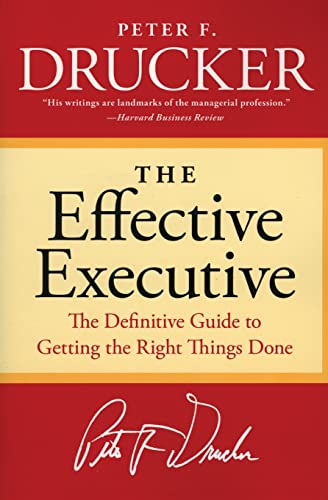
16. The Effective Executive
Peter F. Drucker, 1967
Best for: Prioritising and managing your own timeDrucker argues that effectiveness is a set of habits anyone can learn, not a personality trait. He asks knowledge workers to track where their time really goes, decide what contribution they are paid to make, build on strengths (their own and their team's), put first things first, and make a few big decisions well rather than many small ones badly. The book is short and old fashioned in tone, but the core questions still expose why busy managers often achieve little. Reading it is a useful reset whenever your diary has taken over.
Key lesson: Ask "what contribution am I paid to make?" and protect the time to make it.
View on AmazonDrucker's advice to "know thy time" is the most practical exercise in any leadership book. Record a week honestly, then cut or delegate the activities that do not connect to your main contribution.
Can you really learn leadership skills from books?
Partly. Books give you models, language and examples, but skills only develop through practice and feedback. The best approach is to treat each book as a source of one experiment: read, pick one technique, try it for a few weeks and ask for feedback on how it is going. Books work best alongside real responsibility, a mentor or coach and honest reflection. For a structured approach, see my guide to leadership development books, which covers books on the development process itself.
What order should you build leadership skills in?
Skills build on each other, so the order matters. You cannot delegate well until you can give clear feedback, and you cannot lead change until people trust you. This is the reading order I suggest for most managers.
| Stage | Skills to focus on | Books to read |
|---|---|---|
| First 6 months as a manager | Self-management, feedback, coaching | The Effective Executive, Radical Candor, The Coaching Habit |
| Months 6 to 24 | Communication, delegation, team building | Crucial Conversations, Turn the Ship Around!, The Five Dysfunctions of a Team |
| Experienced manager | Decision-making, emotional intelligence, influence | Decisive, Primal Leadership, Influence |
| Moving into senior leadership | Strategic thinking, leading change | Good Strategy Bad Strategy, Leading Change, Becoming A Strategic Business Leader |
This is a guide, not a rule. If you have inherited a team in conflict in your first month, jump straight to Difficult Conversations and The Five Dysfunctions of a Team.
What is the difference between soft and hard leadership skills?
"Soft" skills are the people skills: communication, feedback, coaching, empathy and influence. "Hard" skills are the more technical ones: planning, budgeting, analysing data, building a strategy and managing projects. The labels are a little misleading, because the soft skills are often the hardest to master and the ones most likely to derail a career. Most of the books on this page focus on people skills, which is where new managers usually struggle. The strategic thinking and decision-making books cover the harder analytical side. Senior leaders need both: a brilliant strategy fails if nobody trusts the leader presenting it, and a much-loved leader fails if the team is working hard in the wrong direction.
A practical example: a finance manager promoted to lead a team of ten may be excellent at the technical work but find that the real job is now holding one-to-ones, resolving disagreements and explaining why priorities have changed. That is when books such as Radical Candor and Crucial Conversations earn their place on the shelf.
Where does my book fit?
Becoming A Strategic Business Leader is a concise guide to the core strategy, governance and leadership models, originally written for the ACCA Strategic Business Leader exam and useful for any manager. It covers the strategic thinking and change skills on this page most directly: Chapters 1 to 5 deal with strategic planning, analysis and choice, Chapter 8 with leadership theories and styles, and Chapter 19 with managing change. It does not replace the people-skills books above; it gives you the strategic frame they sit in. You can read the first three chapters free here.
How I chose these
I picked the skills that come up most often in leadership frameworks and in my own work with managers and students, then chose the books that teach each skill most practically. Every book had to give you something specific to try, be grounded in research or long experience, and be readable by a busy manager. Where two books complement each other, such as one on giving feedback and one on receiving it, I included both.
Bottom line
Do not try to build every skill at once. Pick the one that would make the biggest difference to your team right now, read the book for that skill and practise one technique for a month. If you are unsure where to start, Radical Candor (feedback) and The Coaching Habit (coaching) give the fastest visible improvement for most managers. For a broader list, see my best leadership and management books.
FAQs
What book is best for improving leadership skills?
It depends on the skill. For feedback, read Radical Candor by Kim Scott. For communication, Crucial Conversations. For coaching, The Coaching Habit by Michael Bungay Stanier. For delegation, Turn the Ship Around! by David Marquet. If you want one broad book, The Effective Executive by Peter Drucker covers the habits behind most other leadership skills.
What are the core leadership skills?
Most frameworks include communication, feedback, delegation, coaching, decision-making, strategic thinking, influence, emotional intelligence and leading change. The Center for Creative Leadership highlights four fundamentals for every career stage: self-awareness, communication, influence and learning agility. Strong leaders combine these with the ability to manage their own time and priorities.
Can you learn leadership skills from books?
Books give you models, language and examples, but skills only grow through practice. The most effective approach is to read with a specific challenge in mind, choose one technique, use it for several weeks and ask for feedback. Books work best combined with real responsibility, a mentor or coach and regular reflection.
What is the best book on delegation?
Turn the Ship Around! by L. David Marquet is the best book on delegating authority rather than just tasks. It shows how a submarine captain pushed decisions down to the people with the information. Multipliers by Liz Wiseman is a strong companion, explaining how well-meaning leaders accidentally shrink their team's capability.
What is the best book on decision-making for leaders?
Thinking, Fast and Slow by Daniel Kahneman explains why smart people make predictable mistakes, but it is long. For a practical process, read Decisive by Chip and Dan Heath, which offers a four-step method (WRAP) to widen options, test assumptions, gain distance and prepare to be wrong.
Which leadership skill should I develop first?
Start with the skill that would make the biggest difference to your team now. For most new managers that is feedback or coaching, because both improve every conversation you have. For experienced managers moving into senior roles, strategic thinking and leading change usually become the priority.