
The best business books of 2026 include the six on the FT and Standard Chartered Business Book of the Year shortlist: The Infinity Machine (Mallaby), Off the Scales (Donnellan), 1873 (Ahamed), Project Maven (Manson), Blood Will Flow (Perry) and Prophecy (Véliz). The winner is announced on 2 December 2026.
As an Amazon Associate I earn from qualifying purchases. Links to Amazon on this page are affiliate links. This does not change the price you pay.
This is my guide to the best new business books of 2026: titles first published between late 2025 and 2026 that are worth your reading time. It is built around the most respected prize in the field, the Financial Times and Standard Chartered Business Book of the Year Award, with a few strong picks from the Thinkers50 list of best new management books. Each book has a short verdict on who it suits. I have checked every publication date with the publisher or a major retailer, and I will update the page when the 2026 winner is announced.
Quick picks: the best business books of 2026
| Book | Author | Best for |
|---|---|---|
| The Infinity Machine | Sebastian Mallaby | Anyone who wants to understand the people and business behind modern AI |
| Off the Scales | Aimee Donnellan | Readers interested in healthcare, pharma and fast-growing markets |
| 1873 | Liaquat Ahamed | Readers who want to understand financial crises through history |
| Project Maven | Katrina Manson | Readers interested in AI, government contracting and technology ethics |
| Blood Will Flow | Alex Perry | Readers interested in energy, risk and corporate responsibility |
| Prophecy | Carissa Véliz | Leaders using data and AI to make decisions about people |
| Money to Burn | William D. Cohan | Readers who want to understand private equity and modern Wall Street |
| Streetwise | Lloyd Blankfein | Readers interested in banking, risk and crisis leadership |
| The UPS Man | Marc Levinson | Readers interested in operations, logistics and building a company over decades |
| How Africa Works | Joe Studwell | Readers interested in economic development, policy and emerging markets |
| Incorruptible | Eric Ries | Founders, investors and boards thinking about purpose and governance |
| Epic Disruptions | Scott D. Anthony | Leaders who want to understand disruption through memorable stories |
| Uncompete | Ruchika T. Malhotra | Leaders who want a more collaborative, less burnt-out culture |
What is the FT Business Book of the Year 2026?
The Financial Times Business Book of the Year Award has run since 2005 and is widely seen as the leading prize for business writing. For 2026 it has a new sponsor, Standard Chartered, and is now called the Financial Times and Standard Chartered Business Book of the Year Award. Submissions were open from April to June, the six-book shortlist was announced on 6 October 2026, and the winner will be announced at a ceremony in London on 2 December 2026, alongside the Bracken Prize for Young Authors (Standard Chartered).
The 2026 shortlist leans heavily towards technology and global risk: two books on artificial intelligence, one on prediction and algorithms, one on the obesity drug boom, one on energy and conflict, and one financial history.
| Shortlisted book | Author | Theme |
|---|---|---|
| The Infinity Machine | Sebastian Mallaby | DeepMind and the race for advanced AI |
| Off the Scales | Aimee Donnellan | Ozempic and the obesity drug industry |
| 1873 | Liaquat Ahamed | The first global financial crash |
| Project Maven | Katrina Manson | AI in the US military |
| Blood Will Flow | Alex Perry | Oil, gas and violence in Mozambique |
| Prophecy | Carissa Véliz | Prediction, power and algorithms |
Which books are on the 2026 FT shortlist?
These are the six books in contention for the 2026 prize. I have ordered them by how broadly useful I think they are for a business reader.
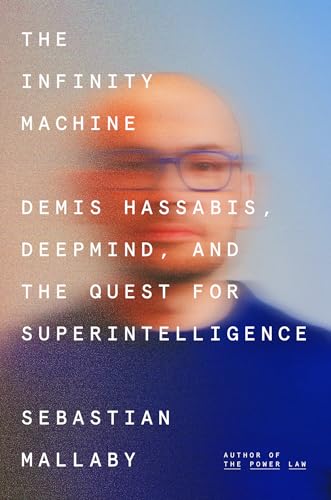
1. The Infinity Machine: Demis Hassabis, DeepMind and the Quest for Superintelligence
Sebastian Mallaby, 2026
Best for: Anyone who wants to understand the people and business behind modern AIFinancial historian Sebastian Mallaby, author of More Money Than God and The Power Law, profiles Demis Hassabis, the co-founder of DeepMind who now leads AI research at Google. Drawing on more than thirty hours of conversation with Hassabis and interviews with colleagues and rivals, he follows the path from chess prodigy and games designer to neuroscientist and AI leader. The book also asks hard questions about the AI race, including whether the people building these systems can still control them. Shortlisted for the 2026 FT and Standard Chartered award.
Key lesson: Long-term scientific ambition and commercial pressure can pull a company in very different directions.
View on AmazonMy verdict: my pick to win, and the one I would recommend to most business readers. Mallaby, whose previous books include The Power Law on venture capital, combines access, research and storytelling better than almost anyone. Published by Penguin Press on 31 March 2026.
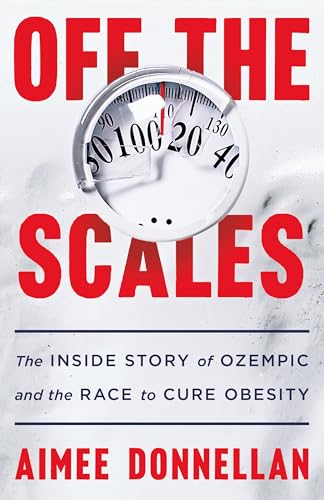
2. Off the Scales: The Inside Story of Ozempic and the Race to Cure Obesity
Aimee Donnellan, 2025
Best for: Readers interested in healthcare, pharma and fast-growing marketsReuters journalist Aimee Donnellan tells the story of GLP-1 drugs such as Ozempic and Wegovy, from the scientific discoveries behind them to the fierce commercial race among the drug makers. She explains how a diabetes treatment became one of the most valuable drug classes in the world, and what that means for health systems, food companies and patients. Reviewers have praised its pace and its treatment of obesity as a medical condition. Shortlisted for the 2026 FT and Standard Chartered award.
Key lesson: One scientific breakthrough can reshape whole industries far beyond its own market.
View on AmazonMy verdict: a fast, well-reported business story with huge consequences, from drug pricing to food companies' product plans. Published by St. Martin's Press in November 2025, so it is a late-2025 release that qualifies for the 2026 award.
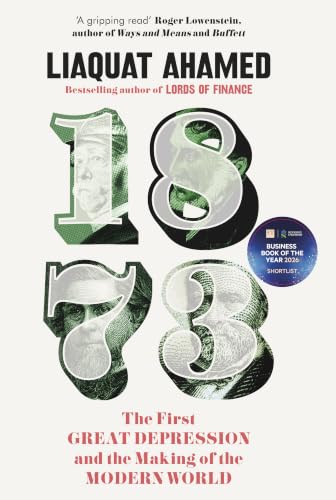
3. 1873: The First Great Depression and the Making of the Modern World
Liaquat Ahamed, 2026
Best for: Readers who want to understand financial crises through historyFrom the Pulitzer Prize-winning author of Lords of Finance, this history tells the story of the first truly global financial crash. It began with the collapse of the Vienna stock market in May 1873, spread to Wall Street and led to defaults and two decades of deflation. Ahamed shows how an international bond boom fuelled speculation in railways and nation-building, and how policy mistakes deepened the damage. Figures include the Rothschilds, Jay Gould, Mark Twain and Karl Marx. Shortlisted for the 2026 FT and Standard Chartered award.
Key lesson: Policy mistakes during a panic can turn a crash into a long depression.
View on AmazonMy verdict: the best book on the list for anyone in finance. Ahamed won the Pulitzer Prize for Lords of Finance, and this is a worthy successor. The parallels between 1870s speculation and later crashes are striking. Published in the UK on 11 June 2026.
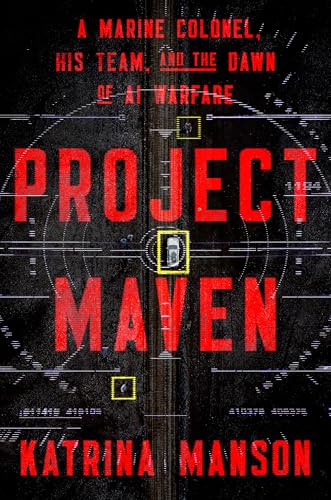
4. Project Maven: A Marine Colonel, His Team, and the Dawn of AI Warfare
Katrina Manson, 2026
Best for: Readers interested in AI, government contracting and technology ethicsKatrina Manson, a journalist who has covered defence technology, tells the story of Project Maven, the 2017 Pentagon effort led by Marine Colonel Drew Cukor to bring artificial intelligence into military operations. Based on more than 200 interviews, it covers the team's push to get AI into combat use, the role of technology companies and the backlash from Google employees. It asks whether military AI will make targeting more accurate or cause mistakes at scale. Shortlisted for the 2026 FT and Standard Chartered award.
Key lesson: Bringing new technology into a huge institution is as much about people and politics as engineering.
View on AmazonMy verdict: essential for anyone working in technology, government or defence, and a gripping study of how a small team changed a giant institution. Published by W. W. Norton on 24 March 2026.
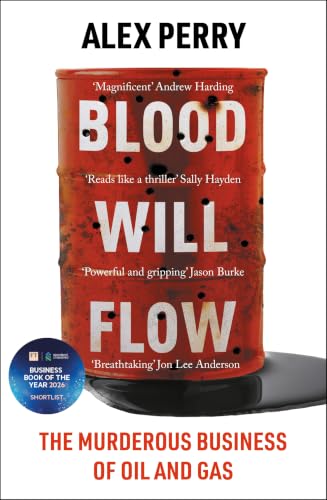
5. Blood Will Flow: The Murderous Business of Oil and Gas
Alex Perry, 2026
Best for: Readers interested in energy, risk and corporate responsibilityJournalist Alex Perry investigates the 2021 attack by Islamist militants on Palma, a small town in northern Mozambique near offshore gas fields that had attracted billions in foreign investment. Construction workers and residents were trapped as the town was overrun. Perry uses the attack to examine the wider business of oil and gas on the energy frontier: who profits, who carries the risk and how security and responsibility are handled. A gripping and troubling piece of reporting, shortlisted for the 2026 FT and Standard Chartered award.
Key lesson: Investment decisions in fragile places carry human risks that balance sheets do not show.
View on AmazonMy verdict: the most harrowing book on the list, and an important one for anyone in energy, infrastructure or risk management. It is a reminder that country risk is about people, not just ratings. Published in the UK in June 2026.
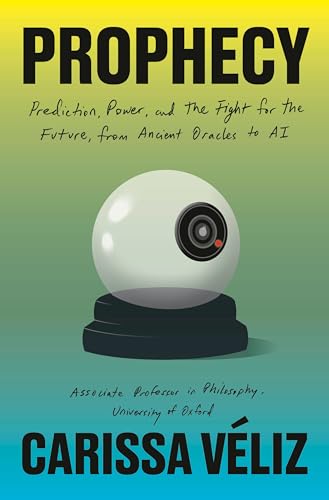
6. Prophecy: Prediction, Power, and the Fight for the Future, from Ancient Oracles to AI
Carissa Véliz, 2026
Best for: Leaders using data and AI to make decisions about peopleCarissa Véliz, an associate professor at Oxford's Institute for Ethics in AI and author of Privacy Is Power, traces the history of prediction from ancient oracles to modern algorithms. Her argument is that forecasts do not simply describe the future: they help shape it, and algorithmic predictions in hiring, healthcare and finance can entrench control while looking objective. She calls for resisting harmful forecasting and making room for uncertainty. Shortlisted for the 2026 FT and Standard Chartered award.
Key lesson: Predictions are not neutral: they can shape the outcomes they claim to forecast.
View on AmazonMy verdict: a thoughtful, readable book for any leader using data and algorithms to make decisions about customers or staff. Published by Doubleday in the US on 21 April 2026 and in the UK in May 2026.
Which longlisted books are worth reading?
The longlist included several excellent books that did not make the final six. These four are the ones I would most recommend to business readers.
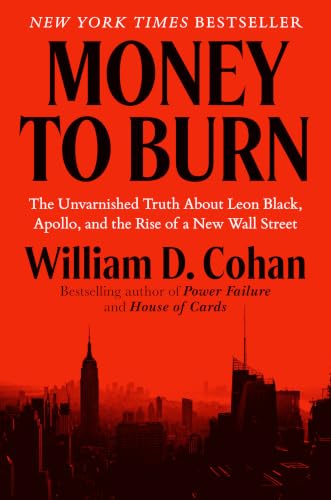
7. Money to Burn: The Unvarnished Truth About Leon Black, Apollo, and the Rise of a New Wall Street
William D. Cohan, 2026
Best for: Readers who want to understand private equity and modern Wall StreetFormer investment banker and Wall Street writer William D. Cohan tells the story of Apollo Global Management and its co-founder Leon Black, a pioneer of private equity and private credit. With access to Black and Apollo insiders, the book covers the dealmaking that built huge fortunes, the growth of private markets into a central force in finance, and the scandal over Black's payments to Jeffrey Epstein that led to his departure as chief executive. Longlisted for the 2026 FT and Standard Chartered award.
Key lesson: Governance failures at the top can undo even the most successful firm's reputation.
View on AmazonMy verdict: the best inside account of how private equity and private credit became so powerful, with serious lessons about governance at the top. Published by Portfolio on 8 September 2026.
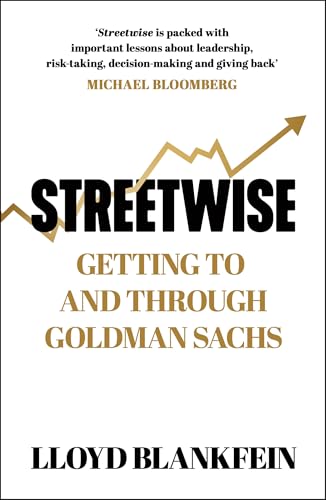
8. Streetwise: Getting To and Through Goldman Sachs
Lloyd Blankfein, 2026
Best for: Readers interested in banking, risk and crisis leadershipLloyd Blankfein, former chief executive of Goldman Sachs, tells his story from a childhood in public housing in Brooklyn, through Harvard Law School, to running one of the world's most powerful banks. The memoir includes his account of the 2008 to 2009 financial crisis and offers lessons on managing competitive teams, handling risk and leading through a crisis. As with any memoir, it is one side of the story, but it gives a rare view from the top of a major bank. Longlisted for the 2026 FT and Standard Chartered award.
Key lesson: In a crisis, the leader's job is to see risk clearly and act before certainty arrives.
View on AmazonMy verdict: a rare first-hand view from the top of Wall Street. Read it as one side of the story, but the passages on risk and crisis decisions are valuable. Published by Hachette in March 2026.
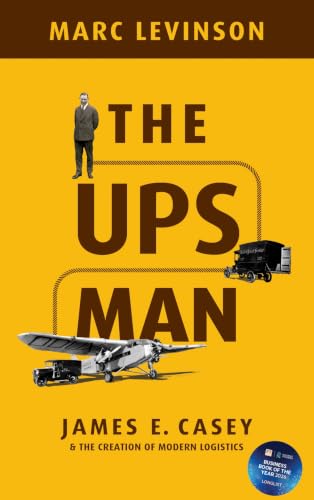
9. The UPS Man: James E. Casey and the Creation of Modern Logistics
Marc Levinson, 2026
Best for: Readers interested in operations, logistics and building a company over decadesMarc Levinson, author of The Box, writes the first full biography of James E. Casey, who started a bicycle messenger service in Seattle in 1907 and turned it into United Parcel Service. Over decades at the company, Casey introduced innovations that let UPS collect from huge numbers of senders and deliver reliably across long distances. Levinson also covers practices that were questionable or illegal, using sources not studied before. A strong read on operations, logistics and long-term leadership. Longlisted for the 2026 FT and Standard Chartered award.
Key lesson: Operational discipline, repeated for decades, can become a lasting competitive advantage.
View on AmazonMy verdict: a fine business biography from the author of The Box, the classic book on the shipping container. Published by New York University Press on 27 October 2026.
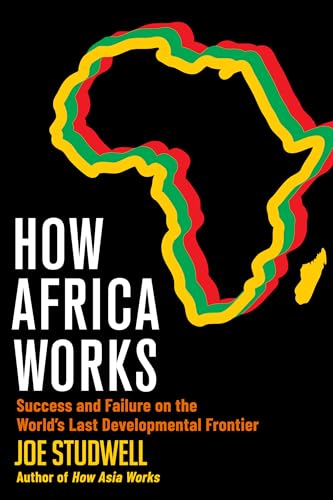
10. How Africa Works: Success and Failure on the World's Last Developmental Frontier
Joe Studwell, 2026
Best for: Readers interested in economic development, policy and emerging marketsJoe Studwell, author of the influential How Asia Works, turns to Africa. He studies four fast-growing economies (Botswana, Mauritius, Ethiopia and Rwanda) and finds that their successes used many of the same policies as East Asia's, often different from what international advisers recommended. He argues that prosperity is achievable and that Africa's growing population can support development if the policy choices are right. A big, data-rich read for anyone interested in economic strategy. Longlisted for the 2026 FT and Standard Chartered award.
Key lesson: Development depends on specific, deliberate policy choices, not general good intentions.
View on AmazonMy verdict: the most important economics book of the year for anyone interested in emerging markets. How Asia Works was hugely influential, and this sequel deserves the same attention. Published by Atlantic Monthly Press on 17 February 2026.
Which other new business books stand out?
Beyond the FT lists, these three titles from the Thinkers50 Best New Management Books for 2026 (Thinkers50) are strong picks for managers and business owners. For new books focused on leadership, see my best leadership books of 2026.
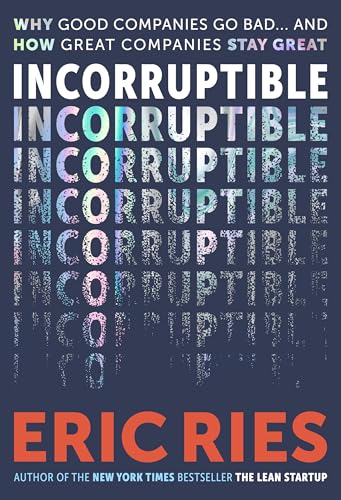
11. Incorruptible: Why Good Companies Go Bad and How Great Companies Stay Great
Eric Ries, 2026
Best for: Founders, investors and boards thinking about purpose and governanceEric Ries, author of The Lean Startup, asks why so many companies lose their way once they succeed. He argues that hidden forces, including investor pressure and the pull of short-term metrics, steadily pull organisations away from the people and principles that made them worthwhile. His answer is to design "mission-locked" companies whose governance protects their purpose as they grow, drawing on examples such as Cadbury, the John Lewis Partnership and Vanguard. It is a governance book as much as a leadership one.
Key lesson: Purpose survives growth only if it is built into the governance structure.
View on AmazonMy verdict: the most important governance book of the year. Anyone who sits on a board, invests in companies or founds one should read it. UK paperback published by Penguin in May 2026.
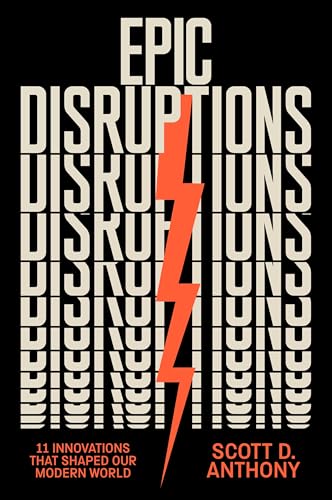
12. Epic Disruptions: 11 Innovations That Shaped Our Modern World
Scott D. Anthony, 2025
Best for: Leaders who want to understand disruption through memorable storiesInnovation expert Scott D. Anthony, who worked closely with Clayton Christensen, tells the stories of eleven disruptive innovations, from ninth-century China to the iPhone, the transistor, disposable nappies and Julia Child's cookbook. Each story shows how disruption actually unfolds, who spotted the opportunity and why incumbents missed it. The book is framed around today's questions about artificial intelligence and the next wave of change. Named in the Thinkers50 list of best new management books for 2026.
Key lesson: Disruption is usually visible early, but incumbents explain it away.
View on AmazonMy verdict: enjoyable and useful, with stories that make disruption theory easy to remember. Published by Harvard Business Review Press in September 2025 and named in the 2026 Thinkers50 list.
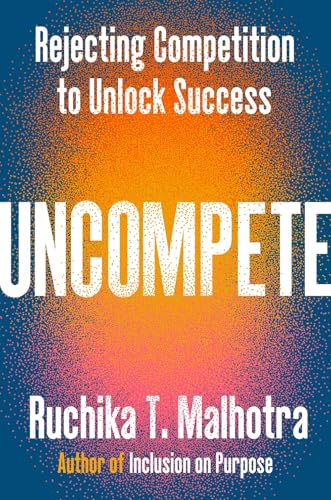
13. Uncompete: Rejecting Competition to Unlock Success
Ruchika T. Malhotra, 2025
Best for: Leaders who want a more collaborative, less burnt-out cultureInclusion strategist Ruchika T. Malhotra challenges the belief that competition always brings out the best in people at work. She argues that constant competition drives exhaustion, burnout and a scarcity mindset, and that it holds back many of the people organisations most need. Drawing on research and interviews with leaders, she proposes a framework for workplace cultures built on collaboration, solidarity and mutual support. Named in the Thinkers50 list of best new management books for 2026.
Key lesson: Internal competition often costs more than it gains.
View on AmazonMy verdict: a timely challenge to cultures that pit colleagues against each other. Best for leaders and HR teams designing performance and reward systems. Published by Viking on 4 November 2025.
Which 2026 business book should you read first?
| If you work in or care about... | Read |
|---|---|
| Technology and AI | The Infinity Machine, then Project Maven |
| Finance and investment | 1873, then Money to Burn |
| Healthcare and consumer goods | Off the Scales |
| Energy, infrastructure and risk | Blood Will Flow |
| Data, analytics and ethics | Prophecy |
| Operations and logistics | The UPS Man |
| Economics and emerging markets | How Africa Works |
| Governance and boards | Incorruptible |
| Innovation and strategy | Epic Disruptions |
| Culture and people | Uncompete |
What do the best business books of 2026 tell us?
- AI is the business story of the year. Three of the six shortlisted books deal with artificial intelligence or algorithmic prediction, from the labs building it to the military using it.
- Risk is global and human. Blood Will Flow and 1873 both show how investment booms can create risks that spread far beyond the people who took them.
- Governance keeps coming back. Money to Burn and Incorruptible both, in very different ways, show that who controls a company and how they are held to account shapes everything else.
- History is a strategy tool. Ahamed, Levinson and Studwell all use history to explain the present, which is a useful reminder that strategic thinking benefits from long memory.
Which 2026 business books are best for leaders and managers?
Not every book on the FT list is written with managers in mind, but several carry strong leadership lessons. Project Maven is a study of how a small, determined team pushed a new technology into one of the largest organisations in the world, which makes it a useful case study in leading change against resistance. The UPS Man shows how decades of operational discipline and attention to detail can build a lasting advantage, and also how a strong founder's culture can include practices that later look questionable. Streetwise offers a first-hand view of crisis leadership, while Money to Burn shows what happens when governance fails to check a powerful leader. For practical management ideas, Uncompete and Incorruptible are the most directly useful. If you want books written specifically for leaders, my best leadership books of 2026 page covers those.
How should you read a narrative business book?
Narrative books are easy to enjoy and easy to forget. To get more from them, read with three questions in mind: what decision would I have made at each turning point, what does this tell me about my own industry, and which framework would explain what happened? For example, reading Off the Scales with Porter's five forces in mind turns a gripping story into an analysis of buyer power, substitutes and barriers to entry. Note one lesson per book and share it with a colleague, which is the quickest way to make it stick.
Are award-winning business books worth reading?
Usually, yes, but know what you are getting. The FT shortlist favours deeply reported narrative books: biographies, histories and investigations. They are excellent for understanding how industries and economies really work, but they are not how-to guides. If you want practical frameworks for running a team or a business, balance them with books such as Good Strategy Bad Strategy or the classics on my best business books list. A good mix for most readers is one narrative book for every practical one.
How do these books connect to strategy?
Several of this year's books are, at heart, case studies in strategy, governance and risk: how DeepMind balanced research ambition with commercial pressure, how drug makers raced to dominate a new market, how Apollo's governance failed at the top. They become far more useful when you can analyse them with the standard frameworks, such as PESTEL, Porter's five forces and stakeholder mapping. My own book, Becoming A Strategic Business Leader, is not a 2026 release, so it is not on this list, but it is a concise guide to those core strategy, governance and leadership models, originally written for the ACCA Strategic Business Leader exam. You can read the first three chapters free. For more strategy reading, see my list of the best business strategy books.
How I chose these
I started with the official 2026 FT and Standard Chartered shortlist and longlist, added the strongest business titles from the Thinkers50 Best New Management Books for 2026, and kept only books first published between late 2025 and 2026. I checked every date with the publisher or a major retailer. Verdicts are my own view of who each book suits. I will update this page after the winner is announced on 2 December 2026.
Bottom line
If you read one business book from 2026, make it The Infinity Machine by Sebastian Mallaby. If you work in finance, add 1873; if you sit on a board, add Incorruptible. Check back after 2 December 2026 for the FT winner, and balance this year's narrative books with at least one practical strategy title.
FAQs
What is the best business book of 2026?
The official answer will come on 2 December 2026, when the Financial Times and Standard Chartered Business Book of the Year is announced. My pick from the shortlist is The Infinity Machine by Sebastian Mallaby, a profile of DeepMind's Demis Hassabis and the race for advanced AI, because it is both well reported and broadly relevant to business readers.
Which books are on the FT Business Book of the Year 2026 shortlist?
The six shortlisted books, announced on 6 October 2026, are The Infinity Machine by Sebastian Mallaby, Off the Scales by Aimee Donnellan, 1873 by Liaquat Ahamed, Project Maven by Katrina Manson, Blood Will Flow by Alex Perry and Prophecy by Carissa Véliz.
Who sponsors the FT Business Book of the Year in 2026?
From 2026 the award is sponsored by Standard Chartered and is called the Financial Times and Standard Chartered Business Book of the Year Award. It was previously sponsored by Schroders. The 2026 winner will be announced at a ceremony in London on 2 December 2026, alongside the Bracken Prize for Young Authors.
When is the FT Business Book of the Year 2026 winner announced?
The winner will be announced on 2 December 2026 at a ceremony in London, according to Standard Chartered's award page. I will update this page with the result. The shortlist was announced on 6 October 2026 after submissions closed at the end of June.
Are award-winning business books practical?
Mostly not in a how-to sense. FT shortlisted books tend to be deeply reported histories, biographies and investigations that explain how industries and economies work. They are excellent for context and strategic thinking, but pair them with practical books on strategy or management if you want frameworks you can apply directly.
Sources
- Standard Chartered: Financial Times and Standard Chartered Business Book of the Year Award
- Thinkers50: Best New Management Books for 2026
- NetGalley: The Infinity Machine by Sebastian Mallaby
- Penguin: 1873 by Liaquat Ahamed
- Oxford Institute for Ethics in AI: Prophecy by Carissa Véliz
- Hachette: Streetwise by Lloyd Blankfein
- Grove Atlantic: How Africa Works by Joe Studwell
- Penguin Random House: Uncompete by Ruchika T. Malhotra