
The best book for comparing leadership styles is Leadership: Theory and Practice by Peter Northouse, with Primal Leadership by Goleman, Boyatzis and McKee for the six emotional intelligence styles. For single styles, read Greenleaf for servant, Bass and Riggio for transformational, and Leadership and the One Minute Manager for situational leadership.
As an Amazon Associate I earn from qualifying purchases. Links to Amazon on this page are affiliate links. This does not change the price you pay.
Most reading lists on leadership styles mix up general leadership books with books that actually explain a specific style. This page does the opposite: it matches each well-known leadership style to the single best book on it, with one overview textbook to compare them all. Use the mapping table to jump to the style you need, or read the whole page for a quick tour of how the main styles differ. For a plain-English explanation of the styles themselves, see my guide to types of leadership.
Quick picks: the best book for each leadership style
| Book | Author | Best for |
|---|---|---|
| Leadership | Peter G. Northouse | Comparing every major leadership style and theory |
| Primal Leadership | Daniel Goleman, Richard Boyatzis and Annie McKee | Goleman's six emotional intelligence styles |
| Transformational Leadership | Bernard M. Bass and Ronald E. Riggio | Transformational leadership (the research source) |
| The Leadership Challenge | James M. Kouzes and Barry Z. Posner | Transformational leadership in practice |
| Servant Leadership | Robert K. Greenleaf | Servant leadership |
| Leadership and the One Minute Manager | Ken Blanchard, Patricia Zigarmi and Drea Zigarmi | Situational leadership |
| True North | Bill George | Authentic leadership |
| Leadership on the Line | Ronald A. Heifetz and Marty Linsky | Adaptive leadership |
| The Coaching Habit | Michael Bungay Stanier | The coaching style |
| Turn the Ship Around! | L. David Marquet | Democratic, participative and empowering leadership |
| Good to Great | Jim Collins | Level 5 leadership |
| Extreme Ownership | Jocko Willink and Leif Babin | Commanding style used well, with decentralised command |
| The One Minute Manager | Kenneth Blanchard and Spencer Johnson | Transactional leadership done well: goals, praise and correction |
| Becoming A Strategic Business Leader | Adam Niazi | A concise summary of leadership styles alongside strategy and governance models |
Which book matches each leadership style?
| Leadership style | In one line | Best book |
|---|---|---|
| Transformational | Inspires people to go beyond self-interest for a shared vision | Transformational Leadership (Bass and Riggio); The Leadership Challenge |
| Transactional | Clear goals, rewards for meeting them, correction when missed | The One Minute Manager |
| Servant | Puts the growth and wellbeing of followers first | Servant Leadership (Greenleaf) |
| Situational | Adjusts direction and support to each person's readiness | Leadership and the One Minute Manager |
| Authentic | Leads from personal values and life story | True North |
| Adaptive | Helps people tackle problems that need them to change | Leadership on the Line |
| Visionary, affiliative, pacesetting, commanding | Goleman's emotional intelligence styles | Primal Leadership |
| Coaching | Develops people through questions rather than instructions | The Coaching Habit |
| Democratic or participative | Shares decisions and authority with the team | Turn the Ship Around! |
| Level 5 | Personal humility combined with fierce professional will | Good to Great |
| Commanding (used well) | Clear direction and ownership, with decisions pushed down | Extreme Ownership |
| All styles compared | Strengths and weaknesses of each theory | Leadership: Theory and Practice (Northouse) |
Which book compares all the leadership styles?
If you want to understand the whole landscape before going deep on one style, start with a textbook overview and Goleman's research-based styles.
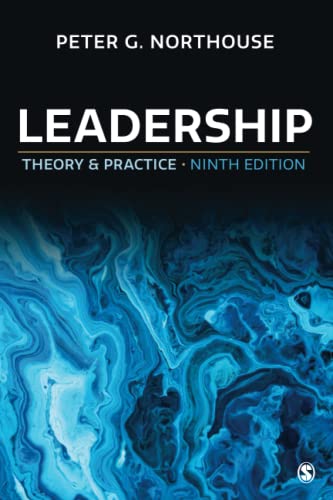
1. Leadership: Theory and Practice
Peter G. Northouse, 1997
Best for: Comparing every major leadership style and theoryThis is the most widely used university textbook on leadership theory. Each chapter covers one approach, including trait, skills, behavioural, situational, path-goal, leader-member exchange, transformational, authentic, servant, adaptive and team leadership, with a description, strengths, criticisms, case studies and a self-assessment questionnaire. It is not a light read, but it is balanced and well referenced. If you need to compare leadership styles properly, for an MBA, CMI qualification or exam, this is the reference book to keep on the desk.
Key lesson: Every leadership theory has strengths and blind spots, so know several.
View on AmazonNorthouse is the reference I would keep on the desk if you are studying leadership for an MBA, a CMI qualification or the ACCA Strategic Business Leader exam. Each chapter ends with criticisms of the theory, which is exactly what examiners want you to discuss.
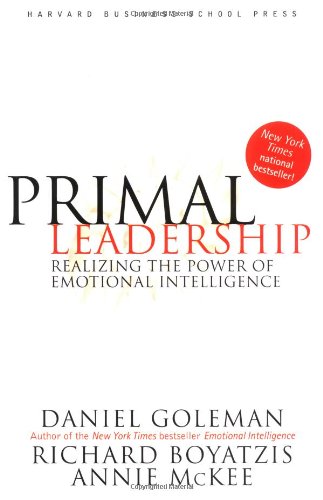
2. Primal Leadership
Daniel Goleman, Richard Boyatzis and Annie McKee, 2002
Best for: Goleman's six emotional intelligence stylesThis book applies emotional intelligence to leadership. The authors argue that a leader's main task is emotional: setting the mood that spreads through a team and shapes its results. They describe six leadership styles (visionary, coaching, affiliative, democratic, pacesetting and commanding), show when each helps or harms, and explain how leaders can build the self-awareness and self-management needed to switch between them. It remains one of the best-known sources for the idea that effective leaders use several styles rather than one.
Key lesson: A leader's mood is contagious, so managing yourself is the first leadership task.
View on AmazonGoleman's styles come from research with more than 3,000 executives, which found that the most effective leaders use several styles in any given week rather than relying on one (Harvard Business Review). The book explains when each style helps (visionary in times of change, coaching for development) and when it harms (pacesetting and commanding when overused).
What is the best book on transformational leadership?
Transformational leadership is probably the most widely taught style. It is about raising people's motivation and sense of purpose, not just exchanging rewards for effort. My guide to transformational leadership summarises the model.
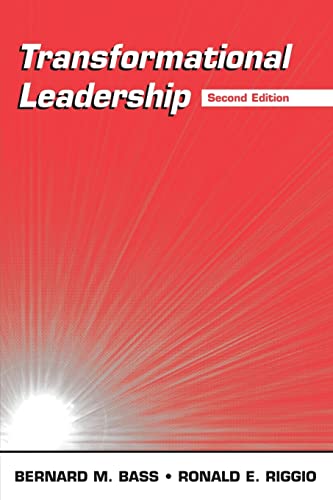
3. Transformational Leadership
Bernard M. Bass and Ronald E. Riggio, 2006
Best for: Transformational leadership (the research source)Bernard Bass developed the best-known model of transformational leadership, and this book (written with Ronald Riggio) summarises the research behind it. It explains the four components, often called the four Is: idealised influence, inspirational motivation, intellectual stimulation and individualised consideration, and contrasts them with transactional leadership based on rewards and corrective action. It is academic in style, aimed at students and researchers, but it is the authoritative source if you want to understand what transformational leadership really means.
Key lesson: Transformational leaders raise followers' goals as well as their performance.
View on AmazonThis is the authoritative academic source on the four components of transformational leadership. It is not a light read, so use it when you need depth or references for an essay.
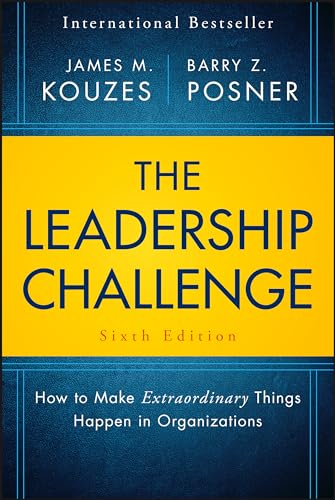
4. The Leadership Challenge
James M. Kouzes and Barry Z. Posner, 1987
Best for: Transformational leadership in practiceBased on decades of research into personal-best leadership experiences, Kouzes and Posner describe five practices of exemplary leadership: model the way, inspire a shared vision, challenge the process, enable others to act and encourage the heart. Each practice comes with commitments and real examples. The book's message is that leadership is a set of observable, learnable behaviours, not a position or a personality type. Regular new editions keep the examples fresh, and the related Leadership Practices Inventory is widely used.
Key lesson: Credibility is the foundation of leadership: do what you say you will do.
View on AmazonFor a practical, readable version, Kouzes and Posner's five practices (model the way, inspire a shared vision, challenge the process, enable others to act and encourage the heart) are transformational leadership in action. It is the book I would give a manager rather than a student.
What is the best book on servant leadership?
Servant leadership flips the usual hierarchy: the leader's main job is to help others grow and perform. For a longer list on this style, see my guide to the best servant leadership books.
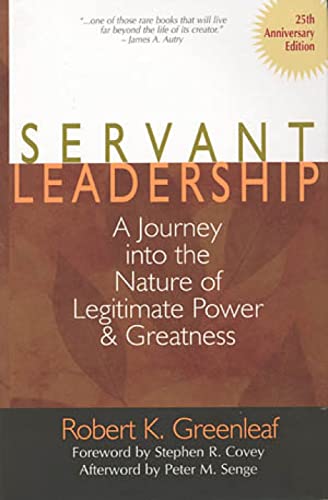
5. Servant Leadership
Robert K. Greenleaf, 1977
Best for: Servant leadershipThe book that launched the modern idea of servant leadership. Greenleaf, a former AT&T manager, argues that the best test of a leader is whether those served grow as people and become healthier, wiser and more autonomous. The collection of essays applies the idea to businesses, universities, churches and foundations. It is more reflective than practical and the language shows its age, but it is the original source behind a style that many modern leadership writers build on, and it rewards slow reading.
Key lesson: A leader is judged by whether the people they serve grow.
View on AmazonGreenleaf's essays are the original source. Read the opening essay, "The Servant as Leader", first; it contains the famous test of whether those served grow as people.
What is the best book on situational leadership?
Situational leadership says there is no single best style: leaders should adjust how much direction and support they give depending on each person's competence and commitment for a specific task. See my guide to situational leadership for the model in detail.
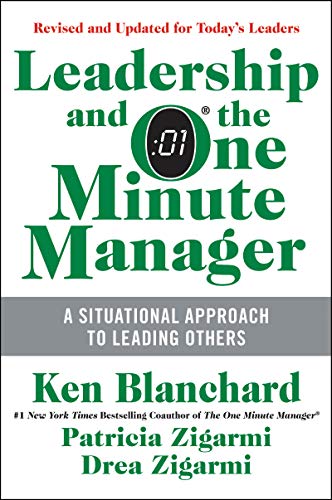
6. Leadership and the One Minute Manager
Ken Blanchard, Patricia Zigarmi and Drea Zigarmi, 1985
Best for: Situational leadershipThis follow-up applies the one minute approach to situational leadership. The authors explain that people move through development levels on each task, from enthusiastic beginner to self-reliant achiever, and that a leader should adjust between four styles: directing, coaching, supporting and delegating. The parable format keeps it short. It is the most accessible introduction to the situational leadership idea that no single style works for everyone, and it gives managers a simple way to diagnose what each person needs.
Key lesson: Match your style to the person's competence and commitment on that specific task.
View on AmazonThis short parable is the most accessible introduction to Blanchard's version of the model. A useful exercise is to plot each person in your team against the main tasks they do: you will usually find the same person needs directing on one task and delegating on another.
What is the best book on authentic leadership?
Authentic leadership is about being genuine: leading from your own values and experience rather than imitating someone else.
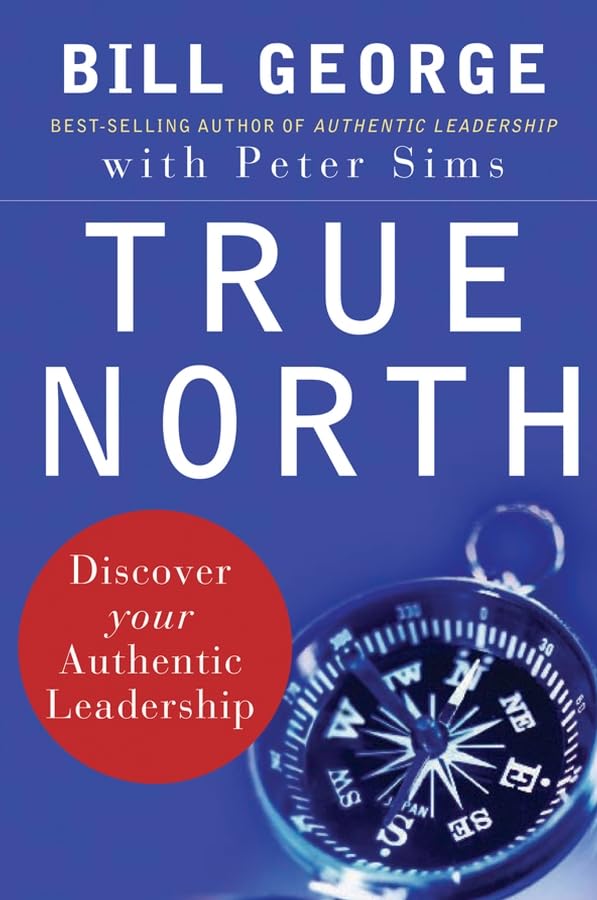
7. True North
Bill George, 2007
Best for: Authentic leadershipBill George, former chief executive of Medtronic and later a Harvard Business School professor, interviewed well over a hundred leaders to explore authentic leadership. His argument is that leaders are most effective when they lead from their own life story, values and purpose (their true north) rather than copying someone else's style. The book covers self-awareness, values, motivation, support teams and integrating life and work, with reflection exercises throughout. It is the standard book on authentic leadership.
Key lesson: Your life story, not a borrowed style, is the source of your leadership.
View on AmazonGeorge's reflection exercises are the most valuable part. Work through them slowly, ideally with a mentor or a small group, as he recommends.
What is the best book on adaptive leadership?
Adaptive leadership is for problems that have no technical fix, where people themselves need to change how they think or work.
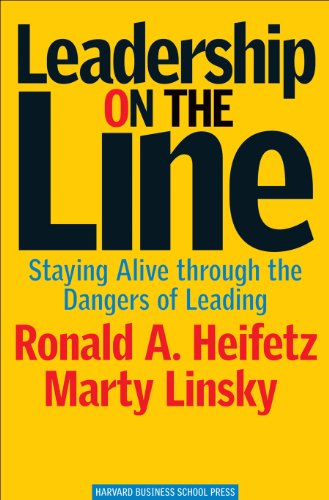
8. Leadership on the Line
Ronald A. Heifetz and Marty Linsky, 2002
Best for: Adaptive leadershipHeifetz and Linsky, both from Harvard Kennedy School, distinguish technical problems (which experts can solve) from adaptive challenges (which require people to change their beliefs, habits or loyalties). Leading adaptive change is dangerous, they argue, because you are asking people to give something up. The book explains how to get on the balcony to see the bigger pattern, regulate the heat, give the work back to the people who must change, and protect yourself. It is the clearest guide to adaptive leadership.
Key lesson: Do not treat adaptive challenges as technical problems with a quick fix.
View on AmazonThe distinction between technical and adaptive challenges is one of the most useful ideas in leadership. Many change programmes fail because leaders treat an adaptive challenge, such as a culture problem, as if it were a technical one, such as a new system.
What is the best book on the coaching style?
Coaching is one of Goleman's six styles, and the one many managers say they want to use more but rarely find time for. This book makes it practical.
9. The Coaching Habit
Michael Bungay Stanier, 2016
Best for: The coaching styleA short, practical book built around seven questions, starting with "What's on your mind?" and ending with "What was most useful for you?". The author's argument is that managers give too much advice and ask too few questions, which creates dependence and overwhelm. By staying curious a little longer, leaders help people solve their own problems. The book includes simple habit-building advice, so the questions actually get used. It is ideal for busy managers who want to coach without setting aside formal coaching sessions.
Key lesson: Stay curious a little longer and rush to advice a little more slowly.
View on AmazonUse one of the seven questions in each one-to-one for a month. It is the fastest way to build the coaching style into your everyday routine.
What is the best book on democratic and participative leadership?
Democratic or participative leaders involve the team in decisions. Done well, it builds ownership; done badly, it becomes endless consultation.

10. Turn the Ship Around!
L. David Marquet, 2012
Best for: Democratic, participative and empowering leadershipMarquet took command of a poorly performing US nuclear submarine and, partly by accident, abandoned the usual leader-follower model. Instead of giving orders, he asked officers to state their intentions ("I intend to...") and pushed decision-making to the people with the information. The book tells the story and draws out practical mechanisms around control, competence and clarity. It is one of the best accounts of how to delegate authority safely, and it shows that empowerment needs both skill building and a clear shared purpose.
Key lesson: Move authority to the information, not information to the authority.
View on AmazonMarquet goes further than consultation: he moves real decision-making authority to the people closest to the work, while building the competence and clarity they need to use it safely. It is the best practical example of empowering leadership I know.
What is the best book on Level 5 leadership?
Level 5 leadership is Jim Collins's term for leaders who combine personal humility with an intense will for the organisation to succeed.

11. Good to Great
Jim Collins, 2001
Best for: Level 5 leadershipCollins and his research team compared companies that made a lasting leap from average to outstanding results with similar firms that did not. The findings include Level 5 leadership (personal humility combined with fierce resolve), getting the right people on the bus before deciding where to drive it, confronting brutal facts, and the hedgehog concept of focusing on what you can be best at. Some of the featured companies later struggled, which is worth remembering, but the leadership ideas remain widely taught and discussed.
Key lesson: Great leaders combine personal humility with an intense will to make the organisation succeed.
View on AmazonThe chapter on Level 5 leadership is the one to read. Its point that the best leaders are often quiet and modest challenges the common picture of the charismatic boss.
Which books cover commanding and transactional styles well?
Commanding and transactional styles have a poor reputation, but both have their place. A crisis needs clear direction, and every team needs clear goals, recognition and correction. These books show how to use them well.
12. Extreme Ownership
Jocko Willink and Leif Babin, 2015
Best for: Commanding style used well, with decentralised commandTwo former US Navy SEAL officers take lessons from combat in Iraq and apply them to business. Each chapter tells a battlefield story, explains the principle and shows it working in a company. The central idea is that leaders own everything in their world: if the team fails, the leader looks first at what they could have done differently. Other principles include keeping plans simple, prioritising and executing one problem at a time, and decentralised command. It is direct, energetic and best read with an eye to adapting the military tone to your workplace.
Key lesson: There are no bad teams, only bad leaders: own the outcome.
View on AmazonWillink and Babin show that a commanding leader can still empower people: the leader owns the outcome and sets clear intent, while decisions are pushed down through decentralised command. It is a useful counterweight to the idea that directive leadership must be controlling.
13. The One Minute Manager
Kenneth Blanchard and Spencer Johnson, 1982
Best for: Transactional leadership done well: goals, praise and correctionA short parable about a young man searching for an effective manager. The answer is three simple practices: one minute goals (clear, short written goals), one minute praisings (catch people doing something right) and one minute re-directs (prompt, specific correction that separates the behaviour from the person). It can be read in an hour and its simplicity is the point. Experienced managers may find it light, but for new managers it is a memorable starting framework for clear expectations and timely feedback.
Key lesson: Agree clear goals, then praise and correct promptly and specifically.
View on AmazonThe One Minute Manager is not marketed as a book about transactional leadership, but its three practices (clear goals, prompt praise and prompt correction) are the transactional style done fairly and humanely. See my guide to transactional leadership for how it compares with transformational leadership.
Where does my book fit?
14. Becoming A Strategic Business Leader: The Ultimate All-In-One Guide
Adam Niazi, 2023
Best for: A concise summary of leadership styles alongside strategy and governance modelsA concise guide to the core strategy, governance and leadership models, originally written for the ACCA Strategic Business Leader (SBL) exam and useful for any manager who wants the big frameworks in one place. Its 19 short chapters run from strategic analysis and choice through governance, stakeholders, leadership, risk, ethics, project management and managing change, so you can see how leadership fits into the wider job of running an organisation. It is a revision-style summary rather than a story-led read. Disclosure: this is my own book.
Key lesson: Leadership only works when it is tied to strategy, governance, risk and the way change is managed.
View on Amazon Read 3 chapters freeMy own book is a concise guide to the core strategy, governance and leadership models, originally written for the ACCA Strategic Business Leader exam and useful for any manager. Chapter 8 summarises the main leadership theories and styles, including trait, behavioural, contingency, transformational and transactional approaches, and the rest of the book shows how leadership connects to strategy, governance, stakeholders and change. It is a summary, not a deep dive, so pair it with the specialist book for whichever style you want to explore. My guide to leadership styles gives a quick overview, and you can read the first three chapters free here.
Is there one best leadership style?
No, and almost all the research points the same way. Situational leadership, Goleman's work and contingency theories all argue that effective leaders adapt their style to the person, the task and the situation. A commanding style may save a project in a crisis but damage morale if it becomes a habit; a democratic style builds commitment but may be too slow when a decision is urgent. The practical goal is not to find your style and stick to it, but to build a range of styles and the judgement to choose between them. That is also why I recommend starting with an overview such as Northouse or Primal Leadership before going deep on any single style. For how styles apply at the strategic level, see my guide to strategic leadership styles.
Why does your leadership style matter so much?
Style is not a cosmetic choice. Gallup estimates that managers account for at least 70% of the variance in employee engagement between teams (Gallup), and much of that comes down to how they lead day to day: how they set direction, give feedback, involve people and respond to problems. Goleman's research linked the climate a leader's style creates to the financial results of the business unit.
Choosing the right style also depends on self-awareness. The Center for Creative Leadership lists self-awareness as one of four core leadership skills at every career stage (CCL). Most of us overestimate how often we coach and underestimate how often we direct, so ask your team which style they experience from you.
Finally, styles are not only about people management. John Kotter's work on change distinguishes leadership (setting direction, aligning and inspiring people) from management (planning and controlling), and his 1995 article on why transformation efforts fail lists eight common errors, starting with not creating a great enough sense of urgency (Harvard Business Review). Transformational and adaptive styles matter most when you are leading change.
How I chose these
For each widely recognised style, I chose the book that either defined the style (such as Greenleaf for servant leadership or Bass and Riggio for transformational leadership) or explains it most practically. Where the original source is academic, I added a more readable companion. I also included one comprehensive textbook so you can compare styles fairly, including their weaknesses.
Bottom line
If you want one book to understand leadership styles, read Primal Leadership for the practical view or Leadership: Theory and Practice for the academic one. Then use the mapping table to go deeper on the style you most need to develop, which for most managers is coaching (The Coaching Habit) or situational leadership (Leadership and the One Minute Manager). For a broader list, see my best leadership and management books.
FAQs
What is the best book on leadership styles?
Leadership: Theory and Practice by Peter Northouse is the best book for comparing all the main styles, with strengths, criticisms and case studies for each. For a more practical read, Primal Leadership by Daniel Goleman, Richard Boyatzis and Annie McKee explains six styles and when each one helps or harms a team.
What are Goleman's six leadership styles?
Goleman's original research named them coercive, authoritative, affiliative, democratic, pacesetting and coaching. Primal Leadership presents them as commanding, visionary, affiliative, democratic, pacesetting and coaching. His finding, based on more than 3,000 executives, is that the most effective leaders use several of these styles, switching between them depending on the situation.
What is the best book on transformational leadership?
Transformational Leadership by Bernard Bass and Ronald Riggio is the authoritative research source, explaining the four components of the style. For a more practical version, The Leadership Challenge by James Kouzes and Barry Posner describes five practices of exemplary leadership that put transformational ideas into everyday action.
What is the best book on servant leadership?
Servant Leadership by Robert K. Greenleaf is the original source of the idea and the best place to start. Its opening essay, The Servant as Leader, sets out the test of whether the people a leader serves grow as people. It is reflective rather than practical, so pair it with a modern book.
Is there one best leadership style?
No. Most research, including situational leadership and Goleman's work, finds that effective leaders adapt their style to the person, the task and the situation. A commanding style can help in a crisis but harms morale if overused. The goal is to build a range of styles and the judgement to choose between them.
Which leadership styles book is best for ACCA or MBA students?
Leadership: Theory and Practice by Peter Northouse is the standard academic text and covers the criticisms examiners expect you to discuss. For ACCA Strategic Business Leader students, a concise summary of the main theories also appears in Chapter 8 of my book, Becoming A Strategic Business Leader.