
The best leadership books are Good to Great by Jim Collins, The 7 Habits of Highly Effective People by Stephen Covey and Dare to Lead by Brené Brown for foundations, The Making of a Manager by Julie Zhuo for new managers, and Leading Change by John Kotter for senior leaders driving change.
As an Amazon Associate I earn from qualifying purchases. Links to Amazon on this page are affiliate links. This does not change the price you pay.
There are thousands of leadership books, and most of them repeat the same handful of ideas. This list cuts through that. I have chosen 25 books that each teach something distinct, from the research classics to practical manuals for new managers, and grouped them so you can find the right one for where you are now. I am Adam Niazi, an FCCA accountant with an Executive MBA and the author of a book on strategic leadership, and I have read, used and taught from these books over many years.
If you only read three, make them Good to Great for the research, The 7 Habits of Highly Effective People for self-leadership, and Dare to Lead for the human side. If you are a new manager, start with The Making of a Manager instead.
Quick picks: the best leadership books at a glance
| Book | Author | Best for |
|---|---|---|
| Good to Great | Jim Collins | Leaders who want an evidence-based view of what separates good organisations from great ones |
| The 7 Habits of Highly Effective People | Stephen R. Covey | Anyone building the personal habits that leadership depends on |
| Dare to Lead | Brené Brown | Leaders who avoid hard conversations or want a more human leadership style |
| Leaders Eat Last | Simon Sinek | Managers who want to build trust and loyalty in a team |
| Extreme Ownership | Jocko Willink and Leif Babin | Leaders who want a no-excuses approach to accountability |
| The Leadership Challenge | James M. Kouzes and Barry Z. Posner | Leaders and students who want a research-based leadership framework |
| The Making of a Manager | Julie Zhuo | First-time managers in their first year |
| How to Win Friends and Influence People | Dale Carnegie | New managers who need to influence without authority |
| Radical Candor | Kim Scott | Managers who struggle to give honest feedback |
| The Five Dysfunctions of a Team | Patrick Lencioni | Leaders of senior or project teams that are polite but not performing |
| High Output Management | Andrew S. Grove | Managers who want a practical, systems-minded operating manual |
| The 21 Irrefutable Laws of Leadership | John C. Maxwell | Readers new to leadership who want a broad overview |
| Multipliers | Liz Wiseman | Capable leaders who suspect they are holding their team back |
| Turn the Ship Around! | L. David Marquet | Leaders who want to build a team that thinks for itself |
| The Culture Code | Daniel Coyle | Leaders trying to build or repair team culture |
| Drive | Daniel H. Pink | Leaders designing incentives or managing knowledge workers |
| Primal Leadership | Daniel Goleman, Richard Boyatzis and Annie McKee | Leaders who want to understand emotional intelligence and leadership styles |
| What Got You Here Won't Get You There | Marshall Goldsmith | Successful professionals stepping up to senior roles |
| Leading Change | John P. Kotter | Leaders running a transformation or major change programme |
| Leadership on the Line | Ronald A. Heifetz and Marty Linsky | Leaders driving difficult change in organisations or public life |
| The Hard Thing About Hard Things | Ben Horowitz | Founders and leaders facing tough calls in a crisis |
| Becoming A Strategic Business Leader: The Ultimate All-In-One Guide | Adam Niazi FCCA | Managers and ACCA students who want strategy, governance and leadership models in one place |
| Team of Rivals | Doris Kearns Goodwin | Readers who learn best from history and biography |
| Leadership: In Turbulent Times | Doris Kearns Goodwin | Leaders facing a crisis or turnaround |
| Start with Why | Simon Sinek | Leaders who need to communicate purpose and rally people behind a direction |
What are the best leadership books of all time?
These six are the books I would put in front of any leader, at any level. They combine solid evidence or long experience with ideas that are simple enough to use the next morning. Most have been in print for decades because they keep proving useful.
Notice the range: one is a large research study, one is about personal habits, one is about courage and honesty, one is about trust, one is about accountability and one is a framework built on surveys of thousands of leaders. Leadership is not one skill, so no single book covers it.

1. Good to Great
Jim Collins, 2001
Best for: Leaders who want an evidence-based view of what separates good organisations from great onesCollins and his research team compared companies that moved from average results to sustained outperformance with similar firms that never made the jump. The patterns they found have become part of everyday management language: Level 5 leaders who mix personal humility with fierce resolve, getting the right people on the bus before deciding where to drive it, facing brutal facts without losing faith, and the steady flywheel of effort rather than one dramatic breakthrough. Some of the featured companies later stumbled, which is worth remembering, but the core ideas about disciplined people, thought and action still hold up well.
Key lesson: The best leaders channel ambition into the organisation, not themselves, and build momentum through consistent, disciplined effort.
View on AmazonCollins also wrote a widely read Harvard Business Review article summarising his idea of the Level 5 leader. If you want the short version before committing to the book, read the HBR article on Level 5 leadership first.
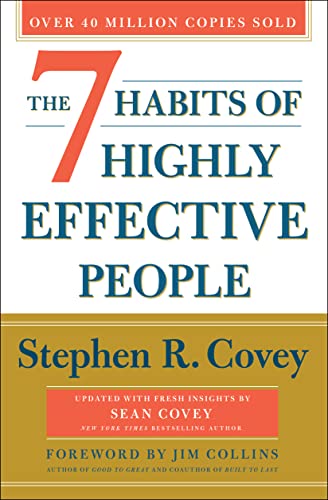
2. The 7 Habits of Highly Effective People
Stephen R. Covey, 1989
Best for: Anyone building the personal habits that leadership depends onCovey's classic moves from private victories (being proactive, beginning with the end in mind, putting first things first) to public victories (thinking win-win, seeking first to understand, synergy) and finally renewal. It is as much about personal character as leadership, which is exactly why it endures: most leadership problems start with how we manage ourselves. The time management matrix of urgent versus important tasks alone is worth the price. The 30th anniversary edition adds commentary from Sean Covey.
Key lesson: You cannot lead others well until you can lead yourself: decide what matters, then schedule your priorities rather than prioritising your schedule.
View on Amazon
3. Dare to Lead
Brené Brown, 2018
Best for: Leaders who avoid hard conversations or want a more human leadership styleBrown applies her research on vulnerability and shame to the workplace. She argues that brave leadership is a set of teachable skills: having honest conversations, setting clear boundaries, living by a short list of values and recovering after setbacks. The book is full of practical tools, such as checking what story you are telling yourself about a situation, and phrases like 'clear is kind'. It suits leaders who are good at the technical side of the job but find difficult conversations draining.
Key lesson: Being clear with people, even when it is uncomfortable, is kinder than leaving them guessing.
View on Amazon
4. Leaders Eat Last
Simon Sinek, 2014
Best for: Managers who want to build trust and loyalty in a teamSinek argues that people do their best work when they feel safe inside their team, and that creating that feeling is the leader's job. He draws on stories from the military and business, plus a simple explanation of the brain chemicals linked to trust, stress and reward, to show why short-term cost cutting and leaders who protect themselves first erode loyalty. The writing is accessible and story-led rather than academic, so treat the biology as a helpful metaphor more than a scientific manual.
Key lesson: When people feel protected by their leader, they turn their energy outwards against problems instead of against each other.
View on Amazon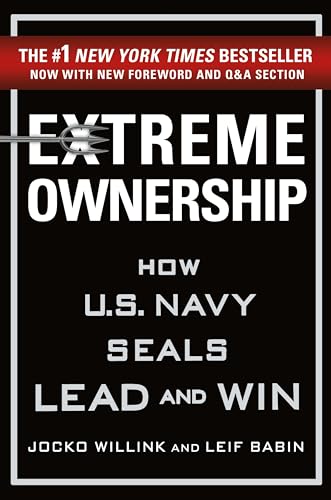
5. Extreme Ownership
Jocko Willink and Leif Babin, 2015
Best for: Leaders who want a no-excuses approach to accountabilityTwo former US Navy SEAL officers turn combat lessons from Iraq into twelve leadership principles, each told as a battlefield story followed by a business application. The central idea is that leaders own everything in their world, including the failures of their team, rather than blaming others or circumstances. Other principles include keeping plans simple, prioritising and executing one problem at a time, and decentralised command. The tone is intense, but the message about accountability is clear and easy to act on.
Key lesson: If your team fails, start by asking what you could have done differently as the leader.
View on Amazon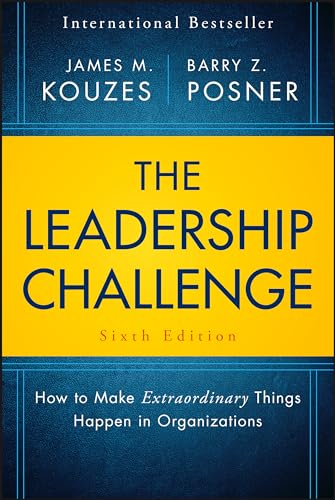
6. The Leadership Challenge
James M. Kouzes and Barry Z. Posner, 1987
Best for: Leaders and students who want a research-based leadership frameworkBuilt on decades of survey research, this book identifies five practices of exemplary leadership: model the way, inspire a shared vision, challenge the process, enable others to act and encourage the heart. Each practice is broken into specific behaviours that can be learned. It is more structured and research-based than most popular leadership titles, which is why it is widely used on leadership courses. The sixth edition refreshes the examples.
Key lesson: Credibility is the foundation of leadership: do what you say you will do.
View on AmazonWhich leadership books are best for new managers?
The jump from doing the work to leading the people who do it is the hardest transition in most careers. Your technical skill stops being the main thing you are judged on. These books focus on the daily mechanics: one-to-ones, feedback, meetings, hiring and handling a team that may include your former peers.
In my experience, new managers most often fail in one of two ways. Some keep doing the work themselves because it feels safer. Others avoid difficult conversations and hope problems sort themselves out. The books below speak directly to both.

7. The Making of a Manager
Julie Zhuo, 2019
Best for: First-time managers in their first yearZhuo became a manager at Facebook at 25 with no training, and this is the book she wishes she had been given. It covers the basics in a warm, practical way: what a manager is actually for, how to run good one-to-ones, how to hire, how to give feedback, how to run meetings that are worth attending and how to handle the shift from doing the work to getting it done through others. Simple sketches illustrate each point.
Key lesson: A manager's output is the output of their team, not their own personal work.
View on Amazon
8. How to Win Friends and Influence People
Dale Carnegie, 1936
Best for: New managers who need to influence without authorityNearly a century old and still in print, Carnegie's book is a set of plain rules for dealing with people: do not criticise or complain, show honest appreciation, take a real interest in others, remember names, let the other person do most of the talking and admit your own mistakes quickly. Some examples feel dated, but the principles map closely onto what modern research says about trust and influence. For new managers who suddenly have to persuade rather than do, it is a fast and practical refresher.
Key lesson: People respond to genuine interest and respect far more than to argument.
View on Amazon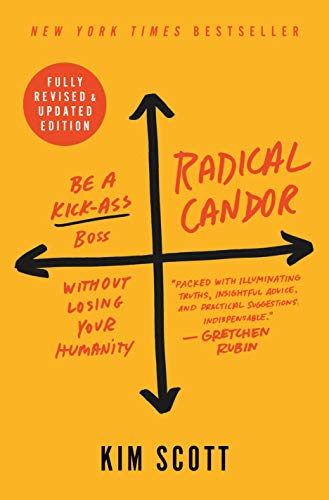
9. Radical Candor
Kim Scott, 2017
Best for: Managers who struggle to give honest feedbackDrawing on her experience managing teams at Google and Apple, Scott offers a two-by-two model for feedback: care personally and challenge directly. Leaders who care but do not challenge fall into 'ruinous empathy', while those who challenge without caring become obnoxiously aggressive. The book covers how to ask for criticism first, how to give praise that is specific, and how to run one-to-ones and career conversations. The revised edition updates the material based on how readers applied it.
Key lesson: Feedback works best when people know you care about them and you are still willing to tell them the truth.
View on Amazon
10. The Five Dysfunctions of a Team
Patrick Lencioni, 2002
Best for: Leaders of senior or project teams that are polite but not performingTold as a fable about a new CEO taking over a struggling executive team, this short book sets out five layers of team failure: absence of trust, fear of conflict, lack of commitment, avoidance of accountability and inattention to results. Each one feeds the next, so the fix starts with trust built through vulnerability. The story format makes it a quick read, and the model at the end is simple enough to use in a team workshop the following week.
Key lesson: Healthy conflict is a sign of trust; a team that never argues is usually avoiding the real issues.
View on Amazon
11. High Output Management
Andrew S. Grove, 1983
Best for: Managers who want a practical, systems-minded operating manualWritten by Intel's former CEO, this is a manager's operating manual based on a production line mindset. Grove argues that a manager's output is the output of their organisation plus the neighbouring parts they influence, so they should focus on high-leverage activities. He covers one-to-ones, meetings, decision-making, planning, performance reviews and task-relevant maturity (how much supervision someone needs). Decades later it is still one of the most practical books on running a team.
Key lesson: Spend your time on activities with the highest leverage over your team's output.
View on Amazon
12. The 21 Irrefutable Laws of Leadership
John C. Maxwell, 1998
Best for: Readers new to leadership who want a broad overviewMaxwell condenses decades of teaching into 21 short laws, such as the law of the lid (your leadership ability caps your effectiveness), the law of influence and the law of the inner circle. Each chapter mixes a principle with a story from business, sport or history. It is broad rather than deep and some laws overlap, but as an accessible introduction to leadership as influence rather than position it remains a popular first read.
Key lesson: Leadership is influence: a title gives you a starting point, not followers.
View on AmazonFor a deeper, stage-by-stage reading plan, see my guide to the best leadership development books, and if you manage people day to day, the list of leadership books for managers.
Which books help leaders empower and motivate a team?
Once you have the basics, the next challenge is getting more from people without simply working them harder. The books in this group look at motivation, culture, emotional intelligence and giving away control. They share a common message: the leader's job is to create conditions in which other people can do their best thinking.
A useful starting point is Daniel Goleman's research on emotional intelligence. His Harvard Business Review article What Makes a Leader? argues that self-awareness, self-regulation, motivation, empathy and social skill separate outstanding leaders from merely competent ones. Primal Leadership, below, develops that idea into six leadership styles. If you want to compare styles more formally, my guide to leadership styles sets out the main models side by side.
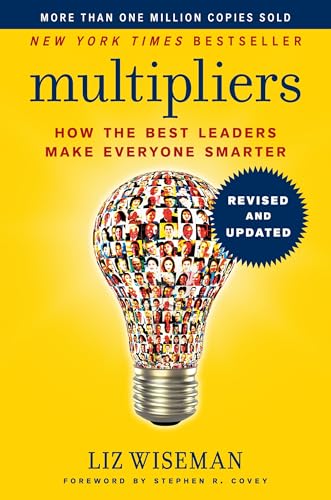
13. Multipliers
Liz Wiseman, 2010
Best for: Capable leaders who suspect they are holding their team backWiseman contrasts two kinds of leader. Diminishers, often very talented people, make themselves the smartest person in the room and drain capability from their teams. Multipliers attract talent, set stretching challenges, debate decisions properly and give ownership away, getting much more out of the same people. The book includes a useful section on 'accidental diminishers', well-meaning leaders whose habits, such as always having the answer or rescuing people too quickly, quietly shut others down.
Key lesson: A leader's job is to draw out other people's intelligence, not to display their own.
View on Amazon
14. Turn the Ship Around!
L. David Marquet, 2012
Best for: Leaders who want to build a team that thinks for itselfMarquet took command of a poorly performing US nuclear submarine and moved it from a culture of following orders to one where crew members stated their intentions and acted. He calls this a leader-leader model, as opposed to leader-follower. The book explains the practical mechanisms he used, such as replacing 'permission to' with 'I intend to', and pairing control with competence and clarity. It is one of the best accounts of giving away authority without losing standards.
Key lesson: Push decision-making down to where the information is, but only as fast as competence and clarity allow.
View on Amazon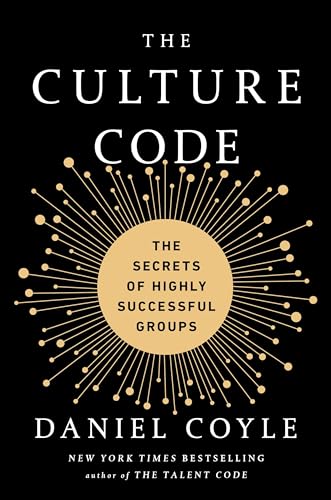
15. The Culture Code
Daniel Coyle, 2018
Best for: Leaders trying to build or repair team cultureCoyle visited high-performing groups, from special forces units to sports teams and a famous restaurant, to find what makes their cultures work. He identifies three skills: building safety through small signals of belonging, sharing vulnerability so people cooperate, and establishing purpose through simple, repeated stories and priorities. Each section ends with practical ideas. It is lively and story-rich, and a good companion to more formal work on psychological safety.
Key lesson: Culture is built from many small signals that tell people they belong and are safe.
View on Amazon
16. Drive
Daniel H. Pink, 2009
Best for: Leaders designing incentives or managing knowledge workersPink pulls together research on motivation to argue that carrots and sticks work for simple, routine tasks but often backfire for creative or complex work. For that, people need autonomy (control over how they work), mastery (the chance to get better) and purpose (a reason that matters). The book is short and readable, with a toolkit at the end, and is a useful corrective for leaders who rely mainly on bonuses and targets.
Key lesson: For complex work, autonomy, mastery and purpose motivate more than bonuses.
View on Amazon
17. Primal Leadership
Daniel Goleman, Richard Boyatzis and Annie McKee, 2002
Best for: Leaders who want to understand emotional intelligence and leadership stylesThis book applies emotional intelligence to leadership. The authors argue that a leader's main task is emotional: setting the mood that spreads through a team. They describe six leadership styles (visionary, coaching, affiliative, democratic, pacesetting and commanding) and when each helps or harms. The coaching and visionary styles are generally the most positive, while pacesetting and commanding need to be used sparingly. The later chapters on self-directed learning give a practical route to change.
Key lesson: Flexible leaders choose their style to suit the situation rather than relying on one default.
View on Amazon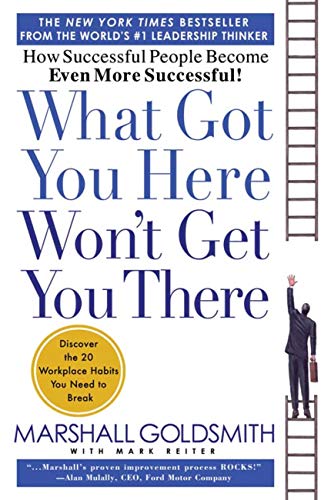
18. What Got You Here Won't Get You There
Marshall Goldsmith, 2007
Best for: Successful professionals stepping up to senior rolesExecutive coach Goldsmith lists 20 interpersonal habits that hold successful people back, such as winning too much, adding too much value, passing judgement, making excuses and failing to give recognition. His point is that the very confidence that drove early success can block the next promotion. The book then explains his method for changing behaviour: ask for feedback, apologise, tell people you are trying to improve, and follow up regularly.
Key lesson: At senior levels, what holds you back is usually behaviour, not skill.
View on AmazonWhat should senior leaders read about change and strategy?
At senior levels, leadership becomes inseparable from strategy, governance and change. You are no longer only motivating a team; you are deciding where the organisation goes, persuading a board and stakeholders, and steering people through uncomfortable change. These books cover that territory.
Kotter's eight steps and Heifetz's distinction between technical and adaptive problems are the two ideas I see used most often in real change programmes. If you want a short explanation of Kotter's model before buying the book, my guide to Kotter's 8-step change model covers each step with examples.
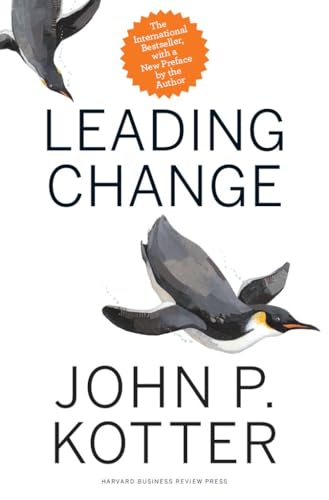
19. Leading Change
John P. Kotter, 1996
Best for: Leaders running a transformation or major change programmeKotter's book grew out of his 1995 Harvard Business Review article on why transformation efforts fail. He sets out eight steps: create urgency, build a guiding coalition, form a vision, communicate it, remove obstacles, generate short-term wins, consolidate gains and anchor the change in culture. It remains the most widely taught change model in business schools and professional exams, and it is short enough to read in a weekend.
Key lesson: Most change efforts fail because leaders skip steps, especially building real urgency.
View on Amazon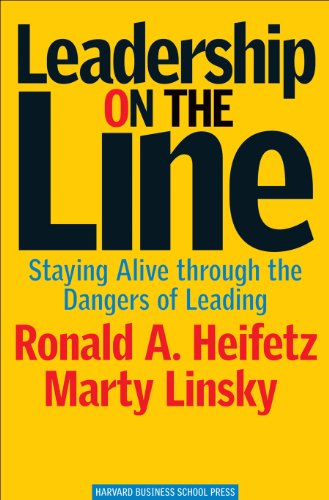
20. Leadership on the Line
Ronald A. Heifetz and Marty Linsky, 2002
Best for: Leaders driving difficult change in organisations or public lifeHeifetz and Linsky, both long associated with Harvard's Kennedy School, explain why leading change is dangerous for the leader. Their key distinction is between technical problems, which experts can solve, and adaptive challenges, which require people to change their values, habits or loyalties. Leaders who treat adaptive problems as technical ones get pushed aside. The book offers tactics for 'getting on the balcony' to see the wider pattern, managing conflict and protecting yourself while you do it.
Key lesson: Real change usually means asking people to give something up, so expect resistance and plan for it.
View on Amazon
21. The Hard Thing About Hard Things
Ben Horowitz, 2014
Best for: Founders and leaders facing tough calls in a crisisHorowitz, a founder turned venture capitalist, writes candidly about the parts of leadership that management books skip: laying people off, demoting a friend, firing an executive and keeping going when the company is close to failing. The early chapters are memoir, the later ones practical advice on hiring, training and building culture in a fast-growing company. It is written for tech founders, but anyone who has led through a crisis will recognise the problems.
Key lesson: There is no recipe for the hardest decisions, but facing them early and honestly is always better.
View on AmazonMy own book sits in this group. I include it with a clear disclosure because it fills a gap the others leave: it puts leadership, strategy, governance, risk and ethics side by side in one concise guide. It is written as a revision guide, not a narrative, so it is best used as a reference alongside one or two of the books above, not instead of them.
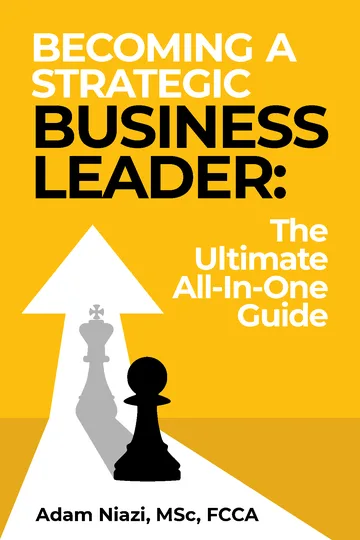
22. Becoming A Strategic Business Leader: The Ultimate All-In-One Guide
Adam Niazi FCCA, 2023
Best for: Managers and ACCA students who want strategy, governance and leadership models in one placeThis is a concise guide to the core strategy, governance and leadership models, originally written as a revision guide for the ACCA Strategic Business Leader exam and useful for any manager. Its 19 short chapters cover strategic planning and analysis, governance, stakeholders, leadership, ethics, risk, change and financial decision-making. It is not a leadership memoir or a big-idea book; it is a toolkit that shows how leadership sits alongside strategy and governance. Disclosure: this is my own book.
Key lesson: Leadership decisions are better when they sit on a clear analysis of strategy, stakeholders and risk.
View on Amazon Read 3 chapters freeFor a fuller list focused on this area, see the best strategic leadership books and the best business strategy books.
Which leadership books use history and purpose?
Some of the most memorable leadership lessons come from history rather than management theory. Biographies show judgement under real pressure, with all the mess and uncertainty that business case studies tend to tidy away. I have also included Simon Sinek's first book here, because purpose is what connects a leader's daily decisions to something bigger.
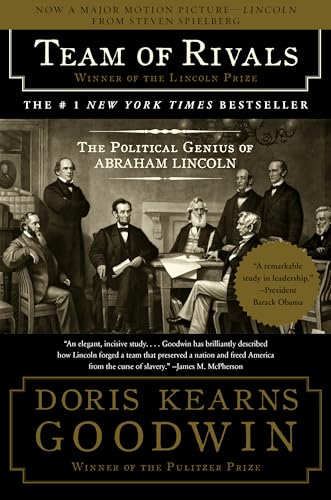
23. Team of Rivals
Doris Kearns Goodwin, 2005
Best for: Readers who learn best from history and biographyGoodwin's Lincoln Prize-winning history follows Abraham Lincoln and the men who competed with him for the 1860 Republican nomination, several of whom he then brought into his cabinet. It is a long biography, not a leadership manual, but it shows emotional intelligence, patience and political judgement in action: Lincoln absorbing criticism, sharing credit and keeping strong-willed rivals working towards a shared goal through a civil war.
Key lesson: Strong leaders surround themselves with capable people who will disagree with them.
View on Amazon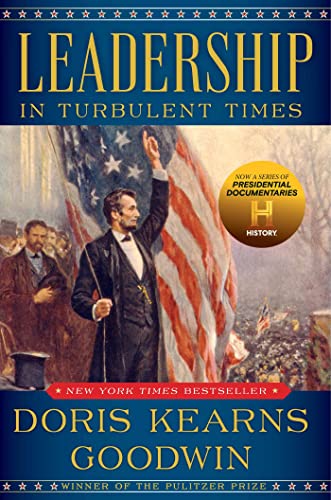
24. Leadership: In Turbulent Times
Doris Kearns Goodwin, 2018
Best for: Leaders facing a crisis or turnaroundGoodwin draws on decades of research into four US presidents (Abraham Lincoln, Theodore Roosevelt, Franklin D. Roosevelt and Lyndon B. Johnson) to ask whether leaders are born or made. She traces how each was shaped by early setbacks, then examines a defining crisis for each: transformation, crisis management, turnaround and vision. It is shorter and more explicitly about leadership than her single biographies, which makes it an excellent bridge between history and practice.
Key lesson: Adversity often shapes leaders more than talent: how you respond to setbacks matters.
View on Amazon
25. Start with Why
Simon Sinek, 2009
Best for: Leaders who need to communicate purpose and rally people behind a directionSinek's first book introduces the Golden Circle: why, how and what. His argument is that organisations and leaders who communicate their purpose first inspire more lasting commitment than those who lead with product features or incentives. Examples include Apple and the Wright brothers. It is a quick, motivational read rather than a rigorous study, but the core idea is genuinely useful when you need to explain a change, pitch a strategy or write a mission statement that people actually remember.
Key lesson: Explain the reason behind a decision before the details, and people are far more likely to commit to it.
View on AmazonHow do these leadership books compare?
Here is a quick comparison of the main types of leadership book on this list, so you can choose by format and effort as well as topic.
| Type of book | Examples on this list | Reading effort | Best when you want |
|---|---|---|---|
| Research study | Good to Great, The Leadership Challenge, Primal Leadership | Medium | Evidence about what works across many organisations |
| Practical manual | The Making of a Manager, High Output Management | Low to medium | Tools you can use this week |
| Fable or story | The Five Dysfunctions of a Team | Low | A quick read to share with your team |
| Memoir from practice | Extreme Ownership, Turn the Ship Around!, The Hard Thing About Hard Things | Low | Lessons from someone who did it under pressure |
| History and biography | Team of Rivals, Leadership: In Turbulent Times | High | Deep lessons on judgement and character |
| Reference guide | Becoming A Strategic Business Leader | Low to medium | Models for strategy, governance and leadership in one place |
How should you read leadership books so they actually change anything?
Reading a leadership book feels productive, but it rarely changes behaviour on its own. The Center for Creative Leadership's long-running research behind the 70-20-10 model suggests most leadership learning comes from challenging experiences and relationships, with formal learning a smaller share. Books work best when they feed directly into what you are doing at work.
Three habits help:
- Read with a live problem in mind. Choose the book that matches a challenge you face right now, such as a new team, a difficult colleague or a change you need to lead.
- Pick one idea and try it within a week. For example, after Radical Candor or Multipliers, change how you run your next one-to-one.
- Write a one-page summary. When you finish, write down the three ideas you want to keep and one thing you will do differently. Reread it a month later. It takes ten minutes and is the single best way I know to make a book stick.
- Do not try to read them all. Ten books read carefully and applied will do more for you than fifty skimmed. Use the situation table below to choose the two or three that match your current challenge, and come back to the rest later in your career.
- Talk about it. Discussing a book with a peer, mentor or your own team turns a private read into shared language. The Five Dysfunctions of a Team works particularly well as a team read.
Which leadership book should I read for my situation?
If you are not sure where to start, match the book to the problem you are facing. This table is the one I use when colleagues and students ask me for a recommendation.
| If your challenge is... | Read first | Then read |
|---|---|---|
| You have just been promoted to manage people | The Making of a Manager | Radical Candor |
| Your team is polite but not performing | The Five Dysfunctions of a Team | The Culture Code |
| You struggle to give honest feedback | Radical Candor | Dare to Lead |
| You do too much yourself and your team waits for you | Multipliers | Turn the Ship Around! |
| People seem demotivated | Drive | Leaders Eat Last |
| You are leading a major change | Leading Change | Leadership on the Line |
| You are stepping up to a senior role | What Got You Here Won't Get You There | Becoming A Strategic Business Leader (my own book) |
| You face a crisis or very hard decisions | The Hard Thing About Hard Things | Leadership: In Turbulent Times |
| You need to explain a new direction | Start with Why | Good to Great |
| You want better personal habits and focus | The 7 Habits of Highly Effective People | High Output Management |
What ideas do the best leadership books agree on?
Read enough leadership books and you notice that the strongest ones, despite very different styles, keep returning to the same few ideas. If you remember nothing else from this list, remember these five.
1. Leadership starts with self-leadership
Covey, Goldsmith and Brown all argue, in different ways, that you cannot lead others well until you understand your own habits, triggers and values. Goldsmith's list of 20 bad habits is a useful mirror: most senior leaders recognise at least three of them in themselves.
2. Trust comes before performance
Lencioni puts absence of trust at the base of his team model. Sinek builds a whole book around making people feel safe. Coyle's research on high-performing groups found the same thing. Teams that trust each other argue more openly, and that healthy conflict produces better decisions.
3. Clarity is a form of kindness
Brown's phrase "clear is kind" sums up a theme that also runs through Radical Candor and Extreme Ownership. Vague goals, fuzzy feedback and unclear roles cause more stress than direct, respectful honesty.
4. Great leaders give control away
Marquet, Wiseman and Pink all show that pushing decisions down to the people closest to the work releases energy and ideas. The condition is that people have the competence and context to decide well, which is why good leaders invest so heavily in coaching and communication.
5. Humility and resolve go together
Collins's Level 5 leaders were modest about themselves but relentless about results. That combination appears again in Lincoln's handling of his rivals and in Grove's focus on output rather than status. Ego is the most common thing that gets in a leader's way.
How I chose these books
I started with the books that consistently appear in business school reading lists, professional body recommendations and long-term bestseller charts, then filtered them using four questions:
- Does it teach something distinct? Many leadership books repeat the same advice. Each book here earns its place with at least one idea you will not get elsewhere on the list.
- Is it grounded? I favoured books based on research or substantial real-world experience over motivational writing.
- Has it lasted? Most of these books are more than five years old and still widely read and cited. For newer titles, see the separate list of the best leadership books of 2026.
- Is it practical? Every book should change how you do at least one thing at work.
The summaries are my own and the order within each section is a suggested reading order, not a ranking of quality. I have not included sales figures or ratings, which change constantly. Where my own book appears, it is clearly labelled.
Where does strategy fit into leadership reading?
Many leadership lists ignore strategy completely, which I think is a mistake. As you become more senior, you are judged less on how well you manage a team and more on whether you set the right direction, manage risk and keep stakeholders on side. That is why the ACCA Strategic Business Leader exam, which I wrote my own book for, combines leadership with strategy, governance, risk and ethics in a single paper.
If you want to build that wider view, read one people-focused book from this list alongside one strategy book, such as Good Strategy Bad Strategy or Playing to Win. My explainers on strategic leadership, leadership versus management and transformational leadership give you the models in a few minutes each.
Bottom line
The best leadership book is the one that matches the challenge in front of you. For broad foundations, read Good to Great, The 7 Habits of Highly Effective People and Dare to Lead. New managers should start with The Making of a Manager and Radical Candor. Senior leaders steering change should read Leading Change and Leadership on the Line. If you want the strategy, governance and leadership models in one concise place, you can read the first three chapters of my book free before deciding whether it suits you.
FAQs
What is the number one leadership book?
There is no single agreed number one, but Good to Great by Jim Collins is the book most often recommended because it is based on a large research study and its ideas, such as Level 5 leadership and the flywheel, apply at every level. For personal effectiveness, The 7 Habits of Highly Effective People is the most enduring alternative.
What leadership book should a new manager read first?
Start with The Making of a Manager by Julie Zhuo. It covers the practical basics of one-to-ones, feedback, hiring and meetings in plain language. Follow it with Radical Candor by Kim Scott for feedback and High Output Management by Andy Grove for a systems view of running a team.
Are leadership books worth reading?
Yes, if you apply them. Research from the Center for Creative Leadership suggests most leadership learning comes from experience and relationships, so books work best when you read them with a real challenge in mind and try one idea at work within a week. Discussing a book with a mentor or your team also helps it stick.
What is the best leadership book for senior executives?
Senior leaders get most from books on change, strategy and judgement. Leading Change by John Kotter and Leadership on the Line by Heifetz and Linsky are the strongest on change. What Got You Here Won't Get You There by Marshall Goldsmith is excellent on the behaviours that hold successful executives back.
Which leadership books are based on research?
Good to Great and Built to Last by Jim Collins, The Leadership Challenge by Kouzes and Posner, and Primal Leadership by Goleman, Boyatzis and McKee are all based on structured research. Drive by Daniel Pink summarises academic studies on motivation. Memoirs like Extreme Ownership are based on experience rather than research.
Is your own book a leadership book?
Partly. Becoming A Strategic Business Leader is a concise guide to the core strategy, governance and leadership models, originally written for the ACCA Strategic Business Leader exam. It has a chapter on leadership but also covers strategy, governance, risk, ethics and change, so it suits readers who want the wider picture in one place.
Sources
- Jim Collins, Level 5 Leadership: The Triumph of Humility and Fierce Resolve, Harvard Business Review
- Daniel Goleman, What Makes a Leader?, Harvard Business Review
- John P. Kotter, Leading Change: Why Transformation Efforts Fail, Harvard Business Review
- Center for Creative Leadership, The 70-20-10 Rule for Leadership Development